

Have you ever noticed that five minutes can feel like an hour when you’re waiting for a message, standing in line, or watching a loading screen? Yet the same five minutes disappear almost instantly when you’re having fun.
This strange experience isn’t just in your imagination. Your brain doesn’t measure time like a stopwatch—it measures it based on attention, emotions, and expectations.
Here are five psychological reasons why waiting often feels much longer than it really is.
1. Your Brain Pays More Attention to Time When You’re Bored
When you have nothing to focus on, your brain starts paying attention to every passing second. Without distractions, you become more aware of time itself, making each minute feel slower than it actually is.
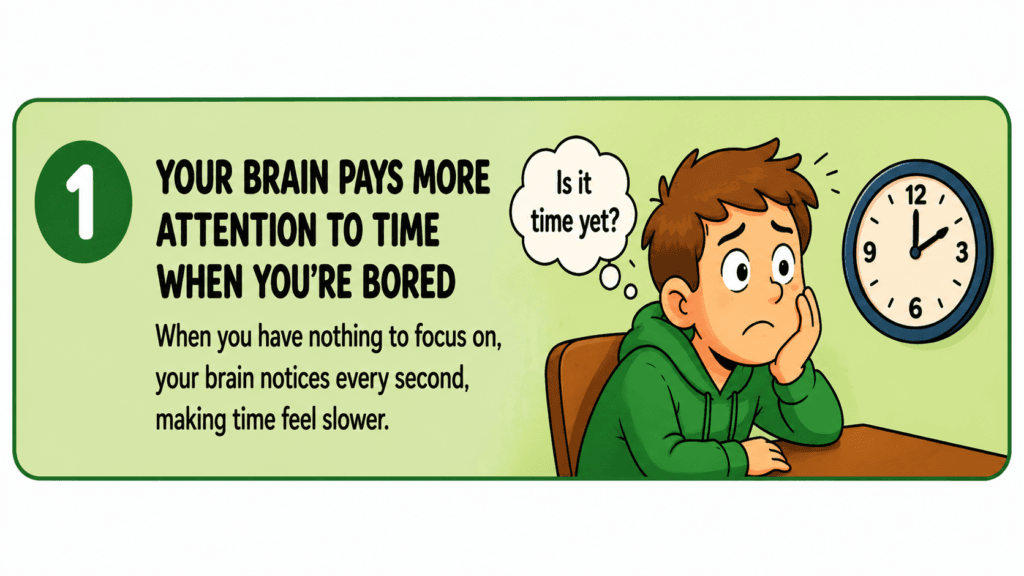
That’s why waiting in an empty doctor’s office often feels longer than spending the same amount of time talking with friends.
2. Uncertainty Makes Time Feel Slower
Waiting becomes especially frustrating when you don’t know how long it will take.
Whether you’re waiting for exam results, an important email, or a package to arrive, uncertainty keeps your brain alert.
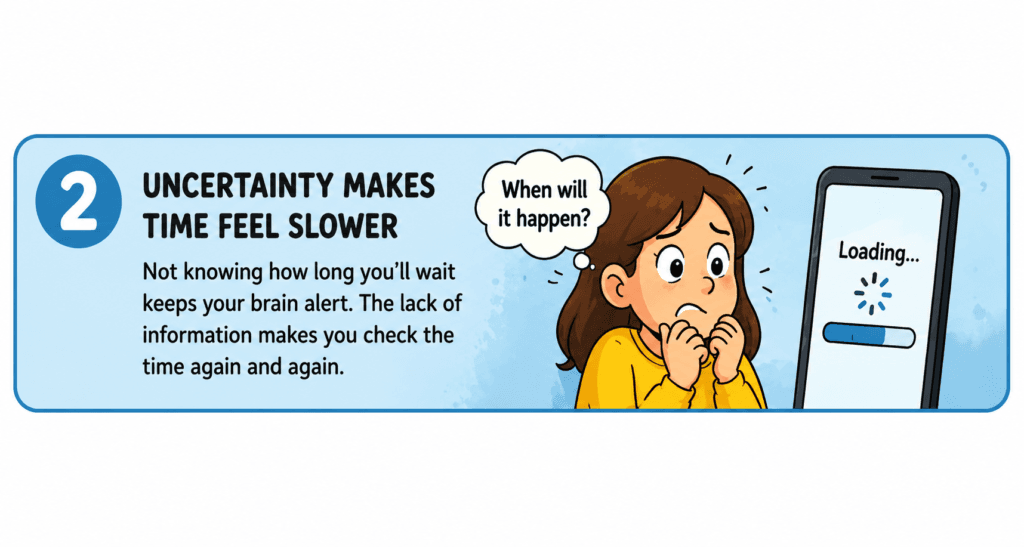
The lack of clear information makes your mind repeatedly check the clock, creating the feeling that time is dragging.
3. Anxiety Stretches Your Sense of Time
Stress and anxiety can distort how you experience time.
When you’re nervous about an interview, a first date, or a medical appointment, your brain becomes hyper-aware of your surroundings.
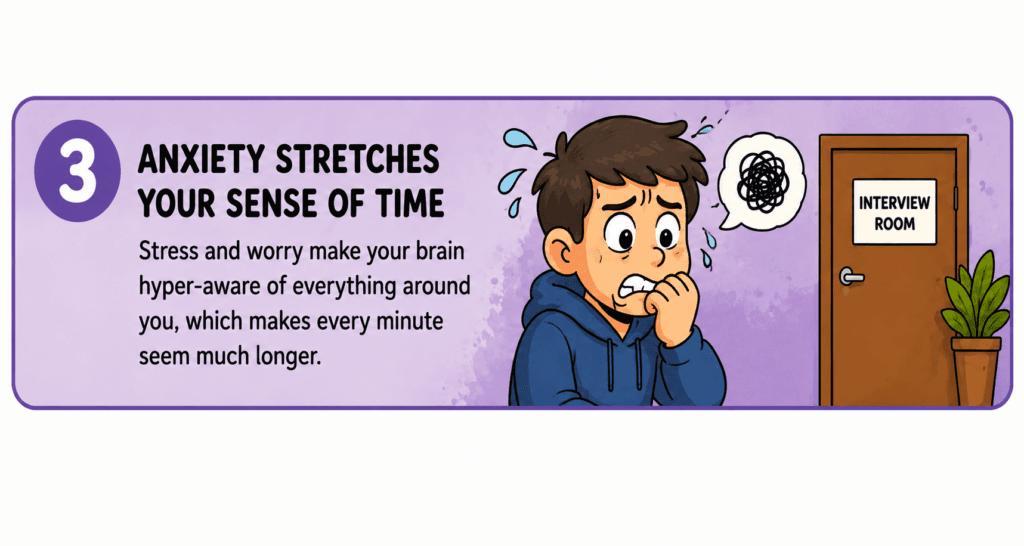
This heightened awareness makes every minute seem much longer because your mind is constantly monitoring what’s happening.
4. Constantly Checking the Clock Makes Waiting Feel Worse
Every time you look at the clock, you remind yourself that you’re still waiting.
This repeated focus on time creates the illusion that almost no progress has been made.
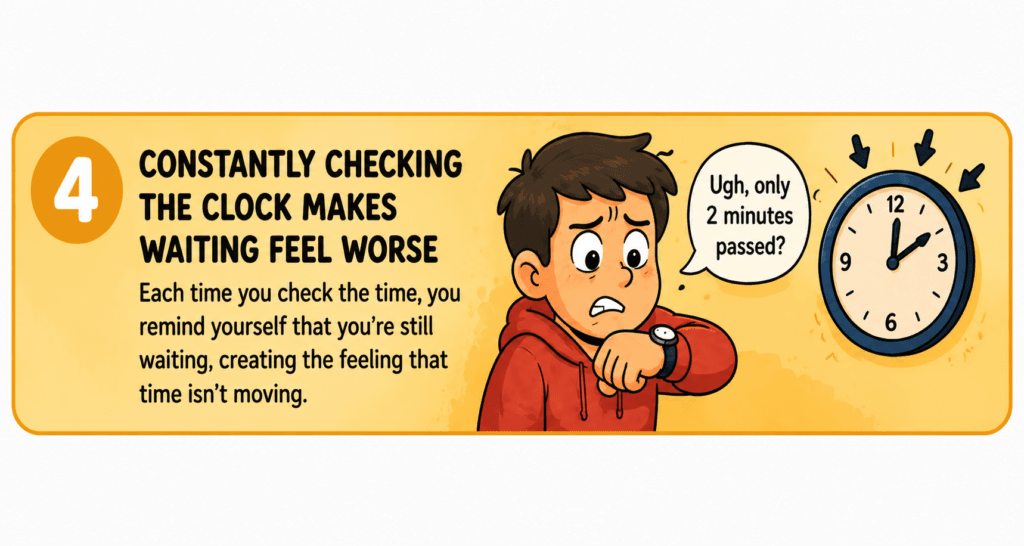
Ironically, people who check the time less often usually feel like the wait passes more quickly.
5. Enjoyment Makes Time Seem to Fly
When you’re deeply engaged in an activity—watching a movie, playing games, reading, or talking with someone—you stop monitoring time.
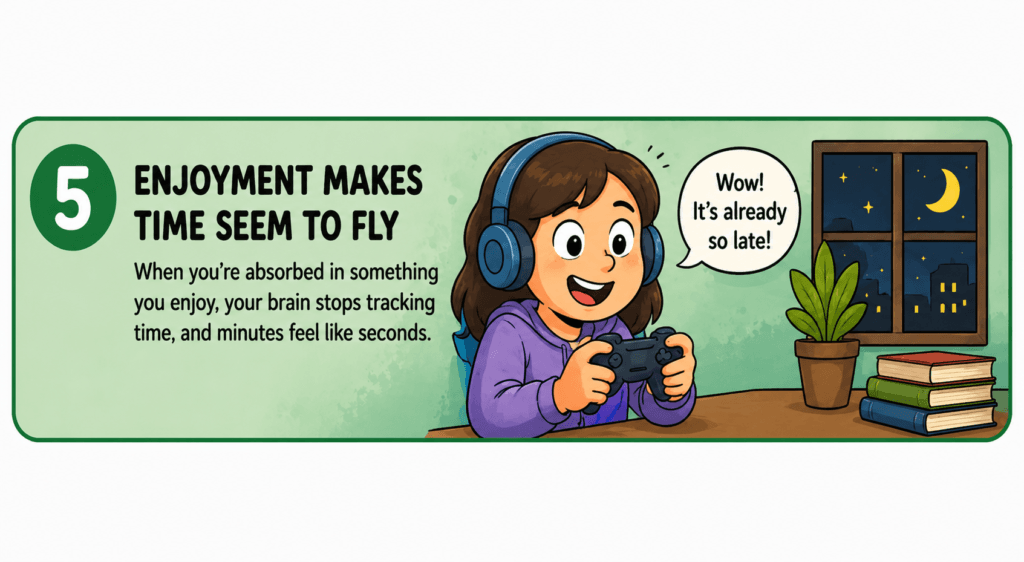
Psychologists sometimes call this a “flow” state, where your attention is fully absorbed.
Because your brain isn’t tracking every second, time seems to pass much faster.
Final Thoughts
Waiting doesn’t actually slow down time—it changes how your brain experiences it.
Boredom, uncertainty, anxiety, and constantly watching the clock all make waiting feel longer than it really is.
On the other hand, staying engaged and distracted helps time seem to pass more quickly.
The next time a few minutes feel like forever, remember: it isn’t the clock that’s changing—it’s your perception of time.