
Have you ever wanted someone so badly—only to lose interest once they started showing they liked you too? It can feel confusing and even make you question your feelings.
In many cases, it isn’t because the person changed. Instead, your brain may be responding to several psychological biases that influence attraction.
Why This Happens
Here are six reasons why this can occur.
1. The Challenge Is Gone
People often value things that require effort.
When someone feels difficult to win over, your brain may interpret them as more valuable.
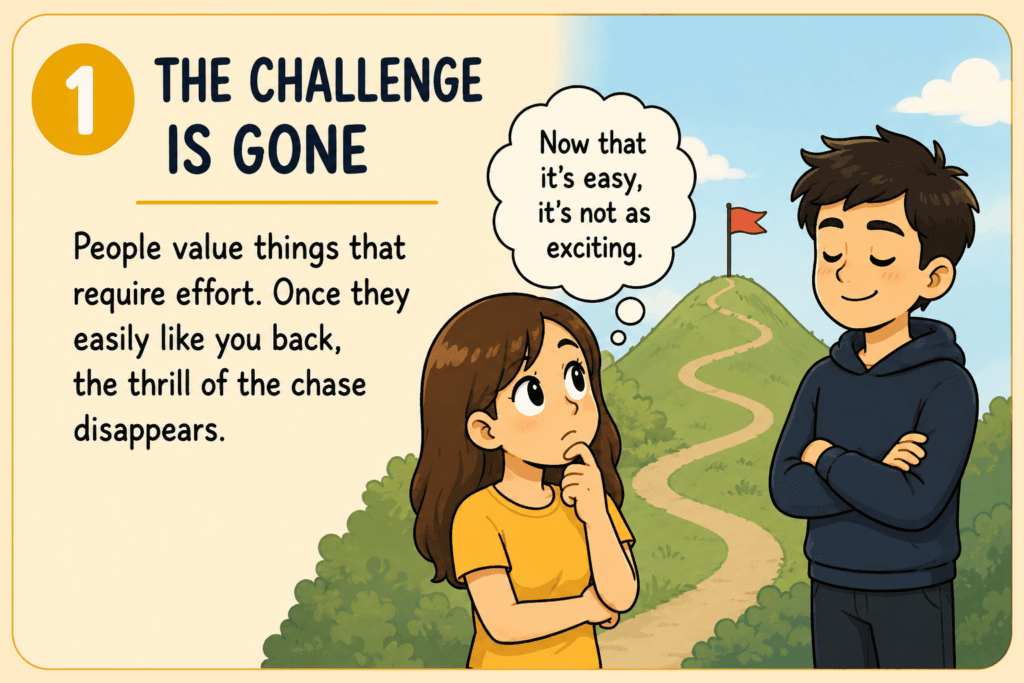
Once they openly return your feelings, the excitement of the pursuit disappears—and so does part of the emotional thrill.
2. Mystery Creates Curiosity
When you don’t know exactly how someone feels, your mind naturally fills in the gaps.
This uncertainty keeps you thinking about them.
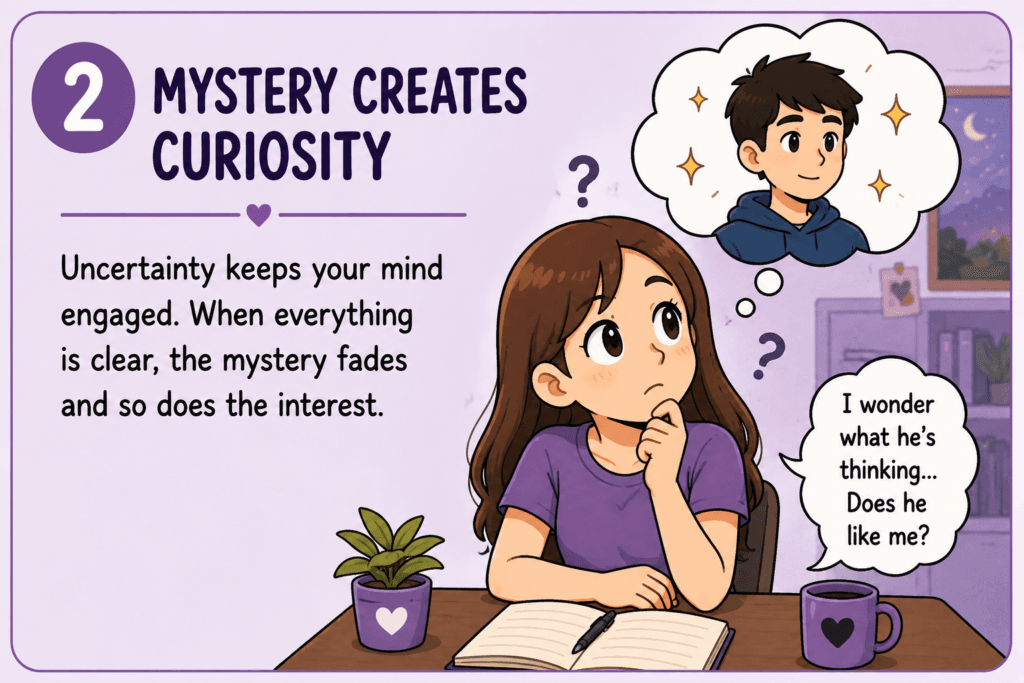
Once everything becomes clear, the mystery fades, leaving fewer reasons for your brain to stay focused on them.
3. Your Brain Enjoys Anticipation More Than Certainty
Psychologists have found that anticipation can sometimes produce more excitement than actually getting what you want.
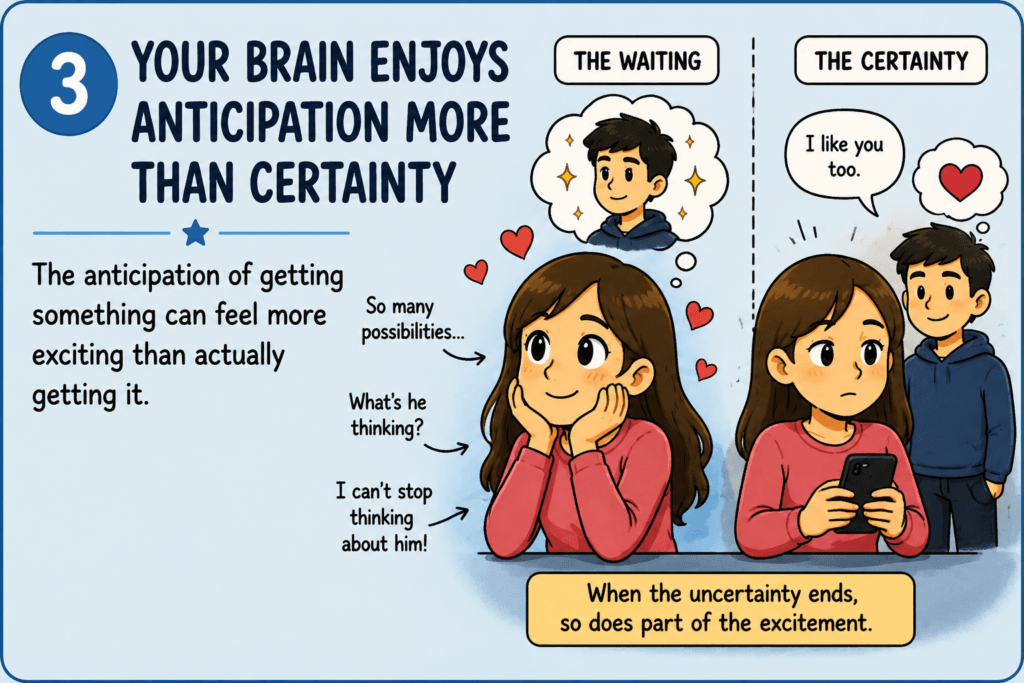
The waiting, hoping, and imagining create a stronger emotional response than the reward itself.
4. You Were Chasing the Feeling, Not the Person
Sometimes people become attached to the excitement of being chosen rather than truly connecting with the other person.
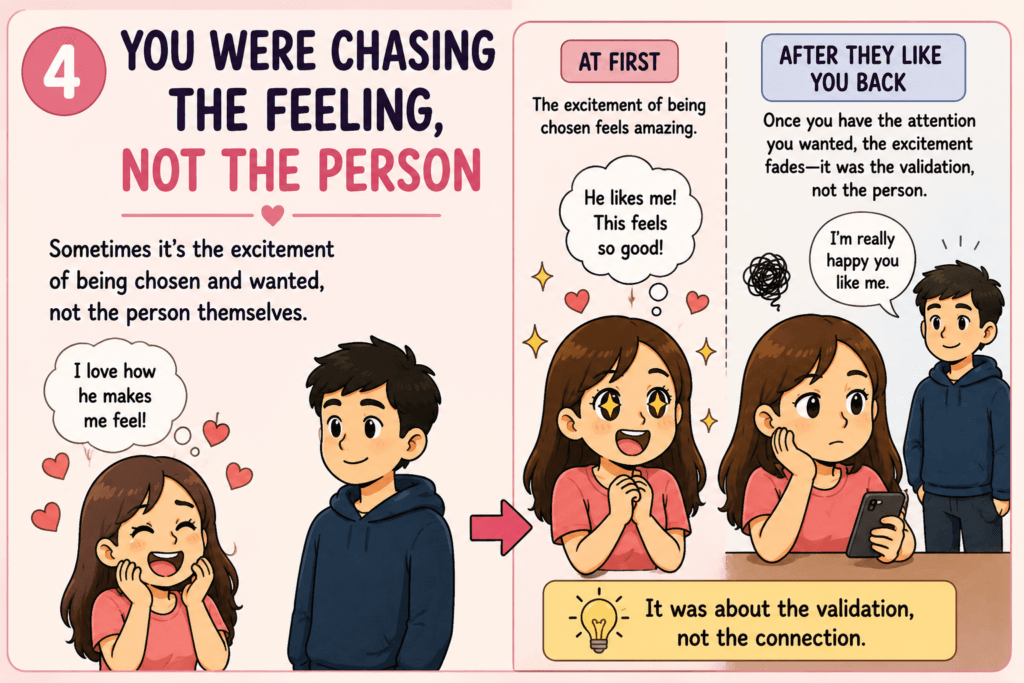
Once they receive the attention they wanted, they realize it was emotional validation—not the individual—that they were pursuing.
5. Familiarity Can Reduce Excitement
As someone becomes more available, they also become more familiar.
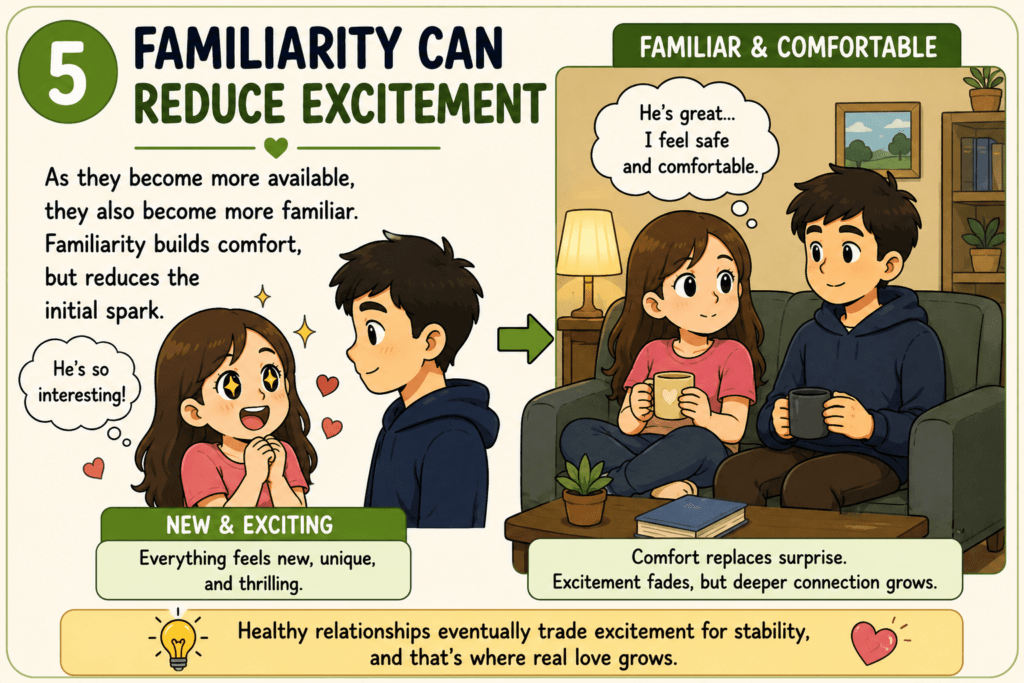
While familiarity builds trust and comfort, it can reduce the novelty that originally made the relationship feel exciting.
Healthy relationships eventually replace excitement with deeper emotional connection.
6. Fantasy Is Often Better Than Reality
Before a relationship begins, your imagination fills in the missing details.
This often makes the other person seem more perfect than they really are.
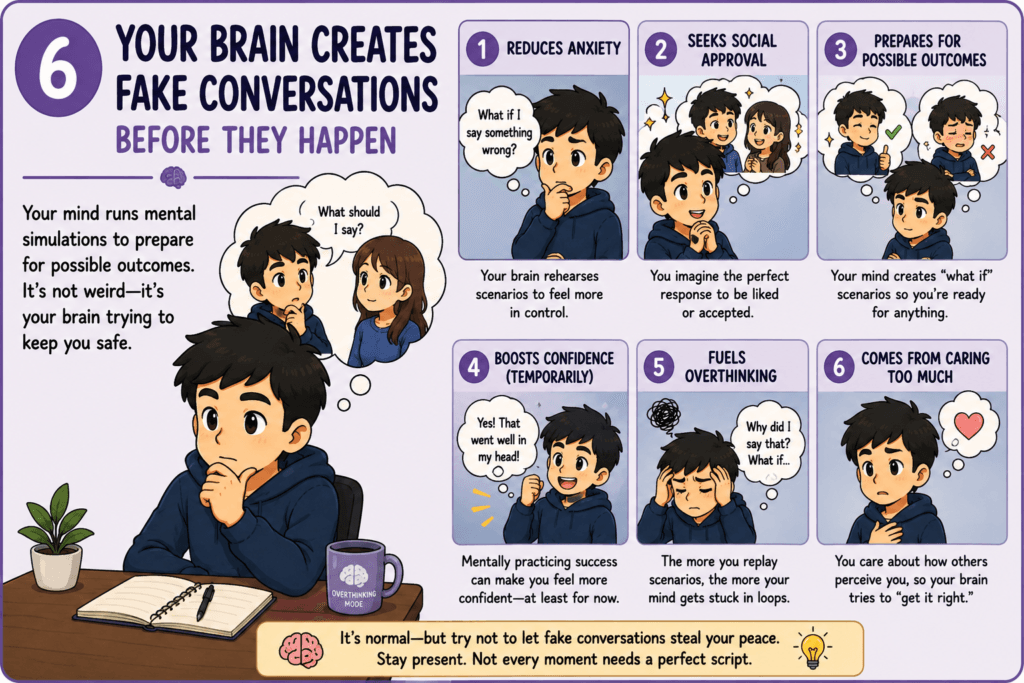
Once you get to know them better, those fantasies are replaced by reality.
That doesn’t mean they’re less attractive—it simply means your expectations have become more realistic.
Final Thoughts
Losing interest after someone likes you back doesn’t automatically mean you never cared.
Sometimes your brain is reacting to uncertainty, novelty, or the excitement of the chase rather than genuine compatibility.
Real love usually grows after the excitement fades, when appreciation, trust, and emotional connection begin to take its place.