
Breaking up is supposed to be the end of a relationship, yet many people find themselves returning to someone they once promised to leave behind.
Friends often wonder, “Why would they go back after everything that happened?” The answer is usually more complicated than simply being in love again.
Psychology suggests that returning to an ex is often driven by emotional patterns, familiarity, and the way our brains process relationships.
While every situation is different, understanding these hidden reasons can help people make healthier decisions about love.
1. The Brain Craves Familiarity
Even if a relationship wasn’t perfect, it was familiar.
Our brains naturally prefer what feels predictable because it requires less emotional effort than starting over with someone new.
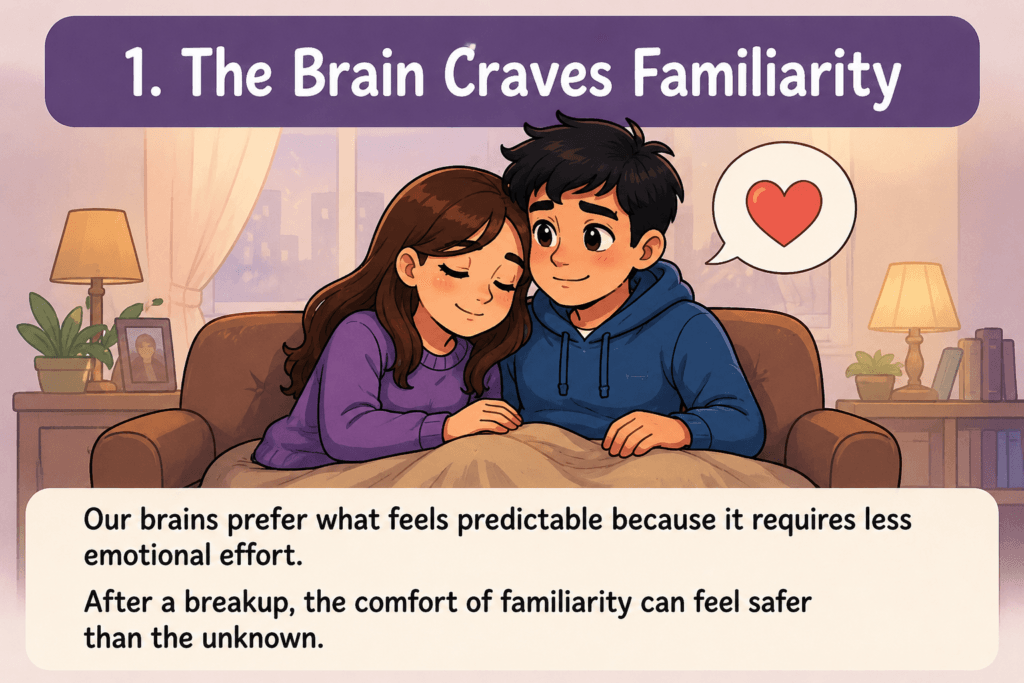
After a breakup, loneliness and uncertainty can make an old relationship seem safer than facing the unknown.
Sometimes people miss the comfort of familiarity more than they miss the person themselves.
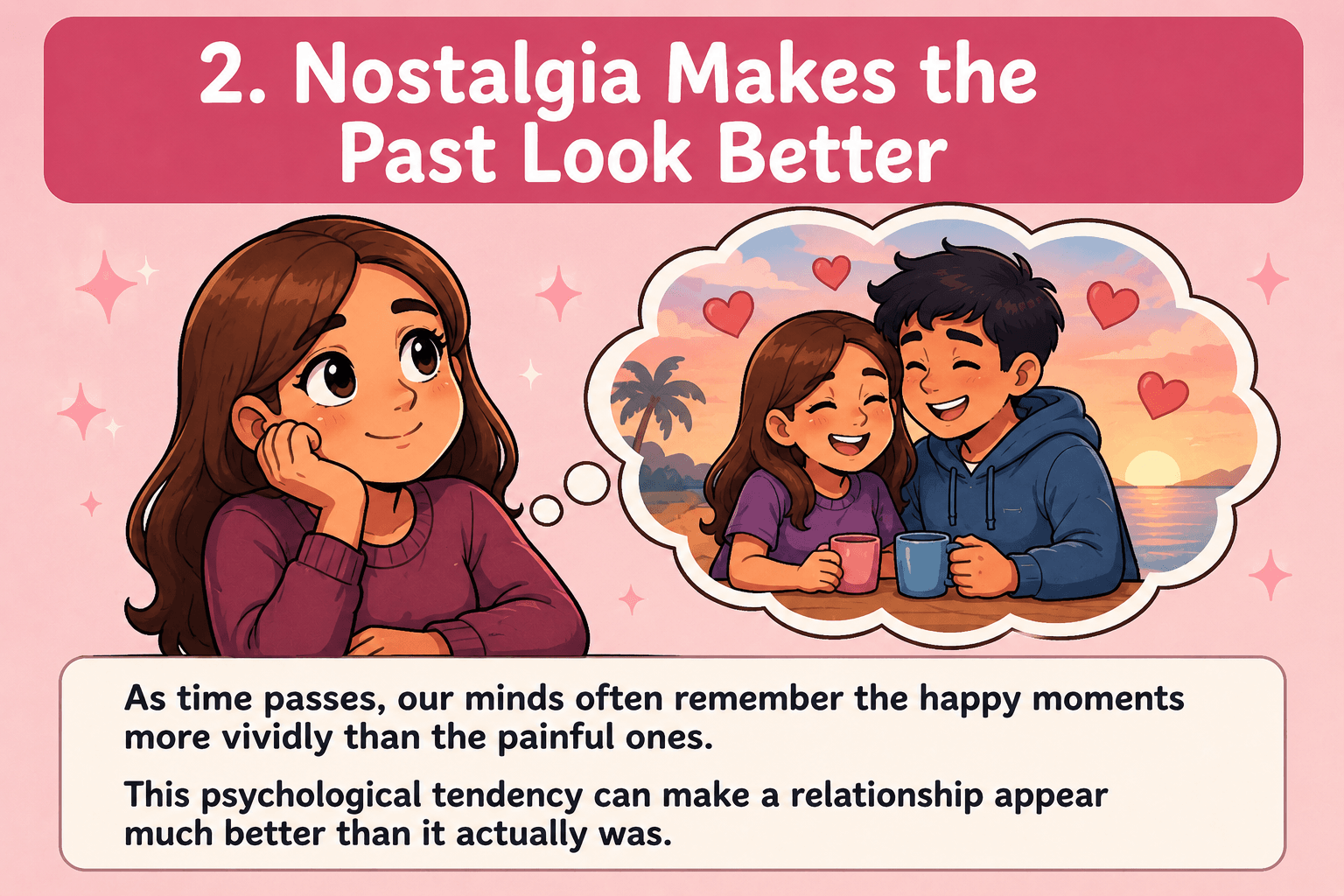
2. Nostalgia Makes the Past Look Better
As time passes, our minds often remember the happy moments more vividly than the painful ones.
This psychological tendency can make a relationship appear much better than it actually was.

People begin thinking about the vacations, late-night conversations, and shared memories while forgetting the constant arguments, disappointment, or emotional pain that caused the breakup.
3. Emotional Attachment Doesn’t Disappear Overnight
Love creates powerful emotional bonds that don’t simply vanish because a relationship ends.
Spending months or years with someone builds habits, routines, and emotional connections.
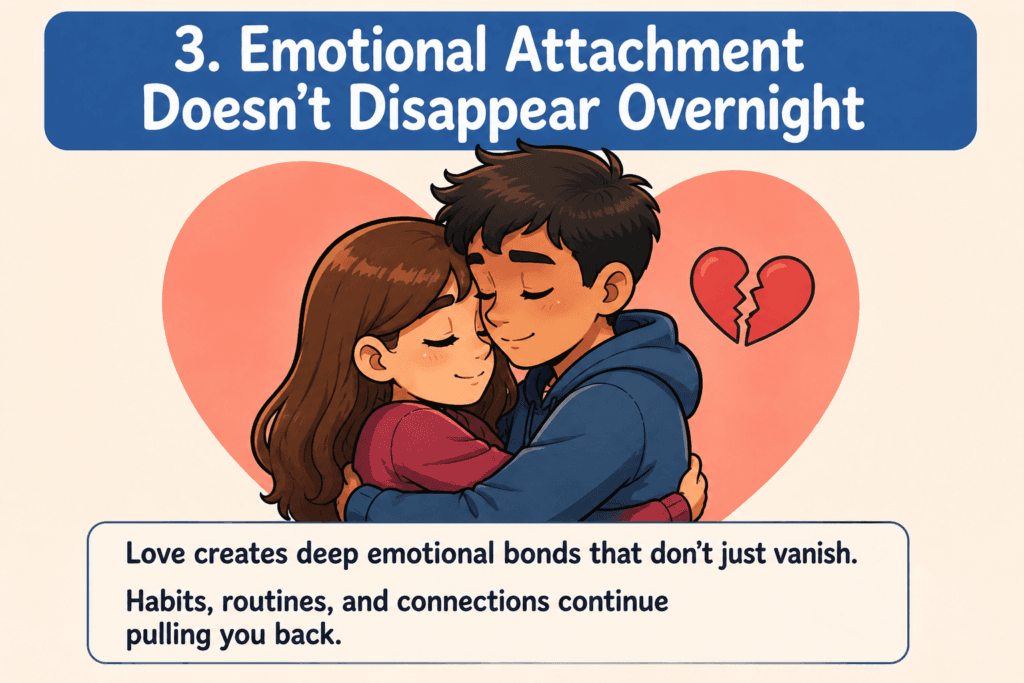
Even when people know the relationship wasn’t healthy, those emotional bonds can continue pulling them back long after the breakup.
4. Fear of Being Alone
For many people, the fear of loneliness is stronger than the desire for a healthier relationship.
After a breakup, silence can feel overwhelming, making an ex seem like the easiest solution.
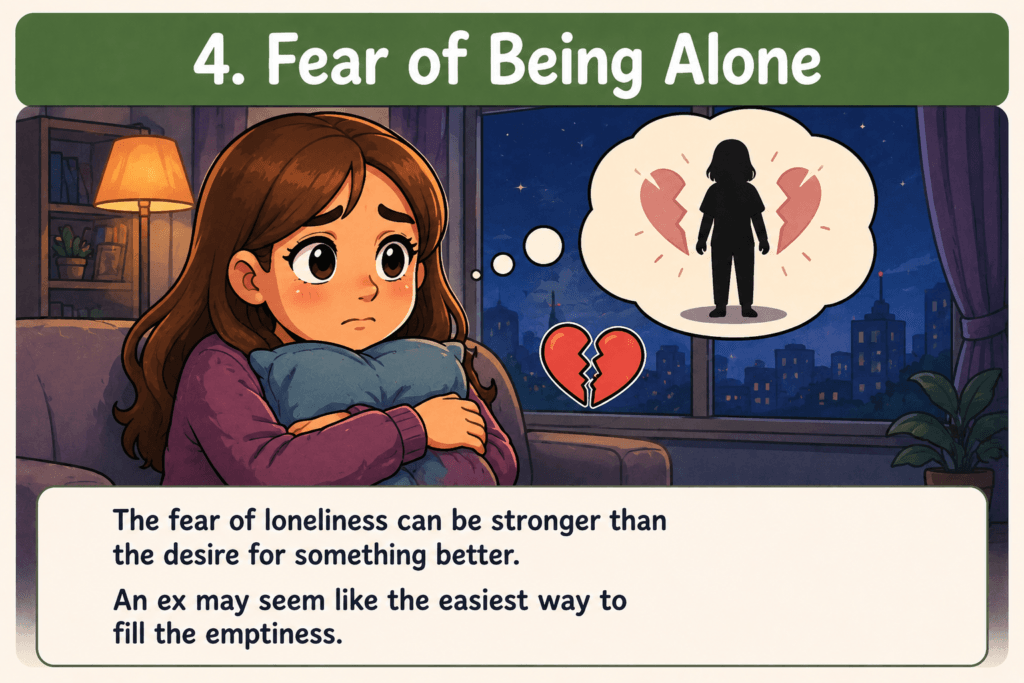
Returning to a familiar partner may temporarily reduce loneliness, but it doesn’t always solve the deeper issues that ended the relationship in the first place.
5. People Believe the Other Person Has Changed
Hope is one of the strongest emotions in relationships.
After spending time apart, many people convince themselves that both partners have matured and that this time things will be different.
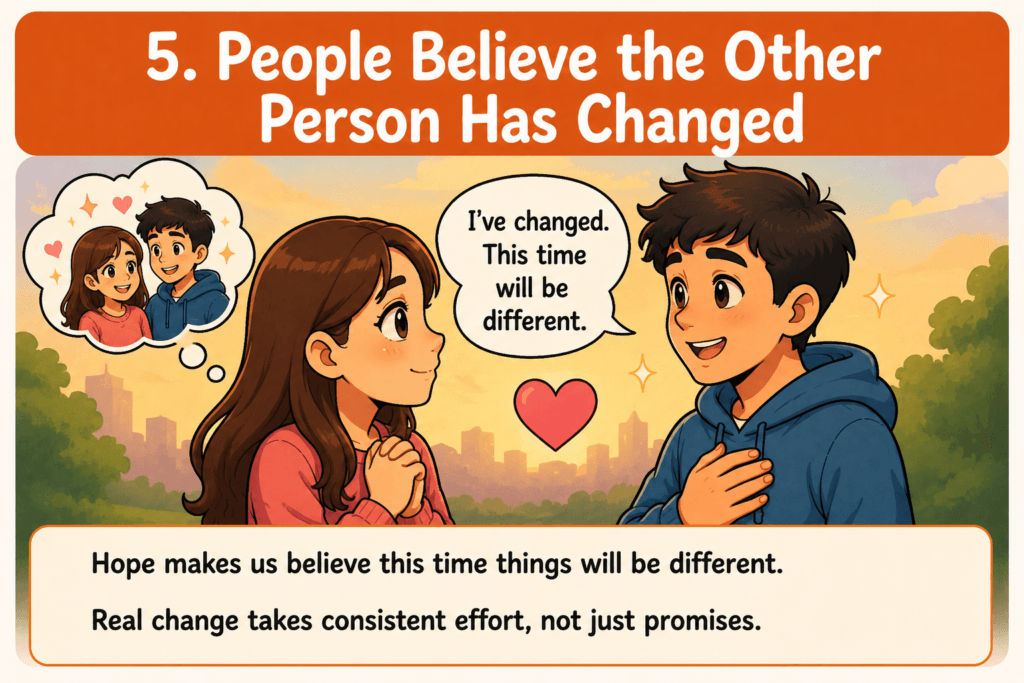
Sometimes that hope is justified—people really can grow.
However, lasting change usually requires consistent effort, honest communication, and accountability from both individuals, not just promises.
6. Unfinished Emotional Closure
Not every breakup provides clear answers.
Some relationships end suddenly, while others leave unanswered questions and unresolved feelings.
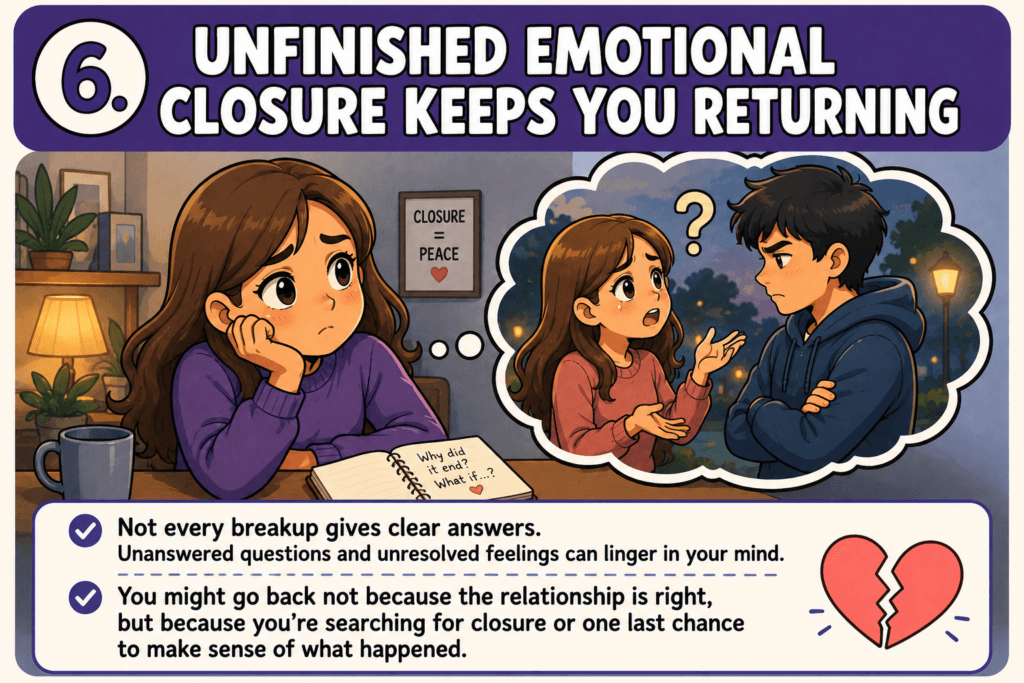
When emotions remain unfinished, people may return not because the relationship is right for them, but because they’re searching for closure, understanding, or one last chance to make sense of what happened.
Should You Go Back to an Ex?
There isn’t a universal answer.
Some couples rebuild stronger relationships after addressing the problems that separated them.

Others repeat the same unhealthy patterns because nothing truly changed.
Before reconnecting with an ex, ask yourself these questions:
- Have the problems that caused the breakup actually been resolved?
- Are both people willing to change their behavior, not just their words?
- Am I returning because I genuinely love this person, or because I’m afraid of being alone?
- Does this relationship bring me peace, or does it constantly create stress and insecurity?
Being honest with yourself is often more important than following your emotions in the moment.
Final Thoughts
Going back to an ex isn’t always a sign of weakness, nor is it always a mistake.
Human relationships are complex, and emotions rarely disappear overnight.
The hidden reason people return is often not just love—it’s familiarity, hope, emotional attachment, and the desire to avoid loneliness.
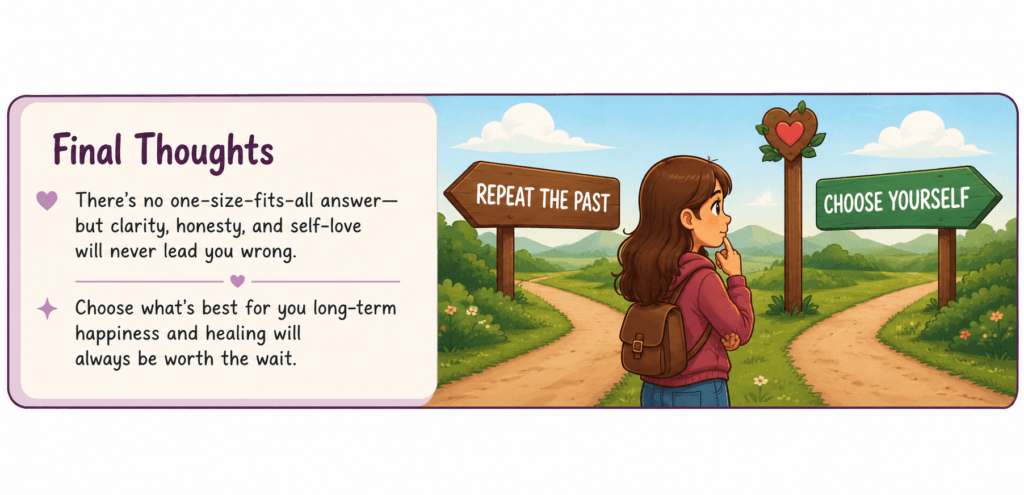
The healthiest decision isn’t about whether you go back or move on.
It’s about choosing the path that supports your long-term happiness, emotional well-being, and personal growth rather than repeating patterns that continue to cause pain.