
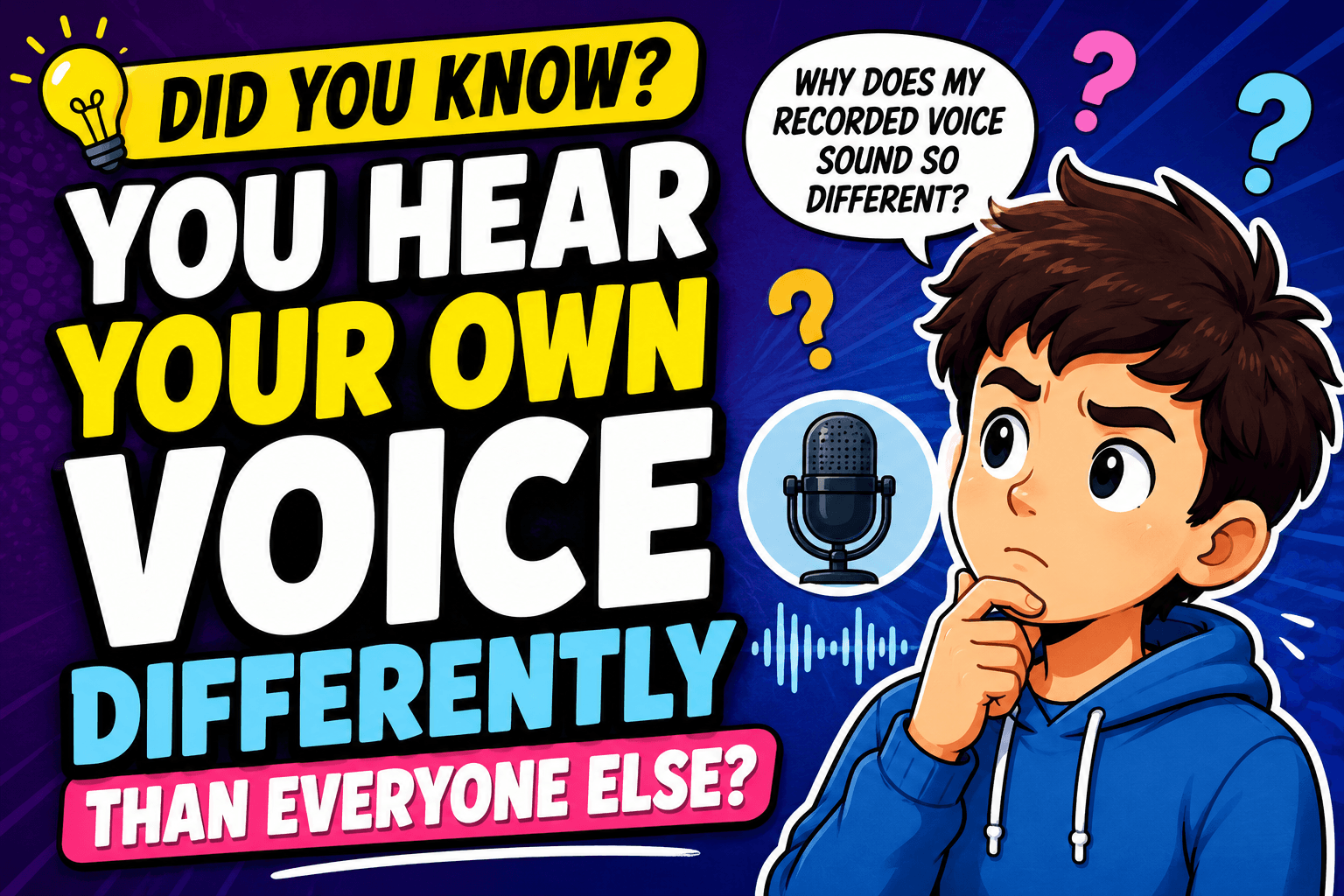
Have you ever listened to a recording of your voice and thought, “Do I really sound like that?”
If so, you’re not alone. Almost everyone is surprised the first time they hear themselves on a recording. The good news is that nothing is wrong with your voice—your brain simply hears it differently than everyone else does.
Here’s the fascinating science behind why your voice sounds so different
1. You Hear Your Voice Through Two Different Paths
When you speak, sound reaches your ears in two ways.
The first travels through the air, just like everyone else hears it.

The second travels through the bones of your skull, which naturally emphasize lower frequencies and make your voice sound deeper and fuller.
A recording only captures the sound traveling through the air, which is why it often sounds thinner or higher than you’re used to hearing.
2. Your Brain Has Been Trained to Recognize Your “Internal” Voice
You’ve been listening to your own voice your entire life through both air and bone conduction.
Over time, your brain accepts that version as your normal voice.
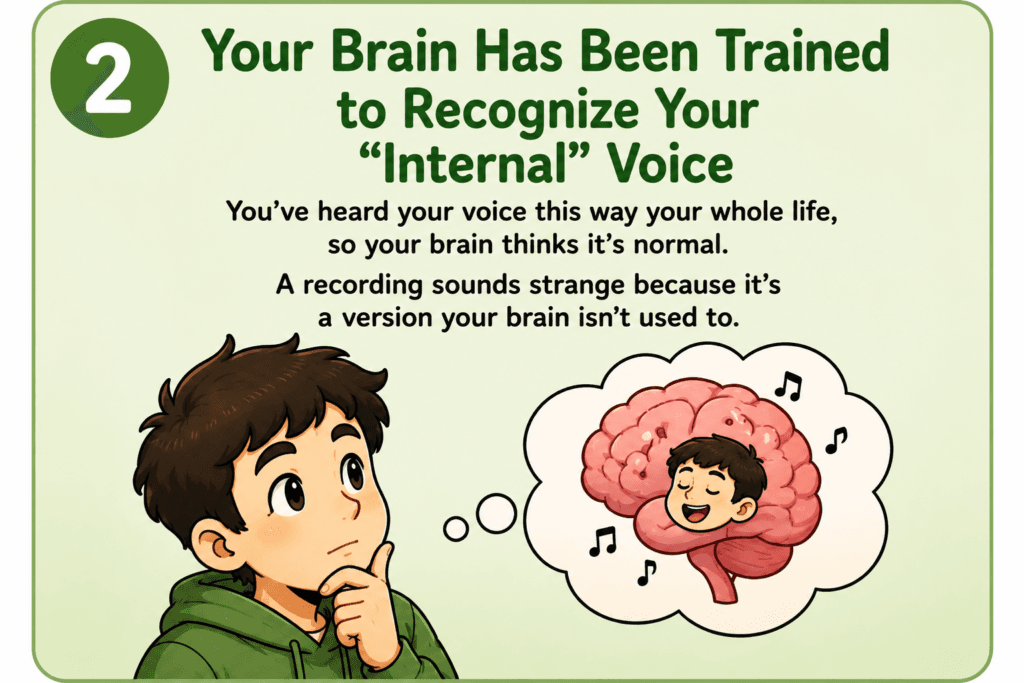
When you hear a recording, your brain is suddenly presented with a version it isn’t familiar with, making it sound strange—even though it’s the same voice everyone else has always heard.
3. You’re Comparing It to an Unfair Standard
Your brain automatically compares the recorded voice with the voice you expect to hear inside your head.
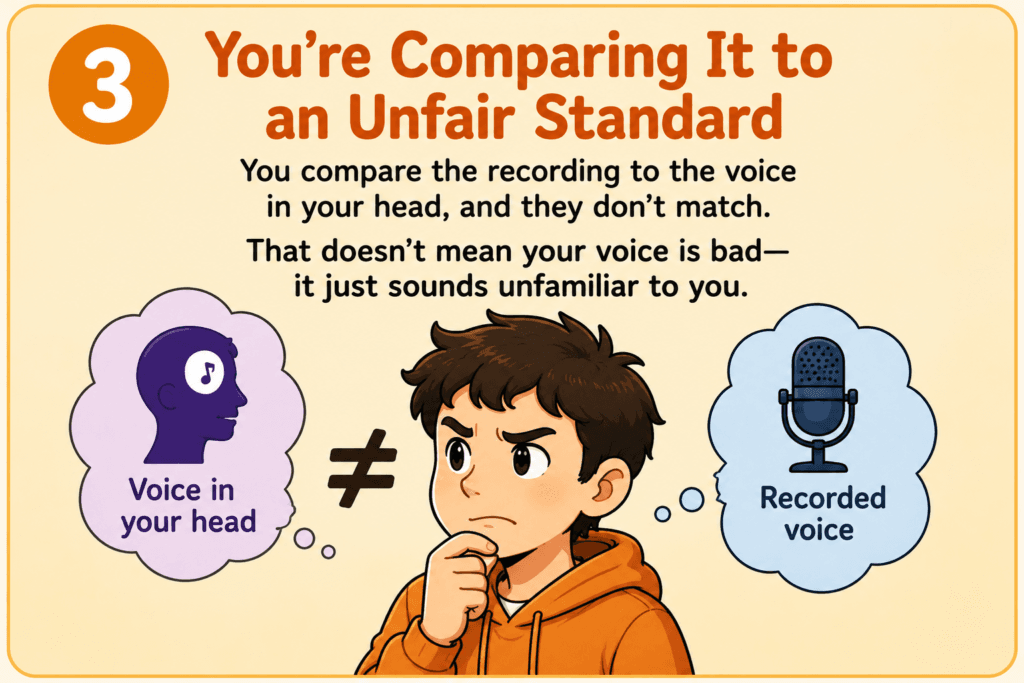
Because they don’t match, the recording can sound unusual or even unpleasant.
This doesn’t mean your voice sounds bad. It simply sounds unfamiliar to you.
4. Other People Don’t Hear What You Hear
The voice you hear inside your head is unique to you.
Everyone else only hears the sound traveling through the air—the same version that microphones record.
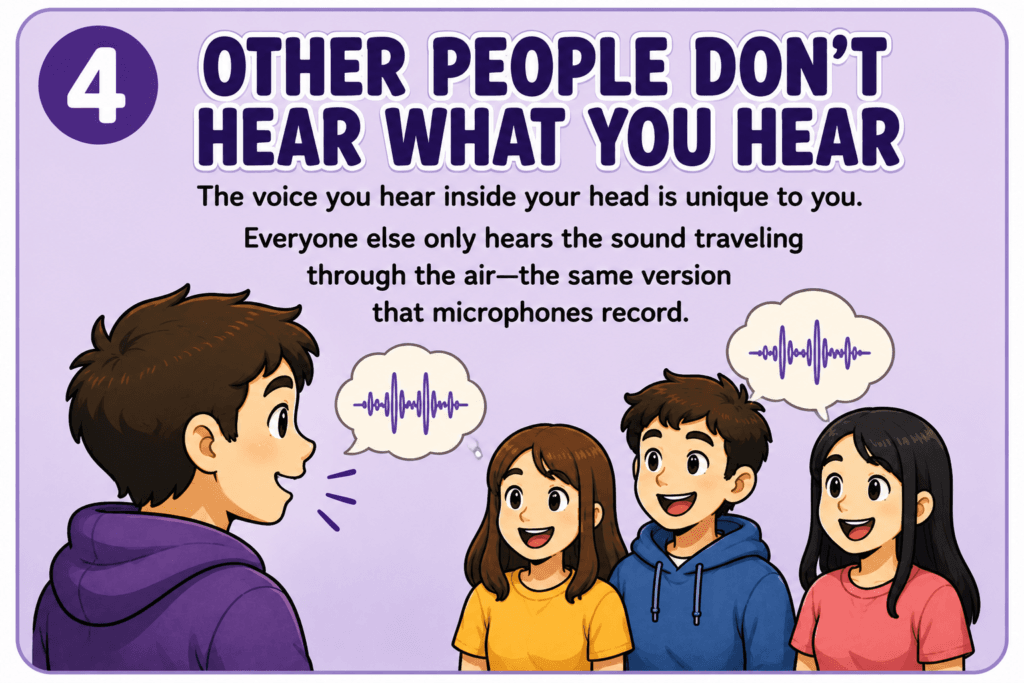
So if you’ve ever wondered whether recordings are accurate, the answer is generally yes. To other people, that’s what your voice normally sounds like.
5. The More You Hear It, the More Normal It Becomes
Many singers, podcasters, teachers, and content creators dislike hearing their recorded voice at first.
However, repeated exposure helps the brain adjust.
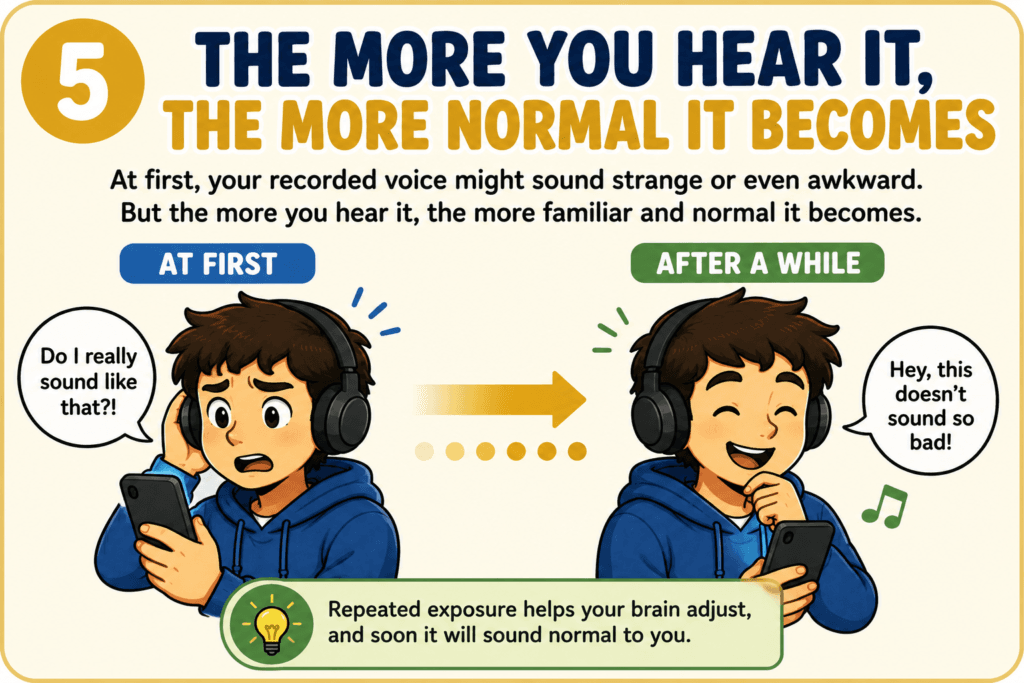
Over time, the recorded version begins to sound more familiar, and many people eventually stop noticing the difference.
6. Your Voice Is Probably Better Than You Think
Most people judge their own voice much more harshly than others do.
In reality, listeners usually pay attention to what you’re saying rather than analyzing how your voice sounds.

Confidence, clarity, and authenticity often matter far more than having the “perfect” voice.
Final Thoughts
The next time your recorded voice surprises you, remember that it’s a completely normal experience.
Your brain has simply spent years listening to a version of your voice that no one else hears.
What sounds unfamiliar to you is likely the voice your friends, family, and coworkers have known all along.
So instead of worrying about how your voice sounds, focus on using it with confidence.
Chances are, everyone else already thinks it sounds perfectly natural.