
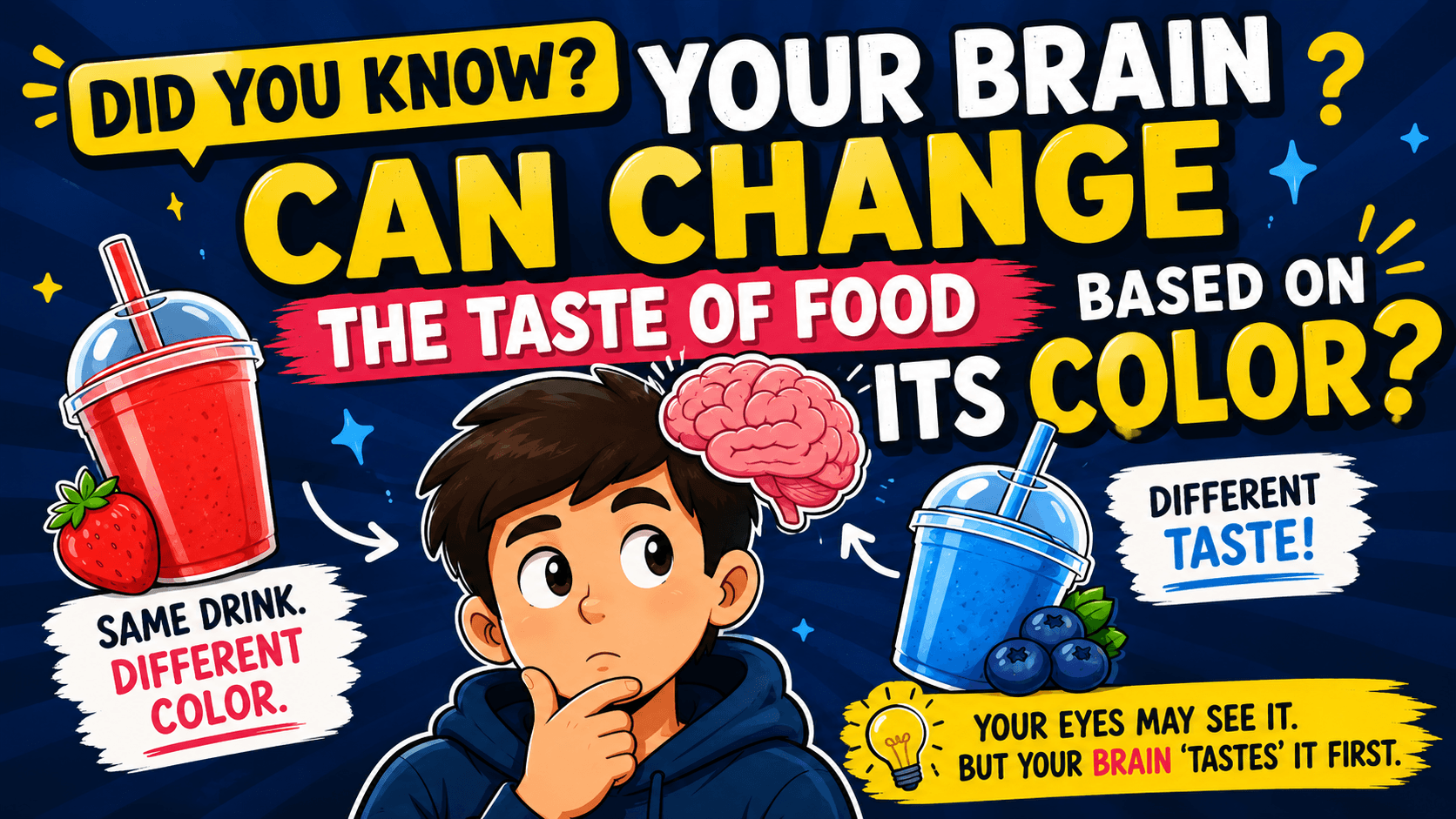
Have you ever taken a sip of a brightly colored drink and instantly expected it to taste sweet, only to be surprised by the flavor? It turns out your tongue isn’t making that decision alone.
Long before food reaches your taste buds, your brain has already started predicting what it will taste like based on what you see.
The Science Behind How Color Changes Taste
1. Your Brain Eats With Your Eyes First
The moment you look at food, your brain analyzes its color, shape, and appearance.
Based on past experiences, it creates an expectation of what the flavor should be.
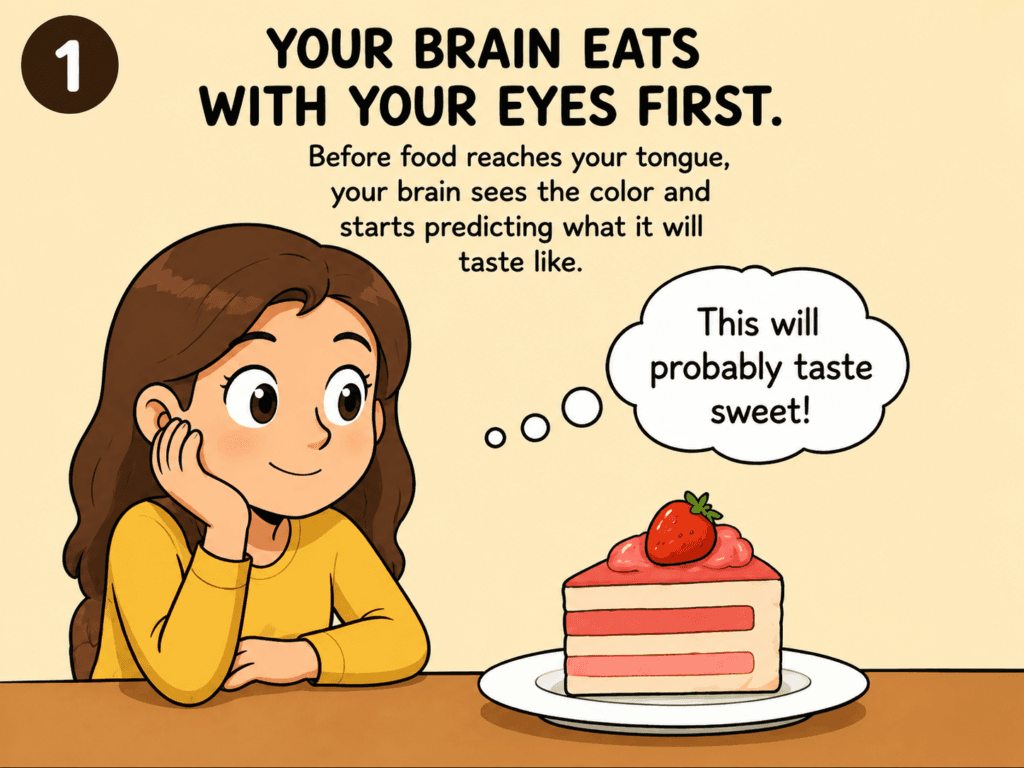
For example, a bright red drink may make you expect strawberry or cherry, while a yellow drink often suggests lemon or pineapple.
These expectations influence how you experience the taste once you take a bite or sip.
2. Color Creates Powerful Flavor Expectations
Over time, your brain learns to associate certain colors with specific flavors:

- Red often links to sweetness
- Green commonly signals freshness, mint, or sourness
- Orange suggests citrus or tropical fruit
- Brown usually indicates chocolate, coffee, or caramel
When the actual flavor doesn’t match the color, your brain can become confused, altering your perception of taste.
3. Taste Is More Than Your Tongue
Many people think taste comes only from the tongue, but that’s only part of the story.

Your brain combines information from your eyes, nose, tongue, and even the texture of the food to create what you experience as flavor.
Because vision is processed before you even take a bite, it has a surprisingly strong influence on how food tastes.
Scientific Evidence and Practical Impact
4. Scientific Studies Show Color Can Change Taste
Researchers have found that simply changing the color of a food or drink—without altering its ingredients—can affect how people describe its flavor.

Participants often rated identical foods as sweeter, more sour, or fruitier just because they were presented in different colors.
This shows how much the brain relies on visual information when interpreting taste.
5. Why Food Companies Pay Close Attention to Color
Food manufacturers carefully select colors because appearance shapes expectations.
For example, a strawberry-flavored yogurt with a pale gray color would seem less appealing than the same yogurt with a vibrant pink color, even if both tasted the same.
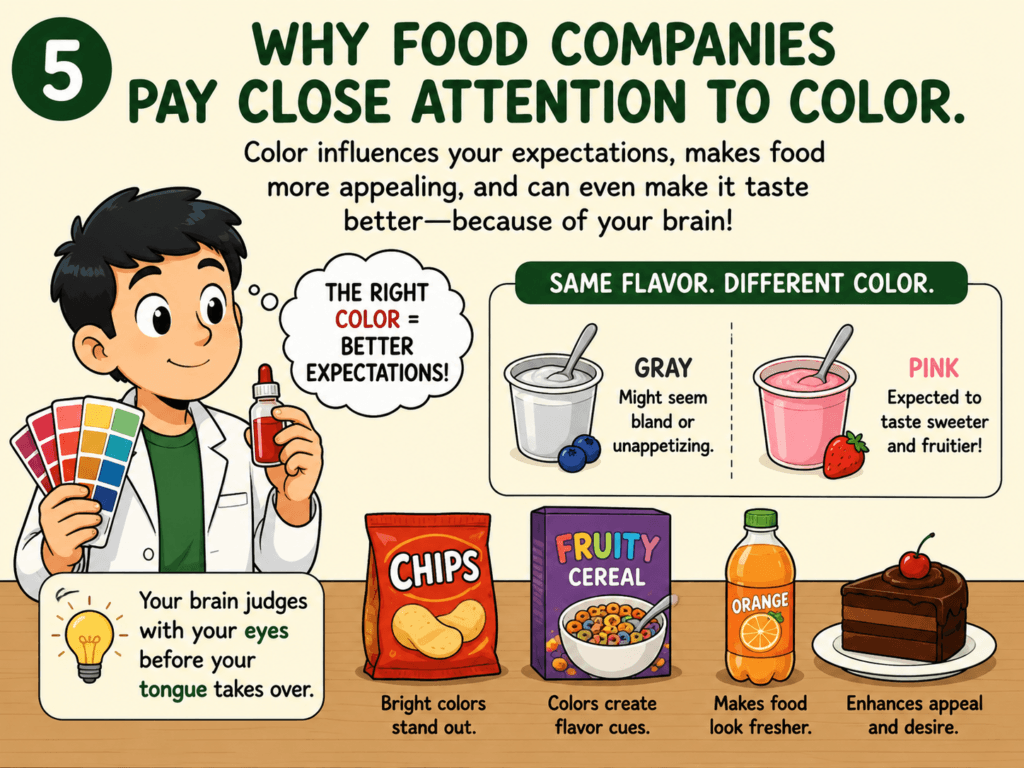
Restaurants, bakeries, and beverage companies use color to make food look more delicious and reinforce expected flavors.
Try This Yourself
6. You Can Test This Illusion
Want to see your brain in action?
Try tasting two identical drinks that have been colored differently with food coloring, without knowing which is which.
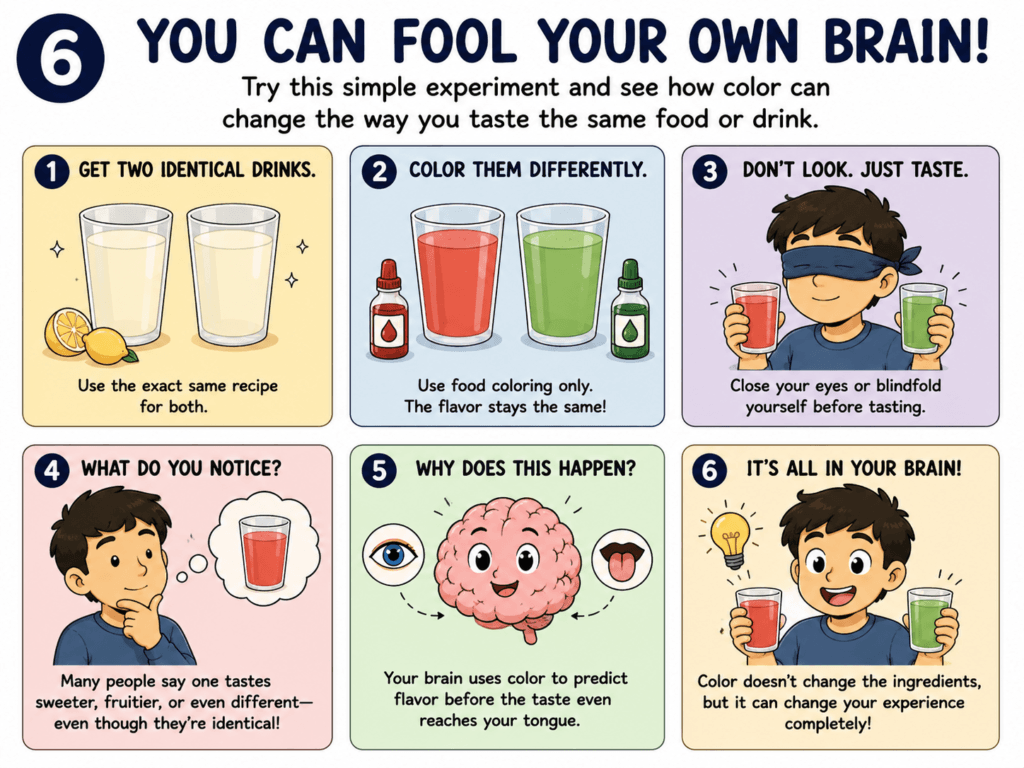
Many people notice different flavors, even though the recipe is exactly the same.
It’s a simple demonstration of how your brain merges sight and taste into a single experience.
Final Thoughts
The next time a meal looks especially colorful, remember your brain has already started shaping your experience before the food even reaches your tongue.
Color doesn’t change the ingredients, but it can change your expectations—and those expectations are powerful enough to influence what you think you taste.
This is a reminder that many everyday experiences are created not just by our senses, but by the remarkable way our brain interprets the world.