

We’ve all heard the saying, “First impressions matter.” While first impressions can influence how we see others, psychology shows they are often incomplete—and sometimes completely wrong.
Our brains are wired to make quick judgments. Within seconds of meeting someone, we automatically form opinions about whether they’re trustworthy, confident, friendly, or competent.
This mental shortcut helps us process information quickly, but it also increases the chance of making inaccurate assumptions.
1. Your Brain Fills in Missing Information
When you first meet someone, you know very little about them.
Instead of waiting for more information, your brain fills in the gaps using appearance, body language, tone of voice, and facial expressions.
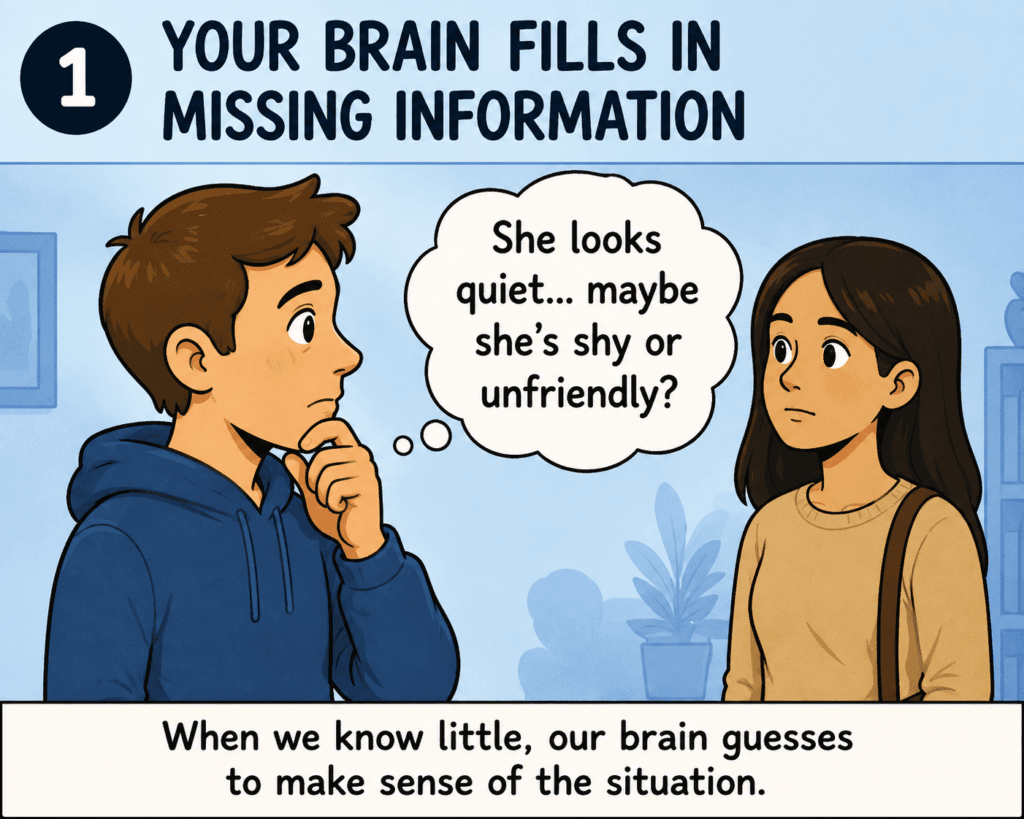
The problem is that these clues don’t always reflect who someone truly is.
A quiet person may simply be shy, not unfriendly.
A confident speaker may not actually be knowledgeable.
2. Appearance Can Mislead You
People naturally associate certain appearances with positive traits.
Research has found that attractive individuals are often assumed to be kinder, smarter, or more trustworthy—a phenomenon known as the “halo effect.”
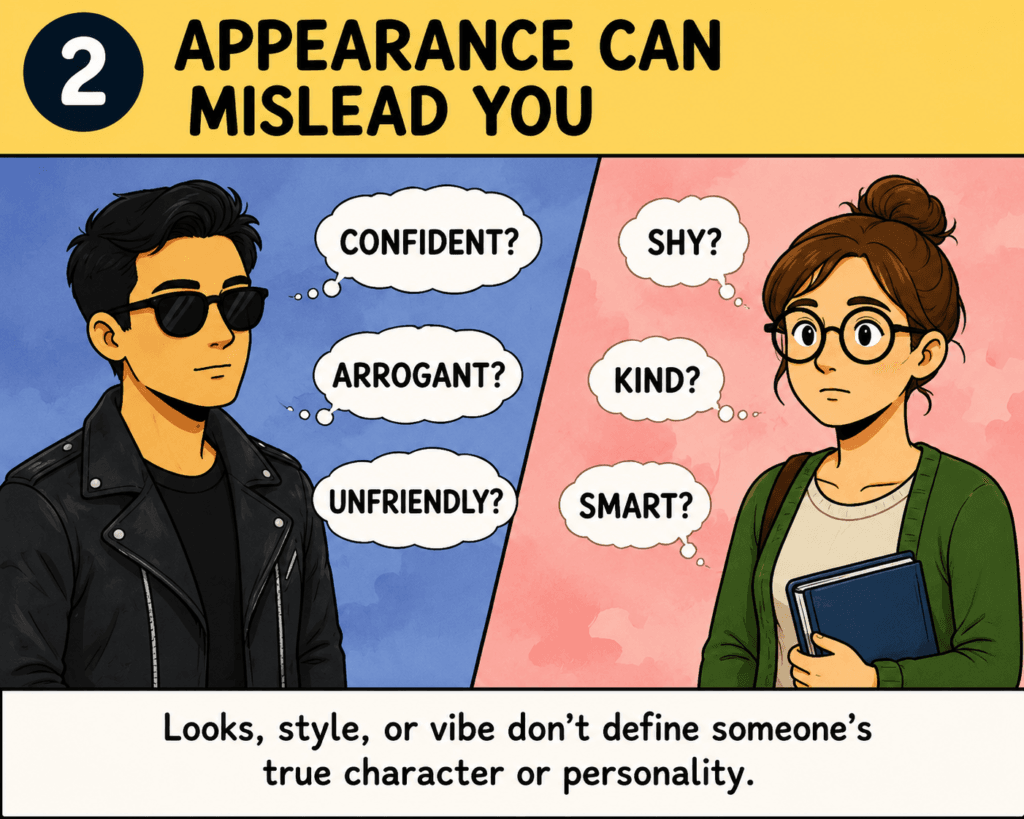
However, appearance doesn’t determine personality, honesty, or character.
Someone who looks approachable may not be trustworthy, while someone who appears serious could be one of the kindest people you’ll ever meet.
3. Mood Influences Your Judgment
Your emotional state affects how you see others.
If you’re stressed, anxious, or having a bad day, you’re more likely to interpret neutral behavior negatively.
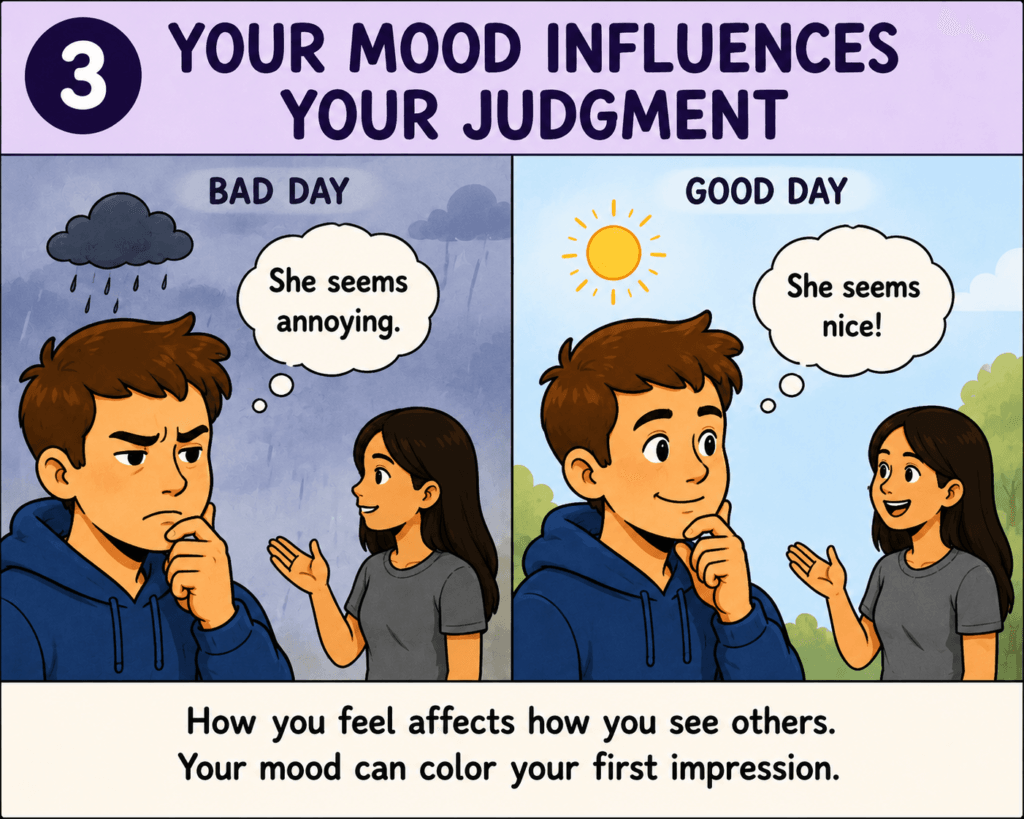
On the other hand, when you’re in a good mood, you may overlook warning signs or judge people more favorably.
Sometimes, your first impression says as much about your own mindset as it does about the other person.
4. People Behave Differently in New Situations
Meeting someone for the first time can be stressful.
Many people feel nervous, awkward, or self-conscious.
A person who seems quiet during your first conversation might become funny, confident, and engaging once they feel comfortable.
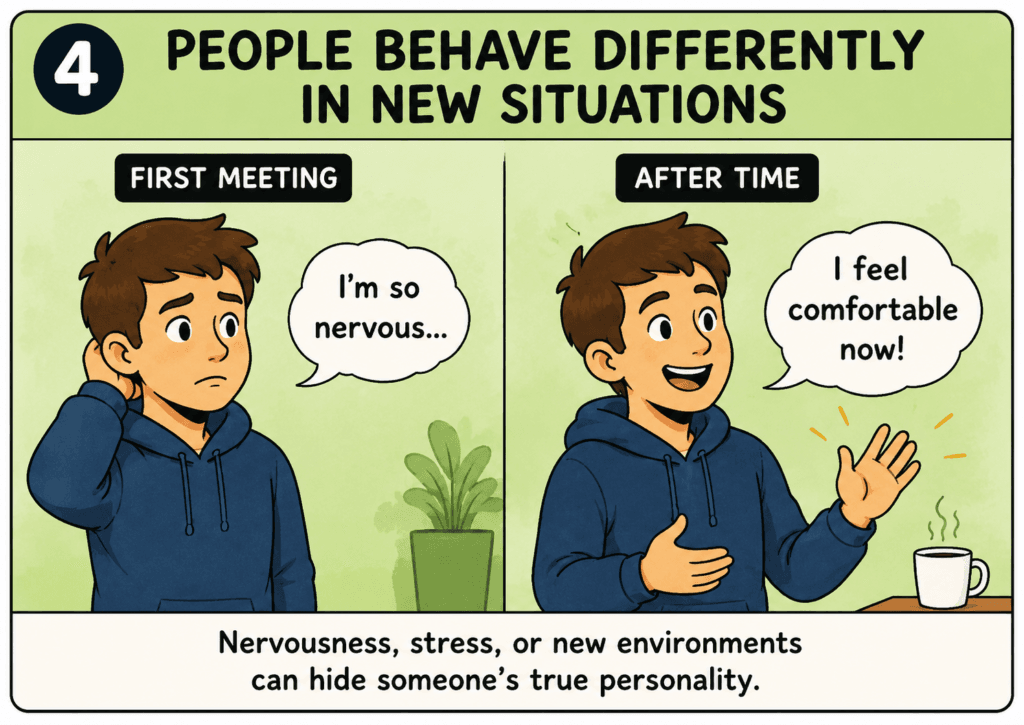
Likewise, someone who appears outgoing at first may simply be skilled at making good first impressions.
One interaction rarely reveals a person’s true personality.
5. Confirmation Bias Keeps First Impressions Alive
Once you’ve formed an opinion, your brain naturally looks for evidence that supports it while ignoring information that contradicts it.
This psychological tendency is called confirmation bias.
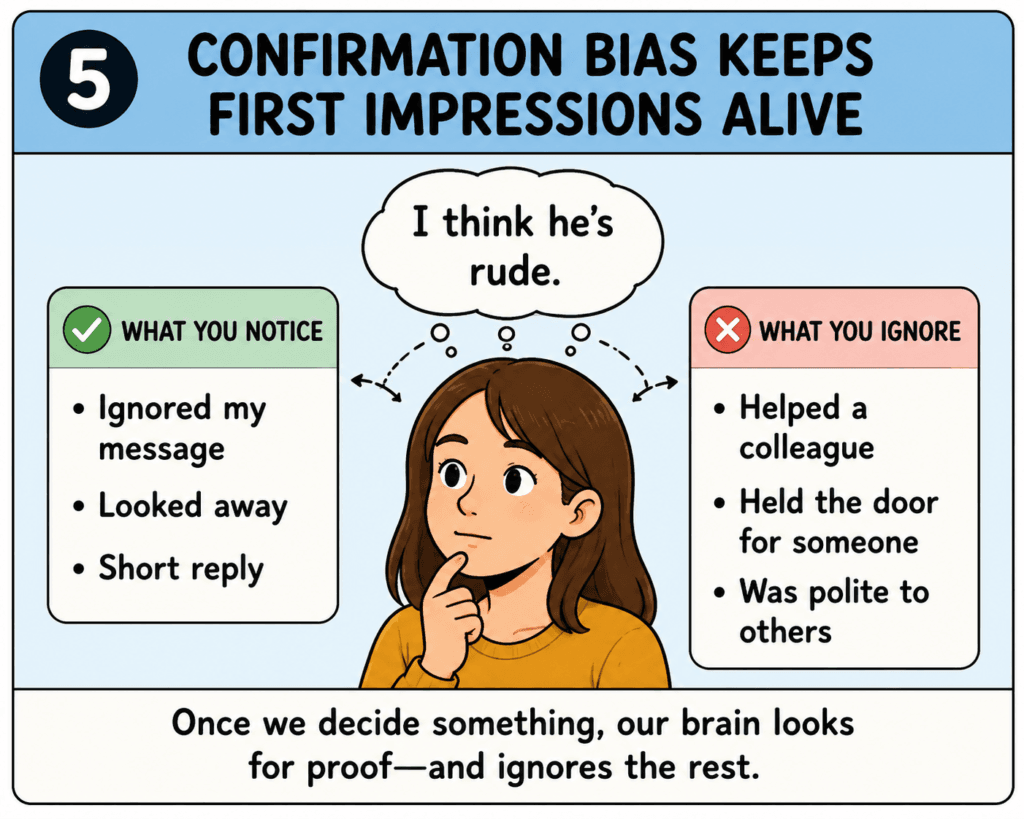
If you decide someone is rude, you’ll notice moments that reinforce that belief and overlook acts of kindness.
This makes first impressions surprisingly difficult to change—even when they’re inaccurate.
6. Character Is Revealed Over Time
Real character isn’t shown in a single meeting.
It becomes visible through repeated actions, honesty, consistency, empathy, and how someone treats others over weeks, months, and years.
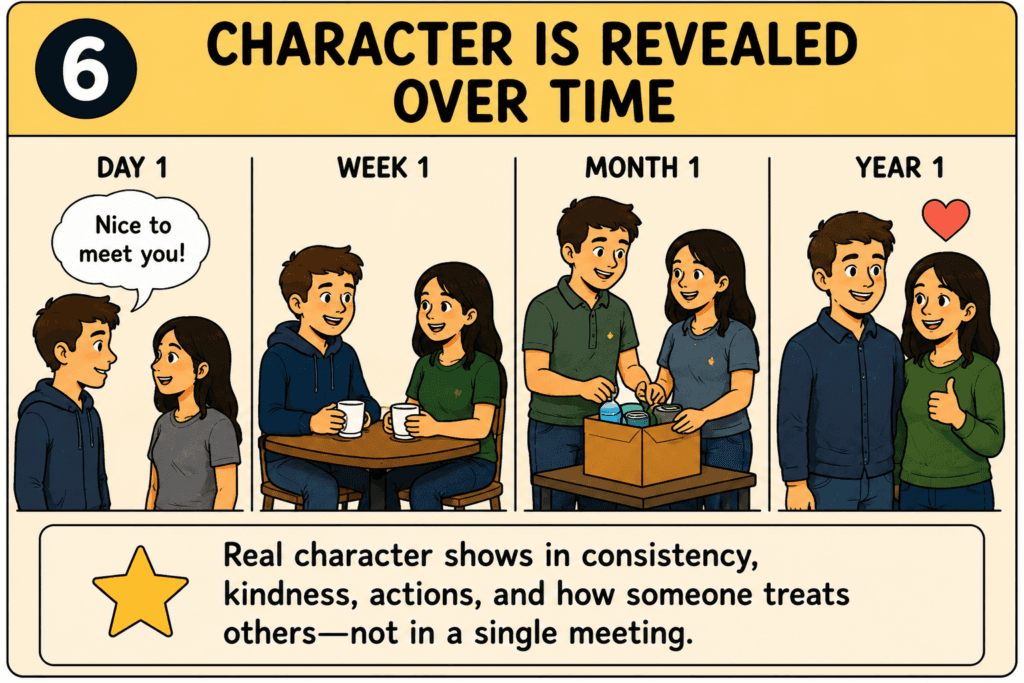
Trustworthy people earn trust through consistent behavior—not through a perfect first impression.
Final Thoughts
First impressions are useful, but they’re only a starting point—not the final verdict.
Giving people time allows you to see beyond appearances, first conversations, and assumptions.
Some of the most meaningful friendships, relationships, and partnerships begin with ordinary—or even misleading—first impressions.
The next time you meet someone new, remember that who they seem to be in the first few seconds may be very different from who they truly are.
Sometimes, the best people take time to understand.