
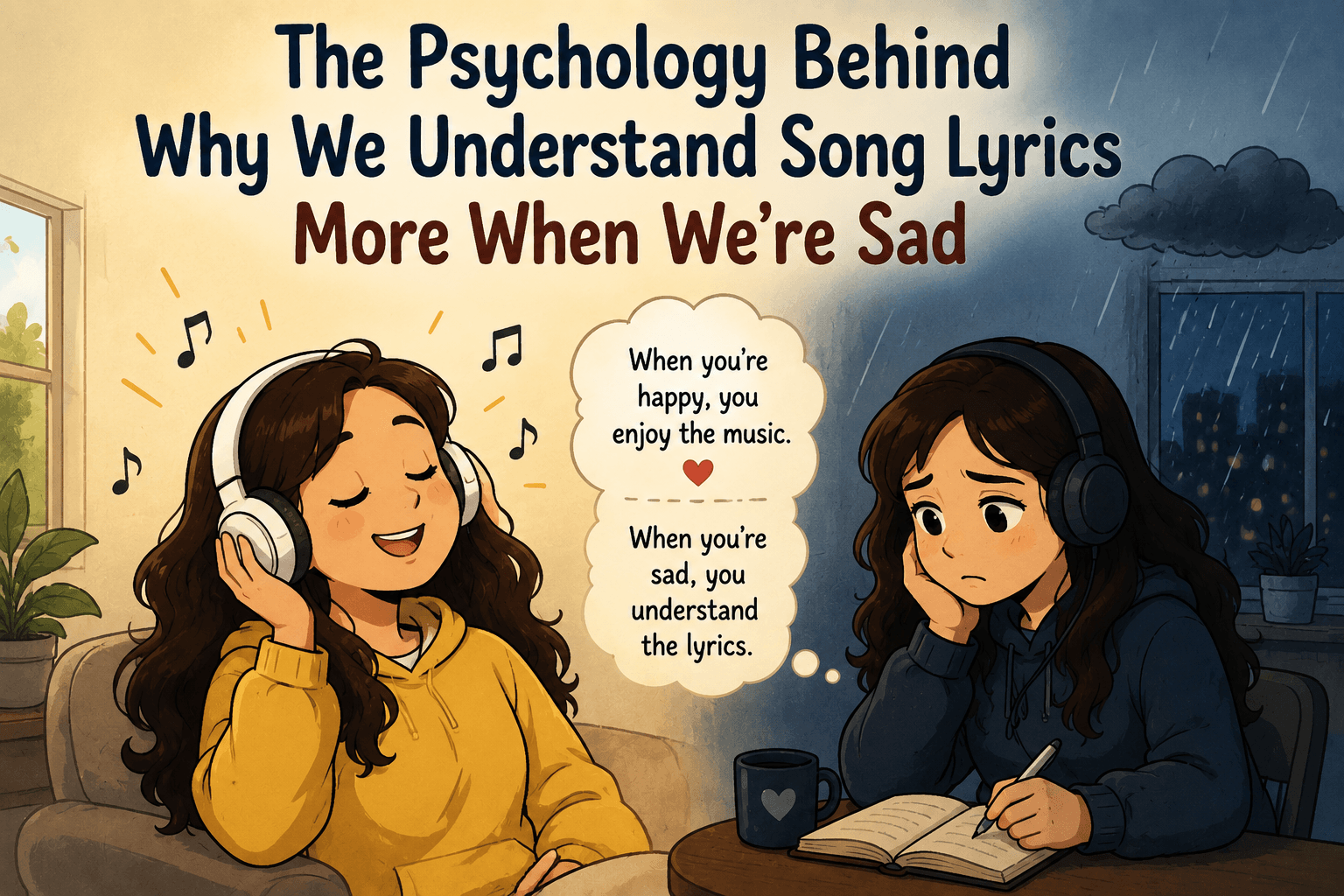
Have you ever listened to a song hundreds of times without paying much attention to the lyrics, only to hear it again after a painful experience and suddenly feel like every word was written just for you?
This is a common human experience. When we’re happy, we often enjoy a song’s melody, rhythm, and energy. But during periods of sadness, heartbreak, grief, or loneliness, our focus often shifts toward the meaning behind the words.
While not everyone experiences music the same way, psychology offers several explanations for why this happens.
1. Your Brain Pays More Attention to Emotions That Match Your Mood
Psychologists call this mood-congruent processing—where your emotional state influences the kind of information you notice and remember.
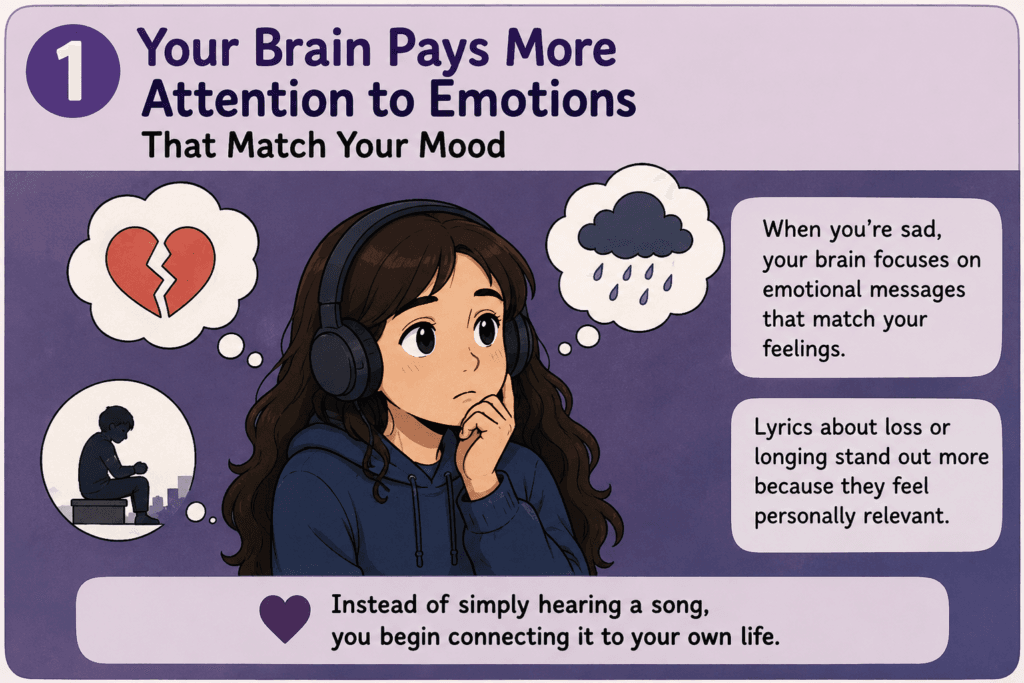
When you’re feeling sad, your brain naturally tunes into emotional messages that align with your current feelings.
Lyrics about loss, disappointment, longing, or hope may stand out because they feel personally relevant.
Instead of just hearing a song, you begin connecting it deeply to your own life.
2. Life Experience Gives Lyrics New Meaning
Many songs describe situations we may not fully grasp until we live through something similar.
A lyric about losing someone might sound poetic when you’re younger.
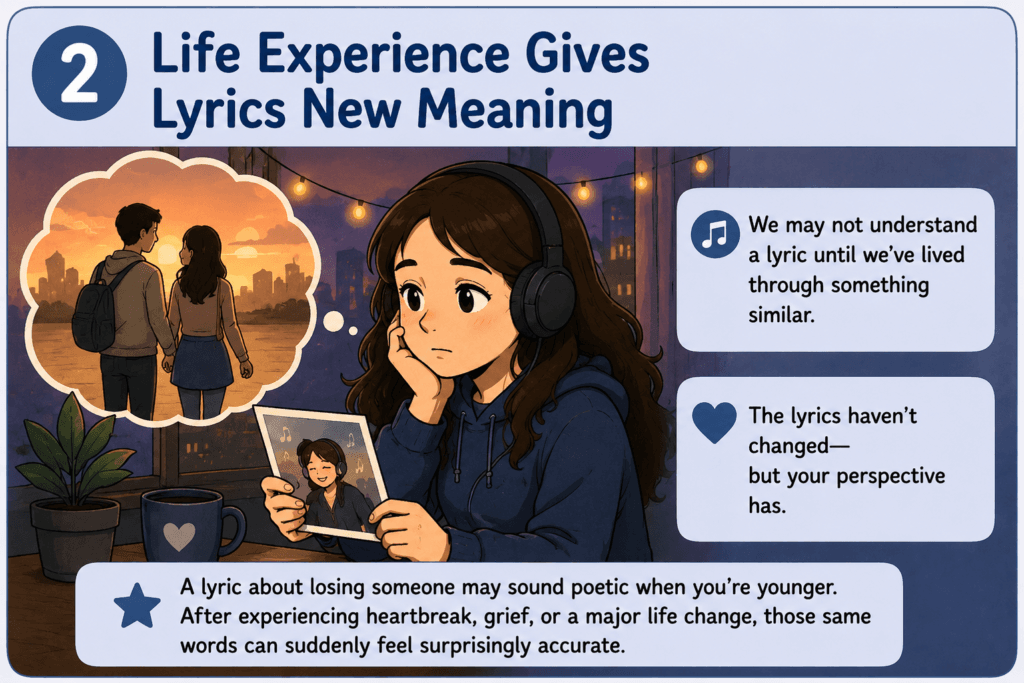
After experiencing heartbreak, grief, or a major life change, those same words can suddenly feel surprisingly accurate.
The lyrics haven’t changed—but your perspective has.
3. Music Helps You Process Difficult Emotions
People often choose music that reflects how they feel.
Listening to songs that match your emotions can help you acknowledge, understand, and process those feelings.
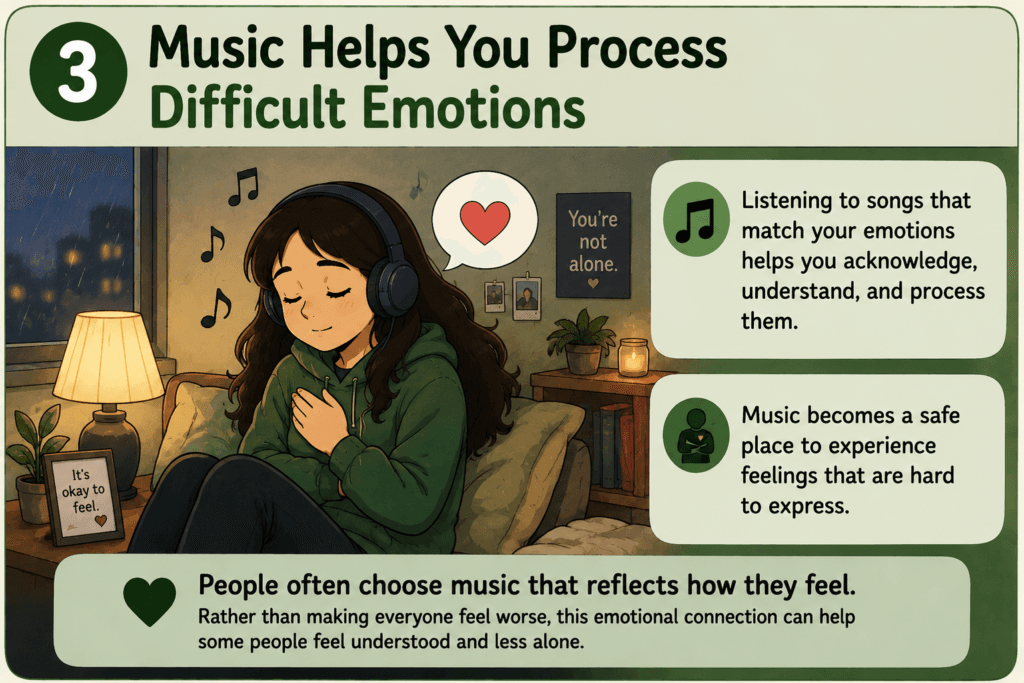
Rather than making you feel worse, this emotional connection can help you feel understood and less alone.
For many, music becomes a safe place to experience emotions that are hard to express.
4. You’re Listening More Carefully
When life is going well, many people focus on the beat, melody, or catchy chorus.
During tough emotional times, however, people tend to listen more closely to the lyrics.
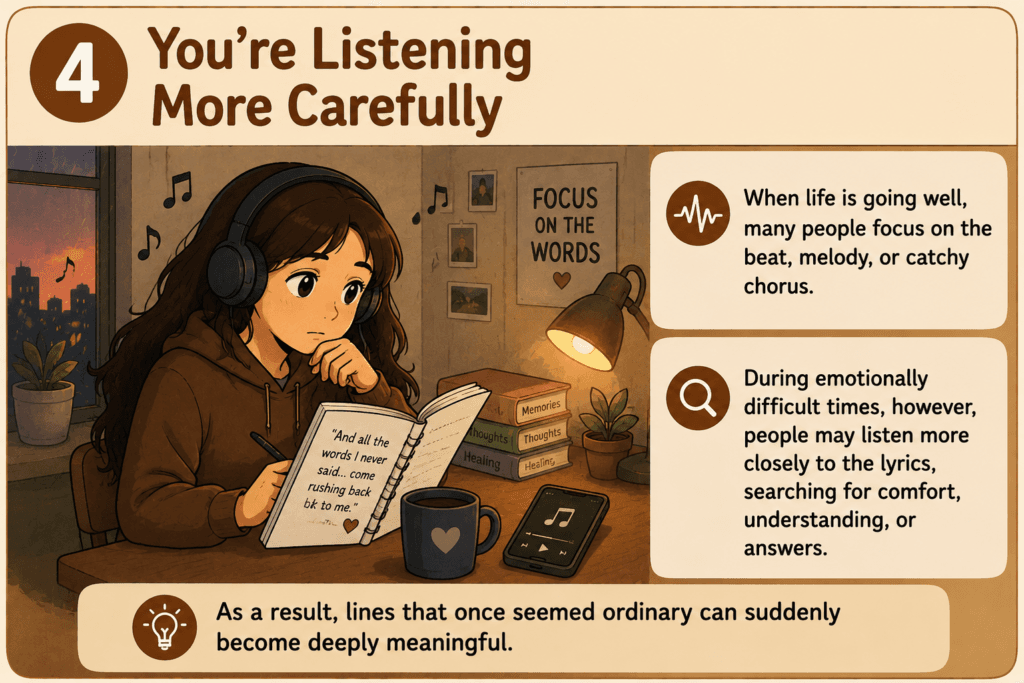
They search for comfort, understanding, or answers.
As a result, lines that once seemed ordinary can suddenly become deeply meaningful.
5. Your Memories Become Connected to the Song
Our brains naturally link music with memories.
If a particular song played during an important relationship, a difficult goodbye, or a meaningful moment, hearing it again can instantly bring back emotions tied to that experience.
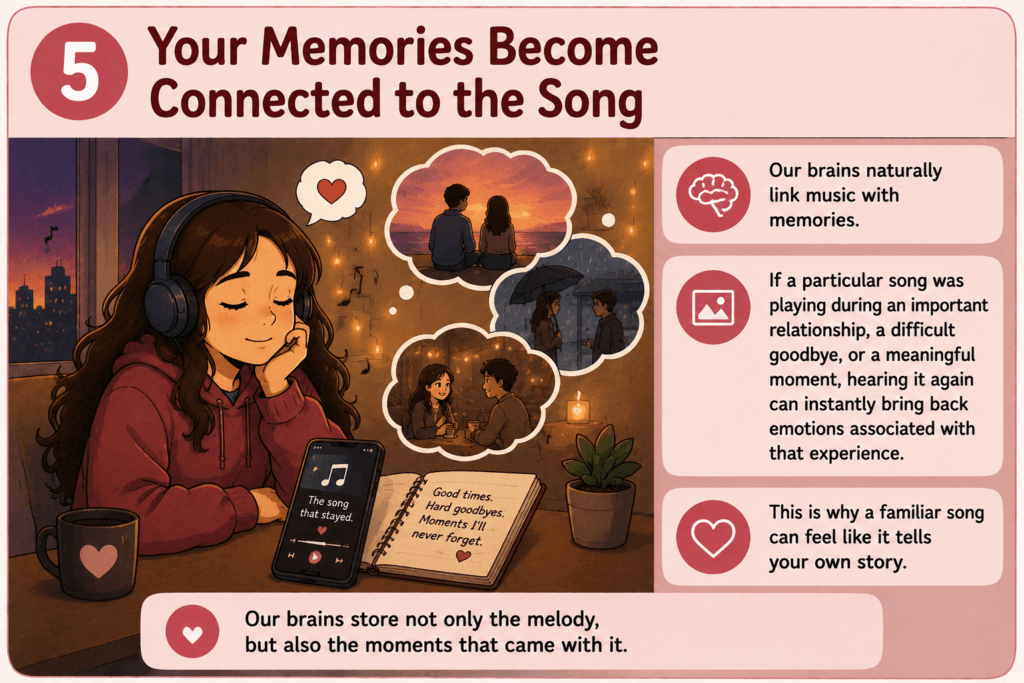
This is why a familiar song can feel like it tells your own story.
6. Feeling Understood Can Be Comforting
One reason emotional songs are so powerful is that they remind us we’re not alone.
Knowing someone else has experienced similar feelings—even through lyrics written years ago—can offer comfort and reassurance during difficult times.

Sometimes, a song expresses exactly what we struggle to put into words ourselves.
Final Thoughts
The saying, “When you’re happy, you enjoy the music. When you’re sad, you understand the lyrics,” isn’t a scientific rule, but it reflects an experience many people recognize.
Our emotions influence what we pay attention to, how we interpret words, and the meaning we give to music.
As we gain new life experiences, songs often take on entirely new significance.
Perhaps that’s why the same song can feel completely different at different stages of life.
Sometimes, the music stays exactly the same—but we don’t.