
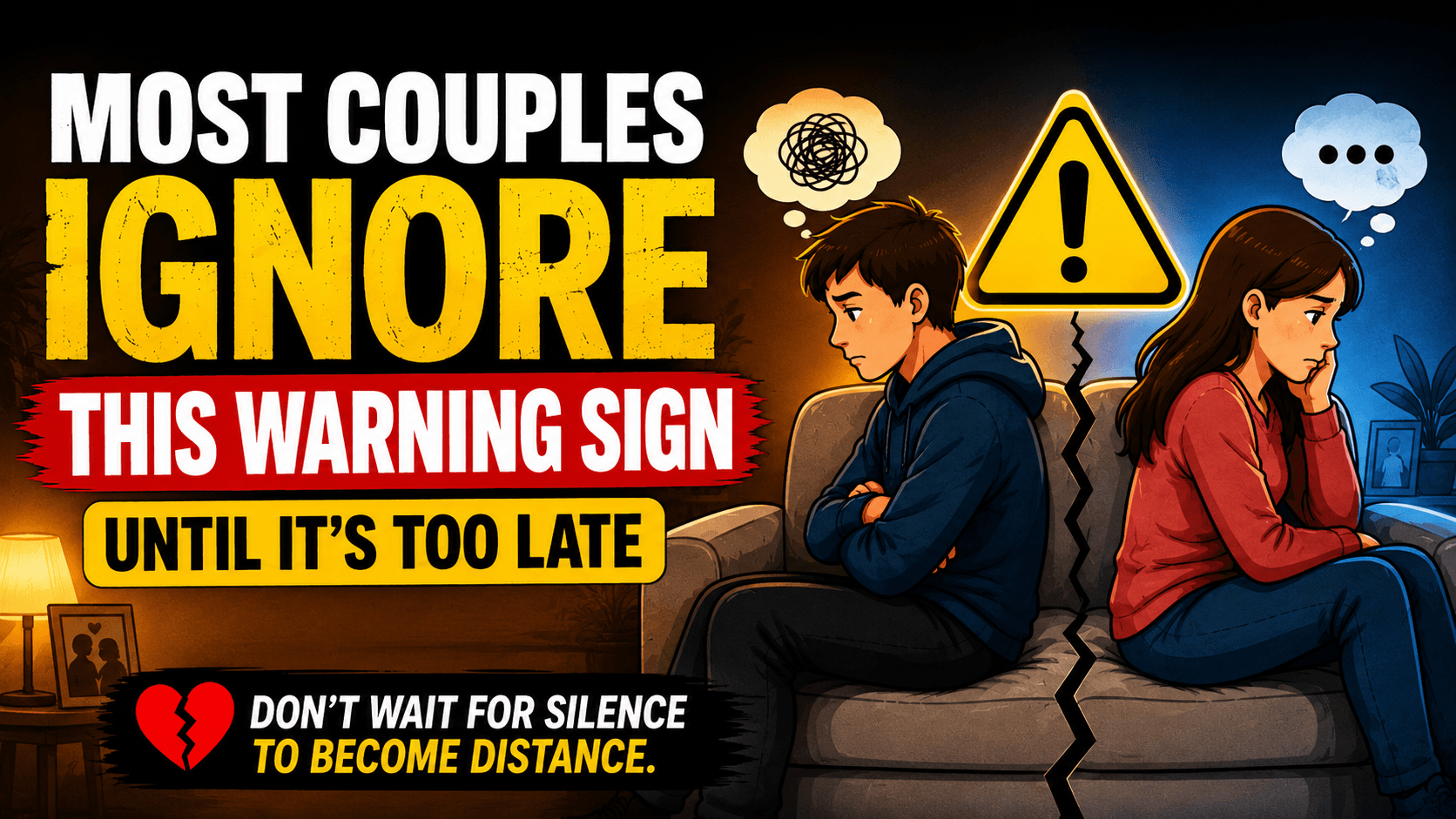
Every relationship goes through difficult seasons. Busy schedules, stress, misunderstandings, and disagreements are normal.
Because of this, many couples assume that as long as they’re not constantly arguing, everything is fine.
However, relationship psychology suggests that some of the most serious problems don’t begin with loud fights—they begin with quiet emotional distance.
Many couples fail to notice this warning sign until they suddenly feel like strangers living under the same roof.
Signs Emotional Distance May Be Quietly Growing
Paying attention early can make a difference. Here are some signs to watch for.
1. Conversations Become About Responsibilities Instead of Connection
At first, couples enjoy talking about their thoughts, dreams, and everyday experiences.
Over time, conversations may slowly shift to bills, chores, work schedules, or the children.
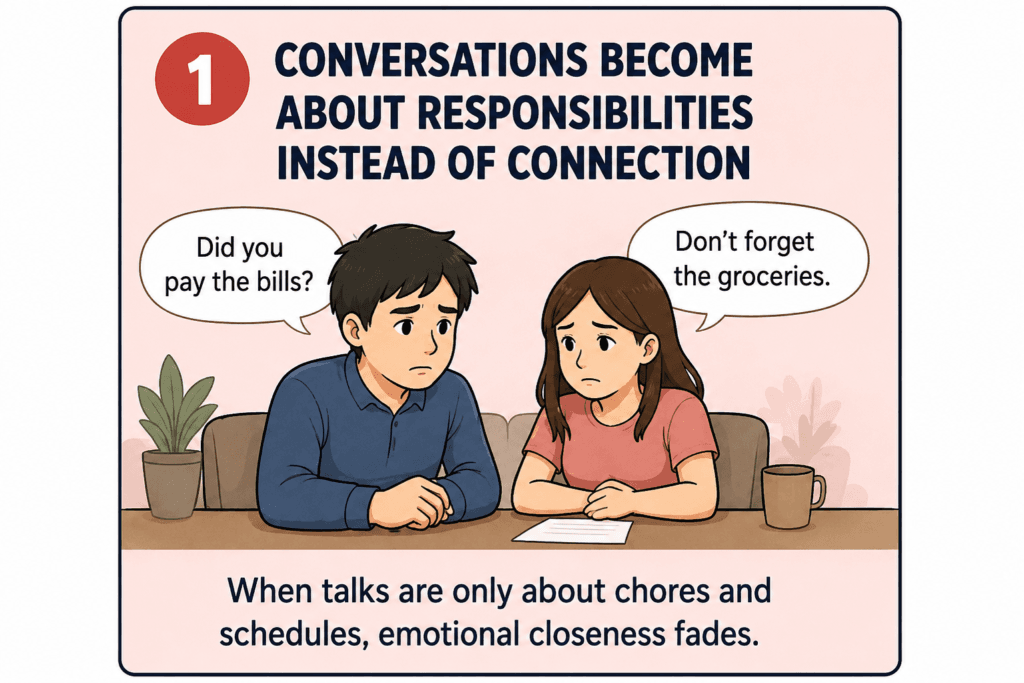
While these topics are important, a relationship can lose emotional closeness if meaningful conversations disappear completely.
Emotional connection is strengthened when partners continue showing curiosity about each other’s lives.
2. Small Acts of Affection Become Less Frequent
Physical affection isn’t only about romance.
Small gestures such as holding hands, hugging, smiling, or a gentle touch often communicate comfort and reassurance.
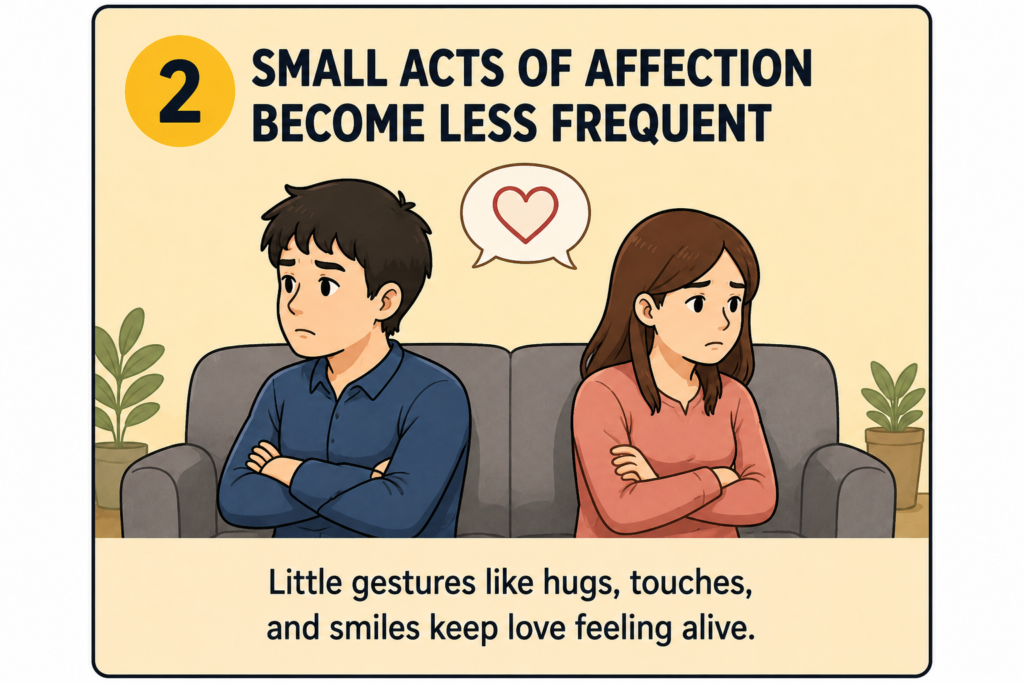
When these gestures gradually disappear without being replaced by other expressions of care, partners may start feeling emotionally disconnected.
3. You Stop Sharing The Little Things
Many people believe major secrets destroy relationships.
In reality, emotional distance often begins when couples stop sharing ordinary moments.
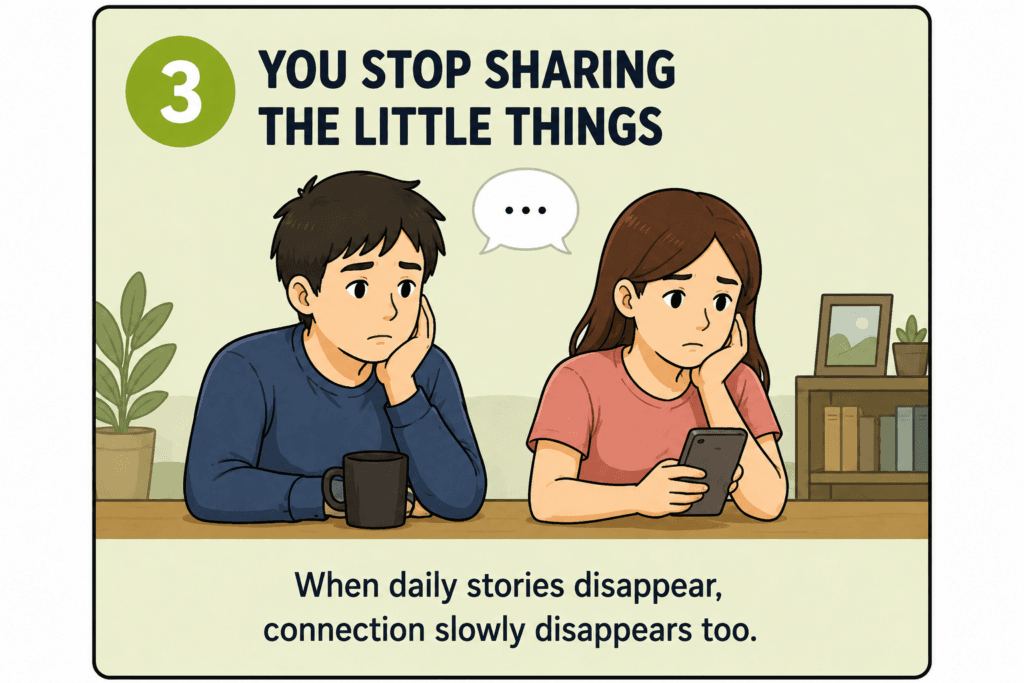
Talking about something funny that happened at work, a stressful day, or an exciting idea helps maintain emotional intimacy.
When these daily conversations disappear, the relationship may slowly feel less connected.
4. Conflicts Are Replaced By Indifference
Many assume that fewer arguments always mean a healthier relationship.
Sometimes that’s true.
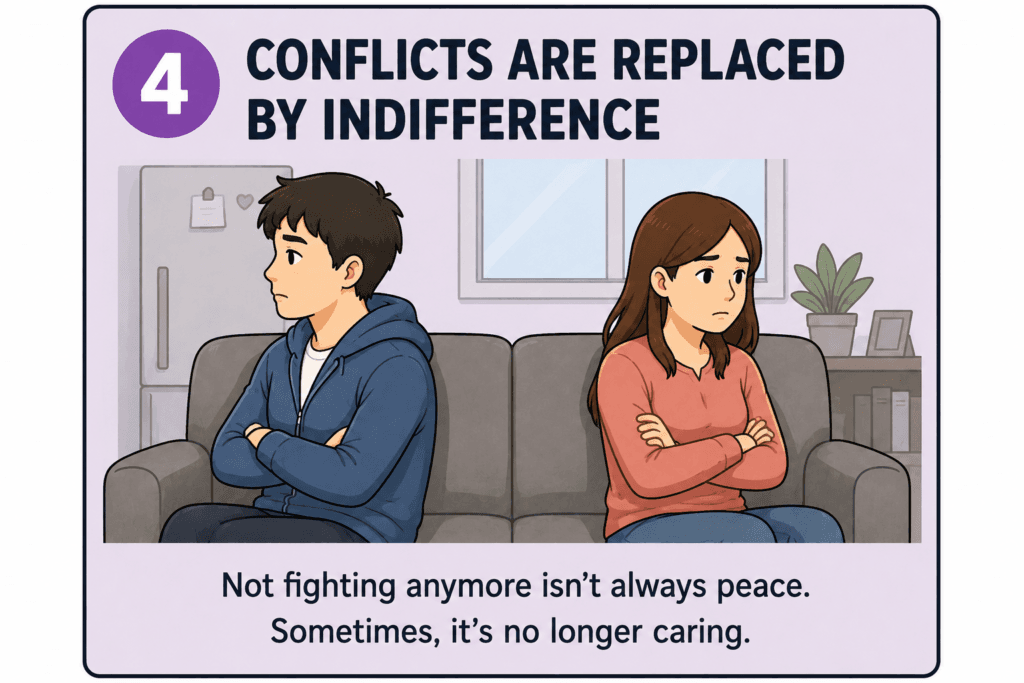
But psychology also suggests there’s an important difference between peace and indifference.
If one or both partners stop caring enough to discuss problems, the silence may reflect emotional withdrawal rather than harmony.
5. You No Longer Look Forward To Spending Time Together
Healthy couples don’t need to be together every moment. Personal space is normal and important.

However, if spending time together begins to feel like an obligation instead of something both people genuinely enjoy, it may be worth asking why the emotional connection has weakened.
6. Repair Attempts Become Less Common
No relationship is free from misunderstandings.
What matters most is how couples reconnect afterward.
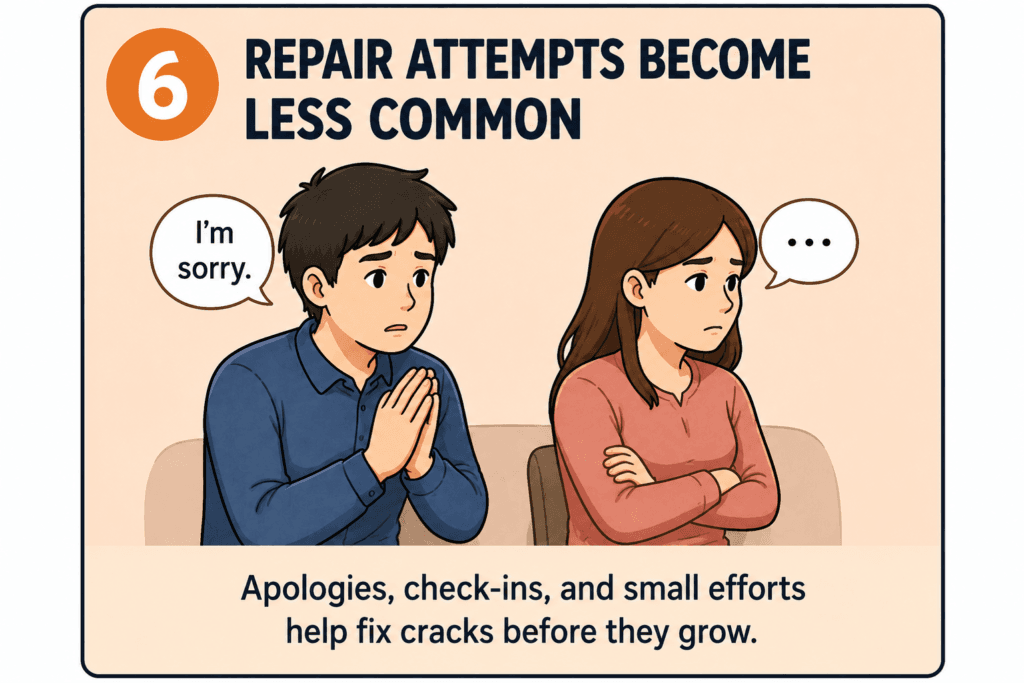
Simple actions such as apologizing, checking in, giving a hug, or trying to make each other smile often help repair emotional closeness.
When neither person makes an effort to reconnect after disagreements, unresolved distance can continue growing.
7. Emotional Distance Usually Grows Slowly
One of the biggest reasons couples miss this warning sign is because it rarely appears overnight.
The changes are often subtle—a few fewer conversations, a little less affection, slightly less excitement about seeing each other.
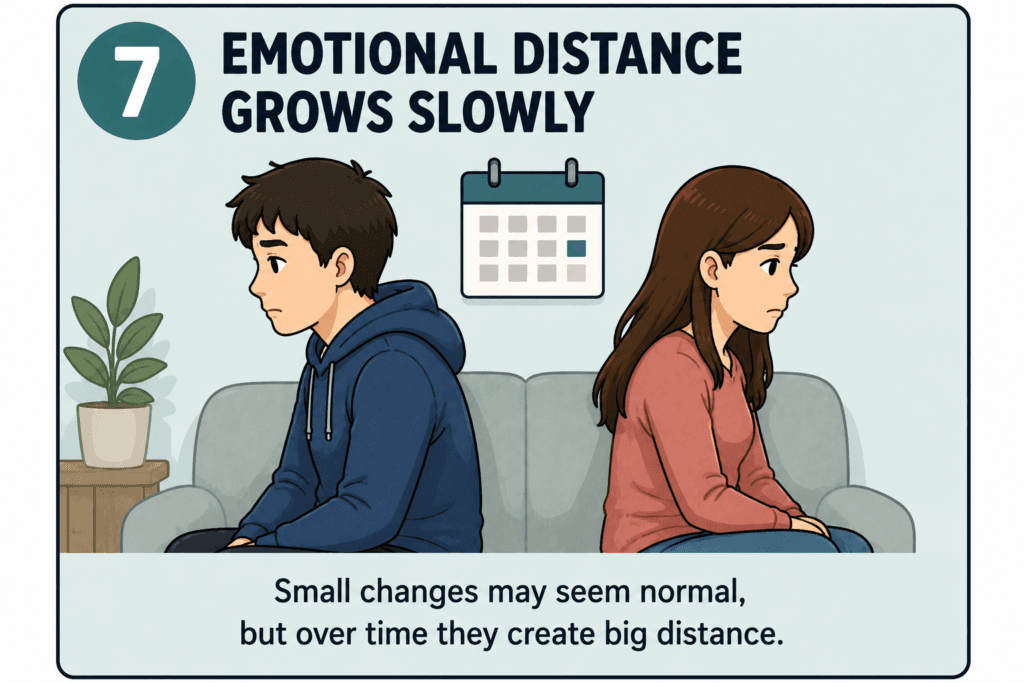
Each change may seem insignificant, but over months or years they can gradually weaken the relationship if left unaddressed.
Final Thoughts
The greatest warning sign in many relationships isn’t constant fighting—it’s slow emotional disconnection.
Most couples don’t notice it because it develops quietly through small daily habits rather than dramatic events.
The good news is that emotional closeness can often be rebuilt.
Honest communication, quality time, small acts of affection, and consistent effort can help partners reconnect before the distance becomes too great.
Recognizing the warning signs early isn’t about expecting the worst—it’s about giving the relationship the attention it deserves before “too late” ever arrives.