
For Years, People Have Said: “Looks Don’t Matter.” Psychology Suggests Otherwise
The Influence of Physical Attractiveness
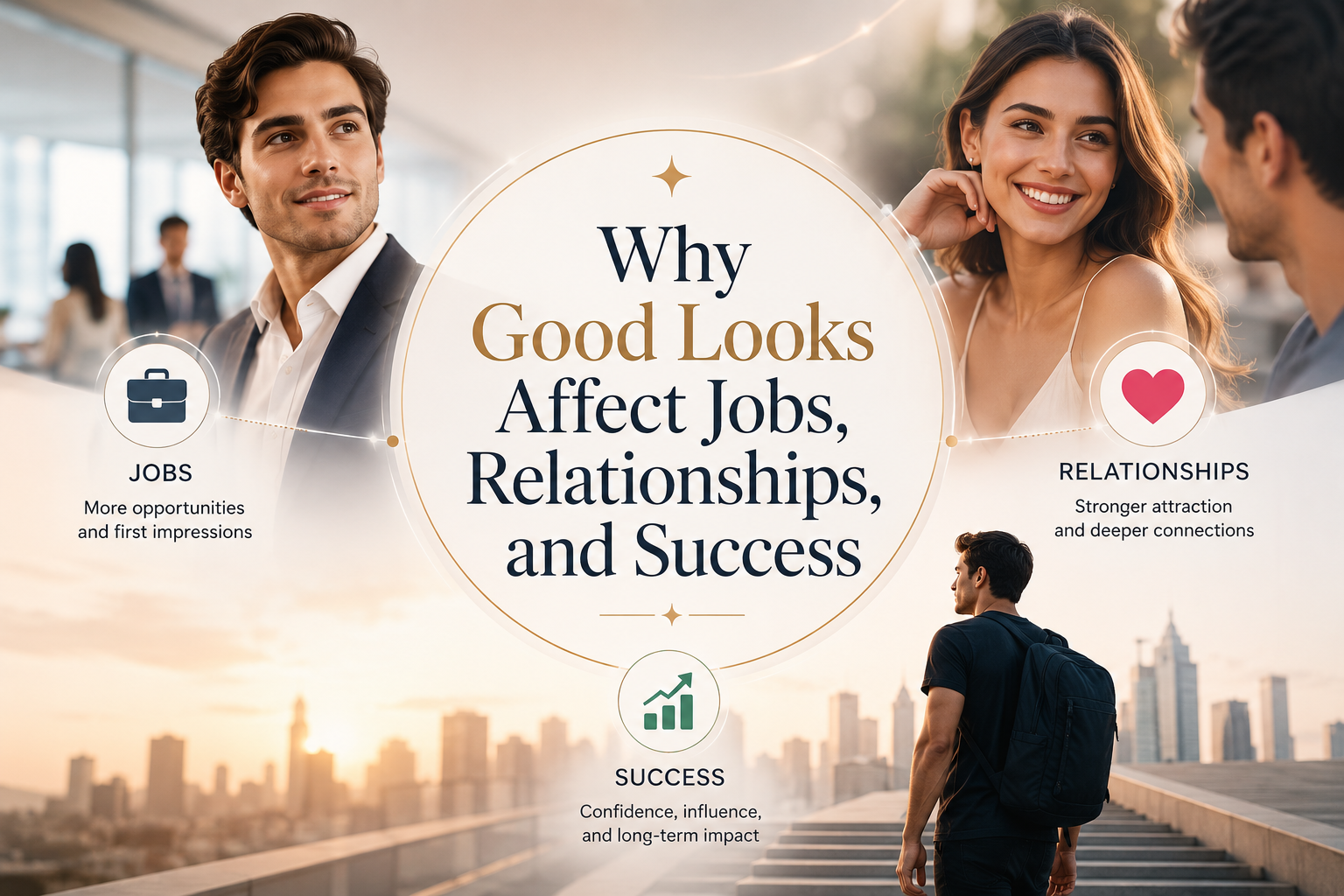
Research consistently shows that physical attractiveness affects how people are treated in daily life. This impact ranges from job interviews and relationships to social media attention and even public reactions to crimes.
This effect is often linked to a psychological bias called the halo effect.
What Is the Halo Effect?
The halo effect is a mental shortcut where people assume that someone who looks attractive also possesses other positive traits.
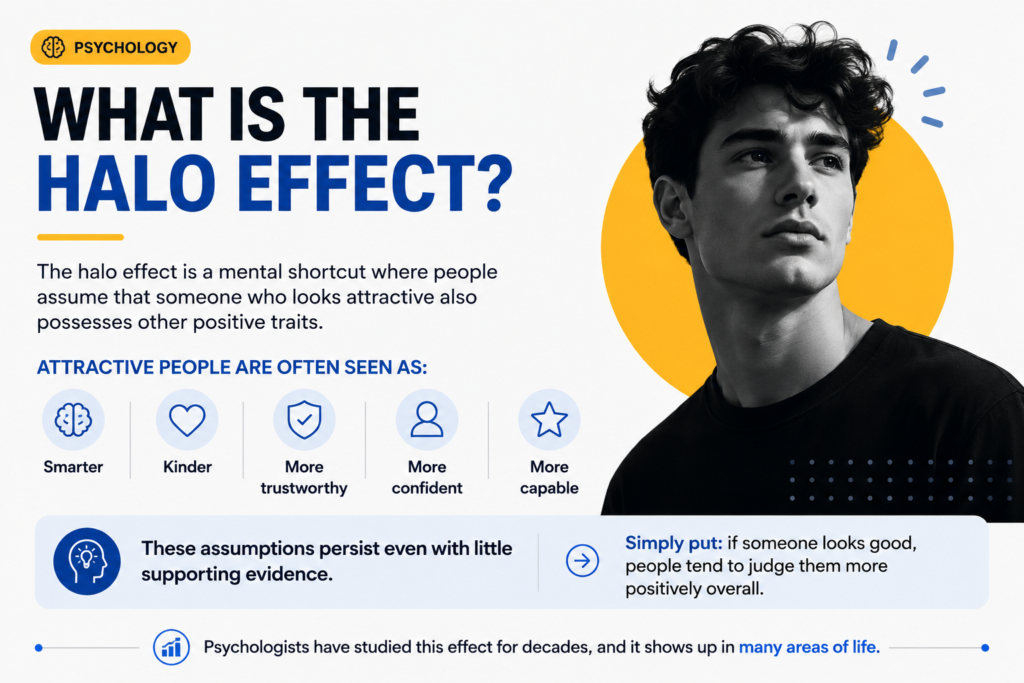
Attractive people are often unconsciously seen as:
- Smarter
- Kinder
- More trustworthy
- More confident
- More capable
These assumptions persist even with little supporting evidence.
Simply put: if someone looks good, people tend to judge them more positively overall.
Psychologists have studied this effect for decades, and it shows up in many areas of life.
How Good Looks Affect Jobs and Careers
Studies reveal that attractive individuals are often:
- More likely to be hired
- Viewed as more professional
- Remembered more easily during interviews
- Sometimes offered higher salaries
Appearance influences first impressions, which strongly shape human judgment.
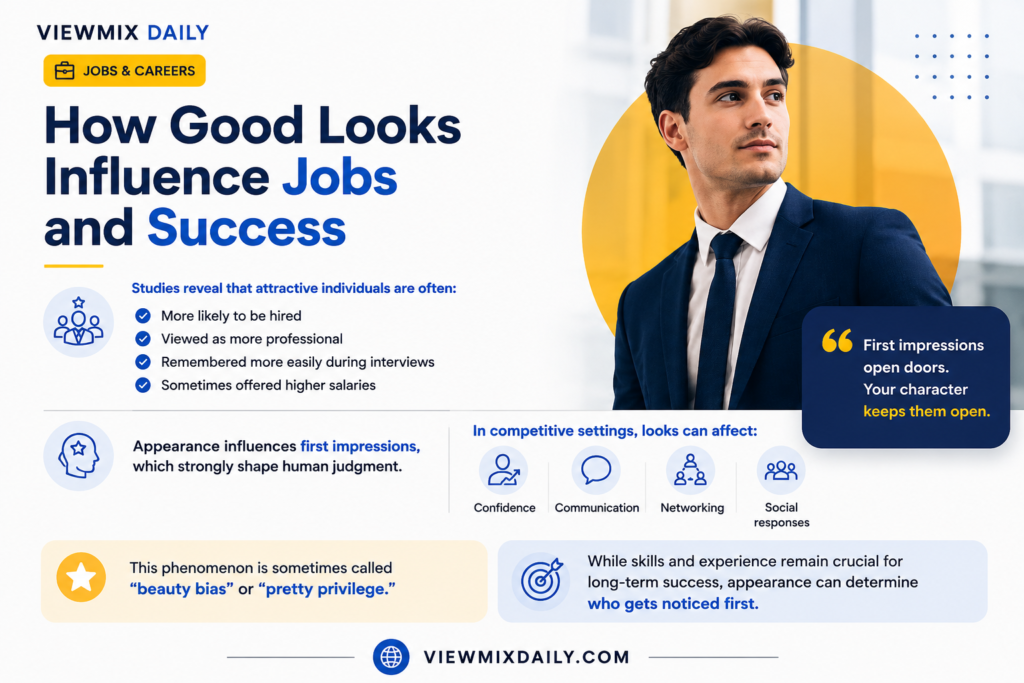
In competitive settings, looks can affect:
- Confidence
- Communication
- Networking
- Social responses
This phenomenon is sometimes called “beauty bias” or “pretty privilege.”
While skills and experience remain crucial for long-term success, appearance can determine who gets noticed first.
Attraction and Relationships
Physical attractiveness plays a key role in dating and relationships.
Humans naturally focus on appearance because attraction is part of social and biological behavior.
Research suggests attractive people may:
- Receive more romantic attention
- Gain followers faster on social media
- Get more compliments and validation
- Experience easier first interactions
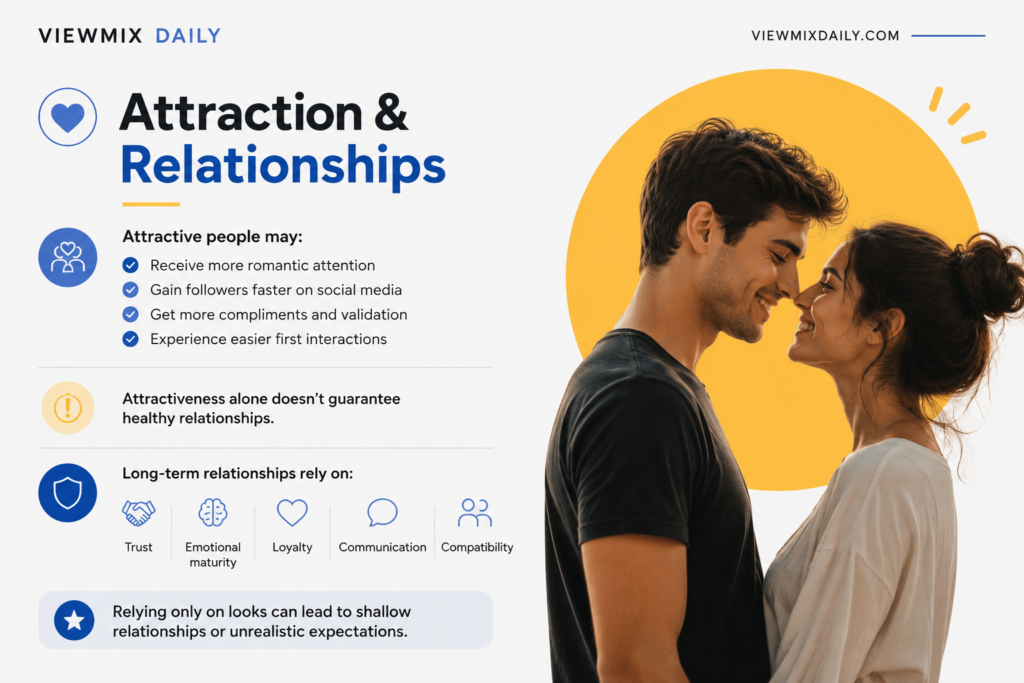
However, attractiveness alone doesn’t guarantee healthy relationships.
Long-term partnerships rely on:
- Trust
- Emotional maturity
- Loyalty
- Communication
- Compatibility
Relying only on looks can lead to shallow relationships or unrealistic expectations.
Social Media and Online Attention
In today’s digital world, appearance can shape online visibility.
On platforms like TikTok, Instagram, and Facebook:
- Attractive creators often gain attention faster
- Receive more engagement
- Are sometimes judged more positively
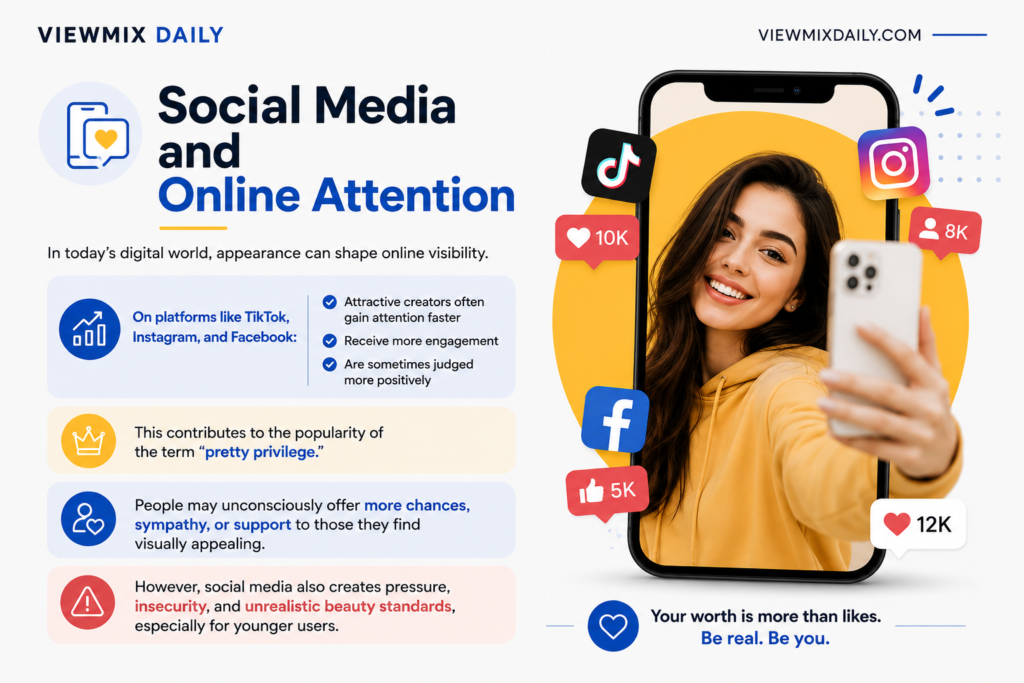
This contributes to the popularity of the term “pretty privilege.”
People may unconsciously offer more chances, sympathy, or support to those they find visually appealing.
However, social media also creates pressure, insecurity, and unrealistic beauty standards, especially for younger users.
Does Appearance Affect Crime and Public Judgment?
This is a controversial aspect of attractiveness bias.
Some studies suggest attractive individuals are judged less harshly for certain non-violent offenses.
People may unconsciously think:
- “They don’t look dangerous.”
- “Maybe they had a reason.”
- “They seem innocent.”
Online, attractive suspects sometimes receive jokes, sympathy, fan comments, or viral attention instead of condemnation.
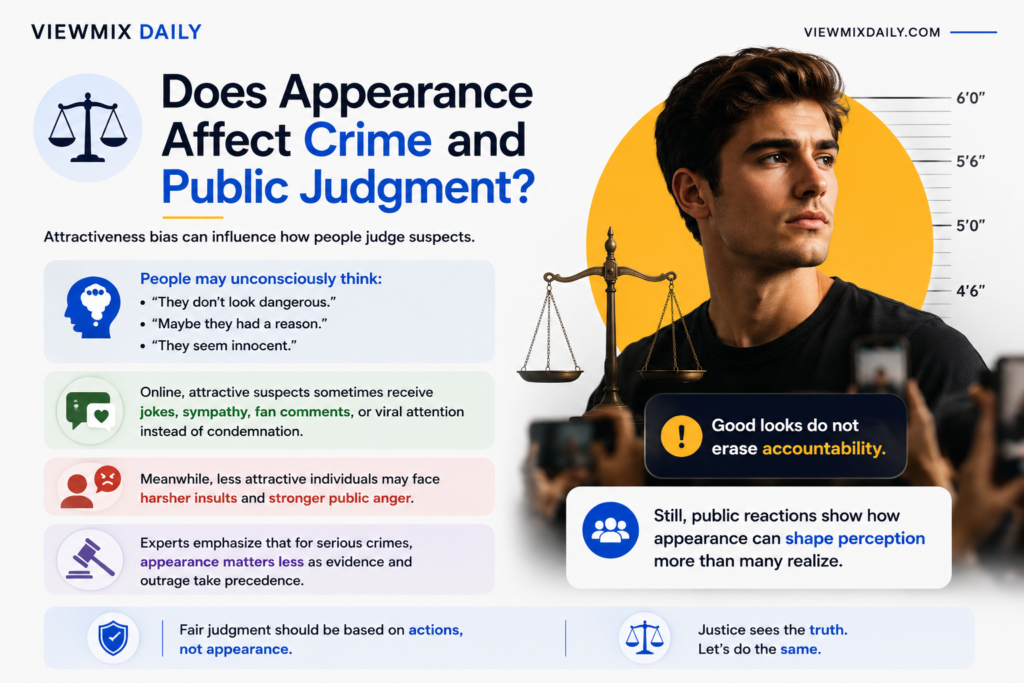
Meanwhile, less attractive individuals may face harsher insults and stronger public anger.
Experts emphasize that for serious crimes, appearance matters less as evidence and outrage take precedence.
Good looks do not erase accountability.
Still, public reactions show how appearance can shape perception more than many realize.
Confidence vs. Appearance
Confidence is another important factor.
Some psychologists believe attractive people develop stronger confidence because they often receive:
- Positive attention
- Social validation
- Better treatment growing up
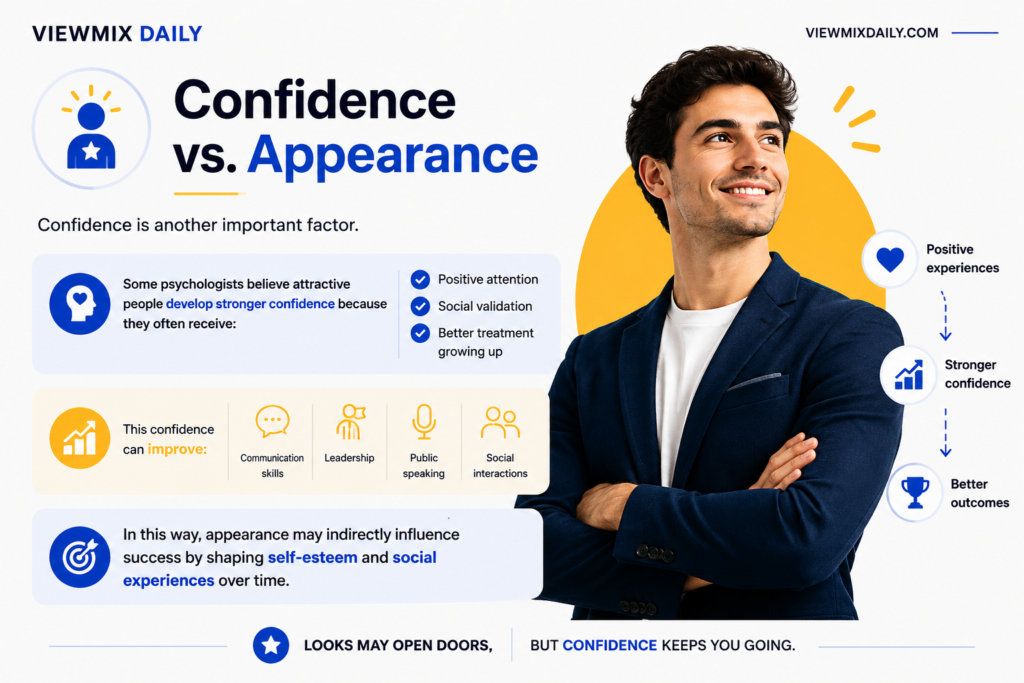
This confidence can improve:
- Communication skills
- Leadership
- Public speaking
- Social interactions
In this way, appearance may indirectly influence success by shaping self-esteem and social experiences over time.
The Dangerous Side of Beauty Bias
While attractiveness can offer advantages, beauty bias can also be unfair.
It may cause people to:
- Underestimate others
- Ignore qualifications
- Make shallow judgments
- Treat people unequally
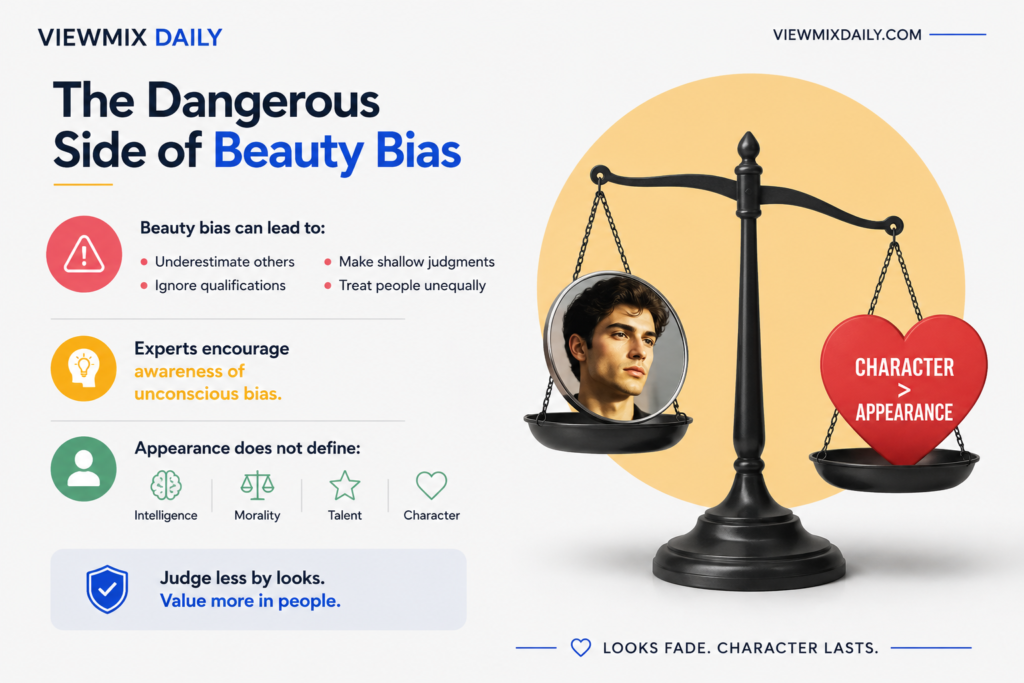
This is why experts encourage awareness of unconscious bias.
A person’s appearance does not define:
- Intelligence
- Morality
- Talent
- Character
Final Thoughts
Good looks influence many parts of life:
- Jobs
- Dating
- Online attention
- Confidence
- Public judgment
Psychology explains this through the halo effect and attractiveness bias.
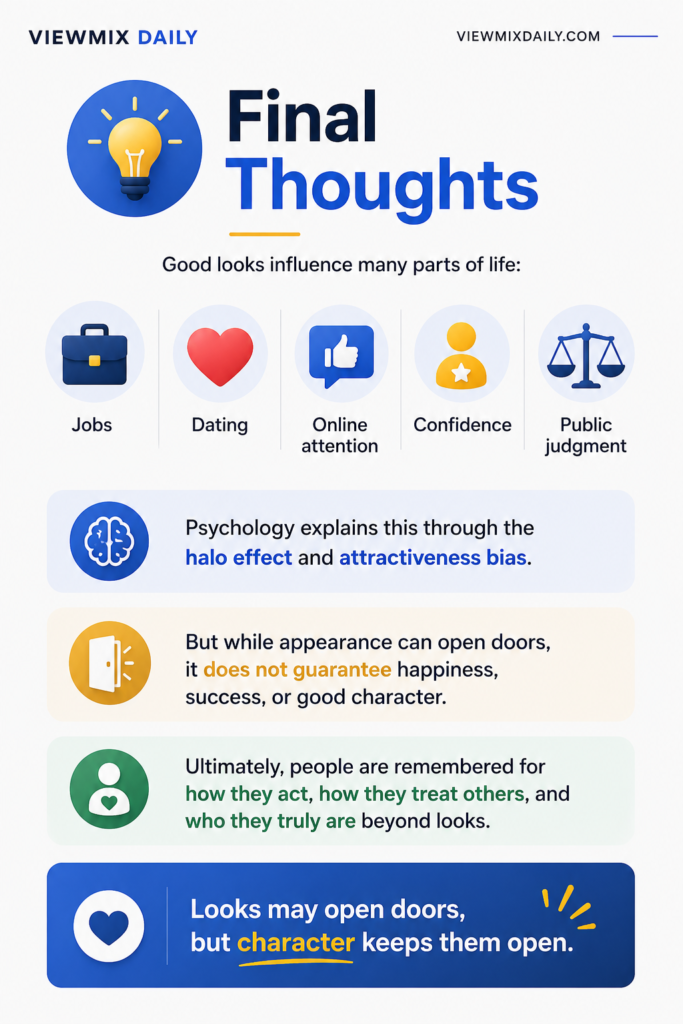
But while appearance can open doors, it does not guarantee happiness, success, or good character.
Ultimately, people are remembered for how they act, how they treat others, and who they truly are beyond looks.