
Many people grow up believing that finding “the one” is the key to a happy life. Movies, social media, and family expectations often suggest that being single means something is missing.
But is that really true?
Psychology and decades of research offer a more balanced answer: a romantic partner can add to your happiness, but they are not the only path to a fulfilling life.
What matters most is the quality of your relationships, your sense of purpose, and how you care for yourself.
Key Insights from Psychology
1. Happiness Doesn’t Depend on Relationship Status
Being in a relationship does not automatically make someone happier.
Some couples enjoy loving, supportive relationships, while others experience stress, conflict, or loneliness despite having a partner.
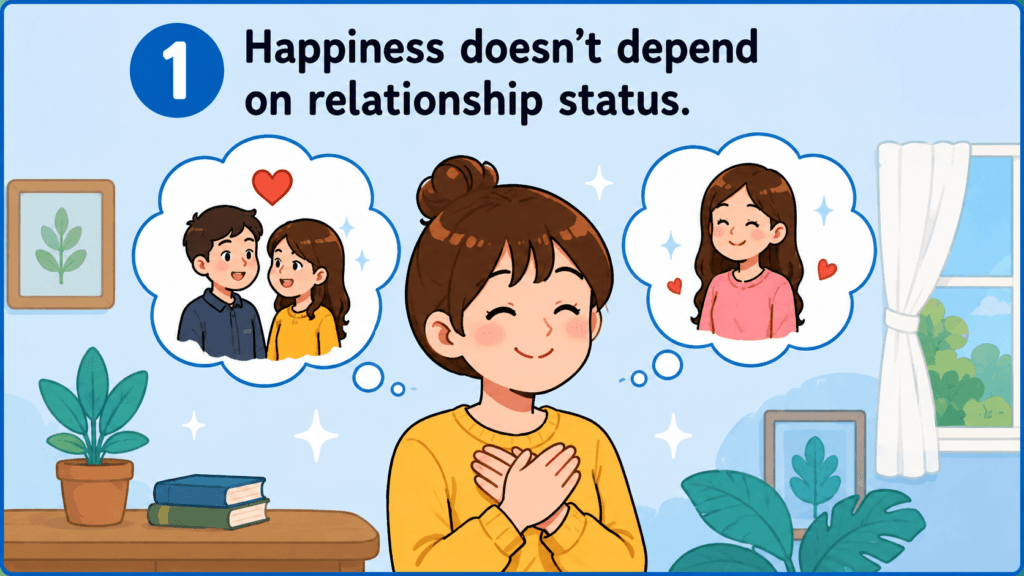
Research shows that the quality of a relationship matters far more than simply being in one.
A healthy relationship can improve well-being, but an unhealthy one can reduce it.
2. Humans Need Connection, Not Just Romance
People are naturally social and thrive when they have meaningful relationships.
These relationships don’t have to be romantic.
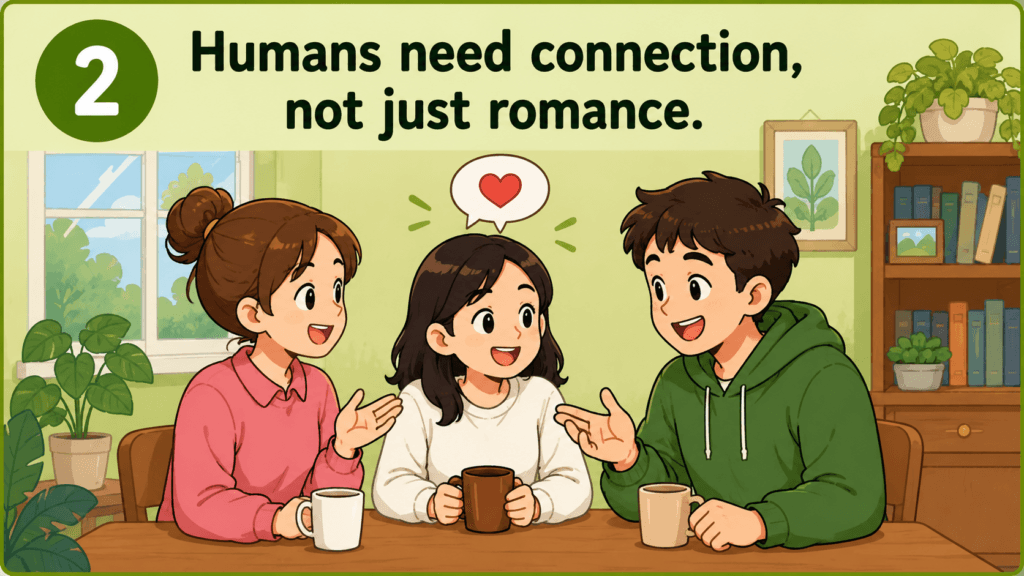
Close friendships, supportive family members, trusted coworkers, and strong communities can all provide love, encouragement, and a sense of belonging.
Emotional connection comes in many forms.
3. Learning to Enjoy Your Own Company Builds Confidence
People comfortable spending time alone often develop greater self-awareness and emotional independence.
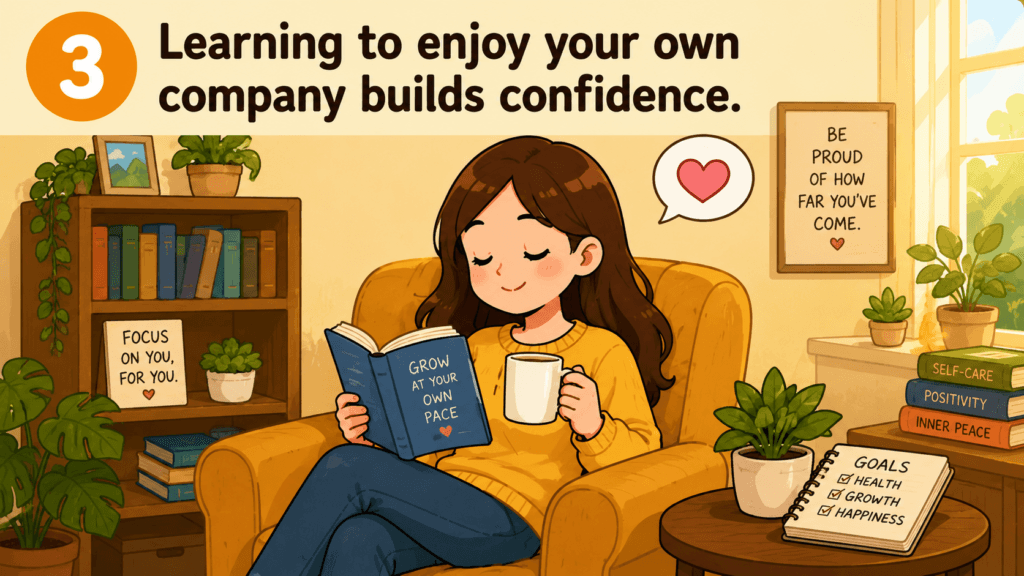
Instead of relying on someone else for happiness, they discover hobbies, goals, and interests that make life meaningful.
This confidence can improve every future relationship they choose to have.
4. A Bad Relationship Is Often Worse Than Being Single
Many people stay in unhealthy relationships out of fear of being alone.
Psychology suggests that chronic conflict, manipulation, disrespect, or emotional neglect can be more damaging than living a peaceful single life.
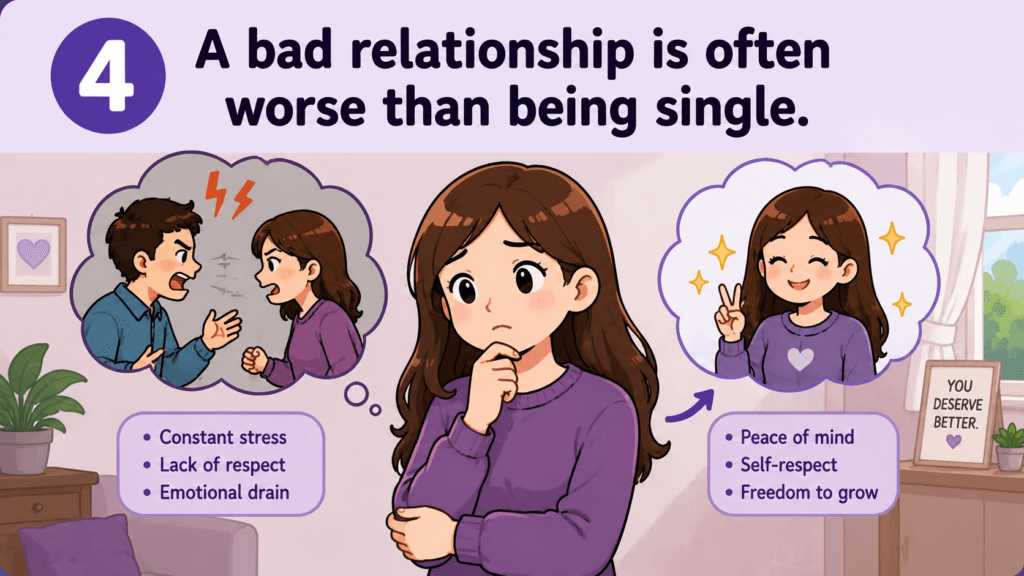
Protecting your emotional well-being is more important than maintaining a relationship at any cost.
5. Purpose Gives Life Meaning
A meaningful life is built on more than romance.
Personal growth, meaningful work, helping others, learning new skills, traveling, creating art, or pursuing long-term goals all contribute to lasting happiness.
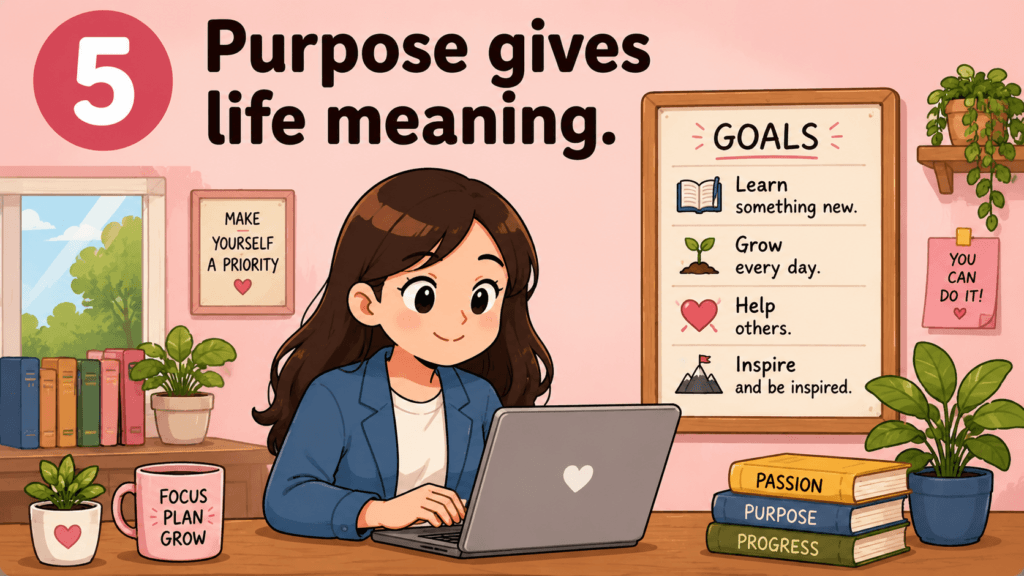
Purpose provides satisfaction that isn’t dependent on another person.
6. A Healthy Partner Complements Your Life—They Don’t Complete It
The idea that another person “completes” you sounds romantic, but psychology tells a different story.
The healthiest relationships involve two individuals who already have their own identities, values, and interests.

They support each other’s growth instead of relying on one another to fill every emotional need.
7. Love Is Wonderful, but It Isn’t the Only Measure of Success
Society often celebrates marriage and romantic relationships as major life achievements.
While love can be deeply rewarding, it isn’t the only way to live a successful life.
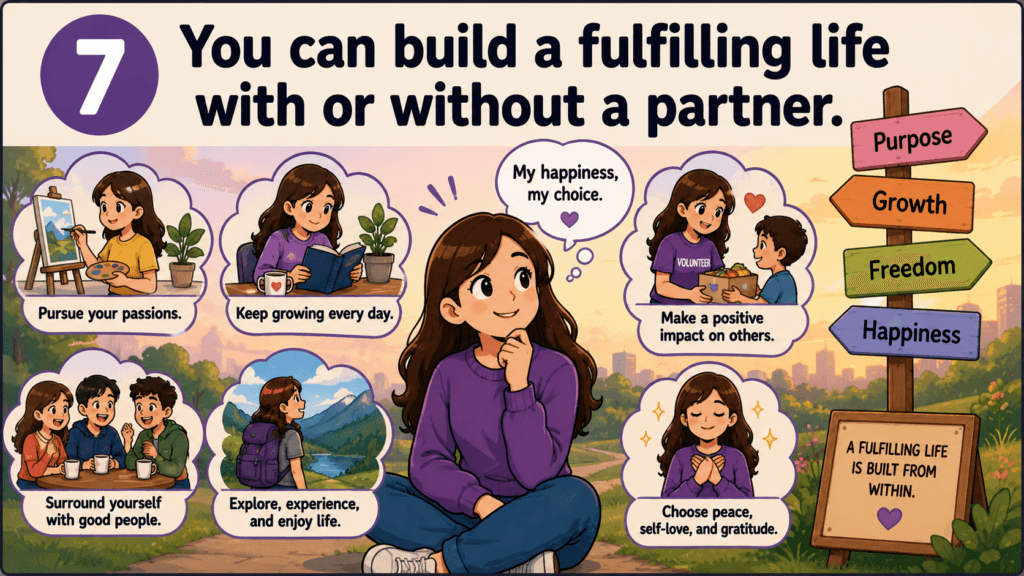
A person can build strong friendships, enjoy good health, achieve meaningful goals, and make a positive impact regardless of romantic involvement.
Final Thoughts
Can you live a happy life without a partner? Yes.
But happiness doesn’t come from avoiding relationships or chasing them at all costs.
It comes from building meaningful connections, living according to your values, taking care of your mental and physical health, and finding purpose in everyday life.
If the right partner comes along, they can make life’s journey richer and more enjoyable.
But your happiness should never depend entirely on someone else’s presence.
A fulfilling life begins with valuing yourself, nurturing healthy relationships of every kind, and creating a life that feels meaningful—whether you’re single or in a relationship.