
Age doesn’t determine whether a relationship will succeed. Many couples with significant age differences build loving and lasting connections, while others face challenges that require understanding and compromise.
An age-gap relationship is not automatically better or worse than one between people of the same age. What matters most is how two people communicate, support one another, and work through life’s challenges together.
Dating someone older can come with unique advantages and difficulties that are worth understanding. Being aware of these differences helps you enter relationships with realistic expectations and make decisions based on compatibility rather than assumptions.
If you’re thinking about dating someone older, here are some potential ups and downs to consider.
1. Greater Life Experience
Up
An older partner may have gained valuable life experience that helps them handle challenges with patience and perspective.
They may have learned important lessons from previous relationships, career experiences, personal setbacks, and everyday responsibilities.
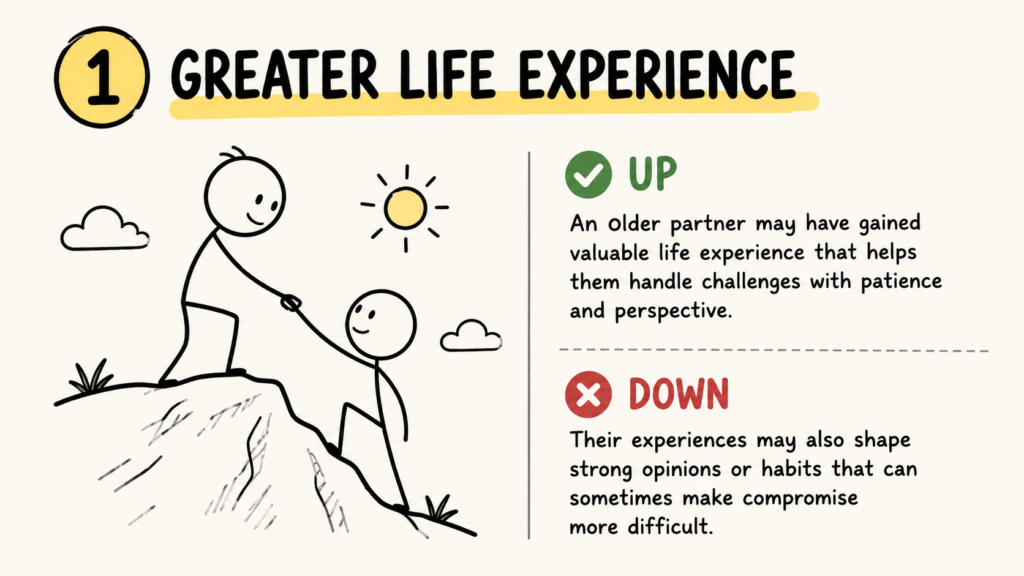
This often means they approach problems calmly and offer helpful guidance when making important life decisions.
Down
Their experiences might also lead to strong opinions or long-established habits that can make compromise more difficult.
After years of living a certain way, changing routines or accepting different viewpoints might not come easily.
Patience and flexibility are essential to avoid conflicts over everyday decisions and lifestyle preferences.
2. Clearer Relationship Goals
Up
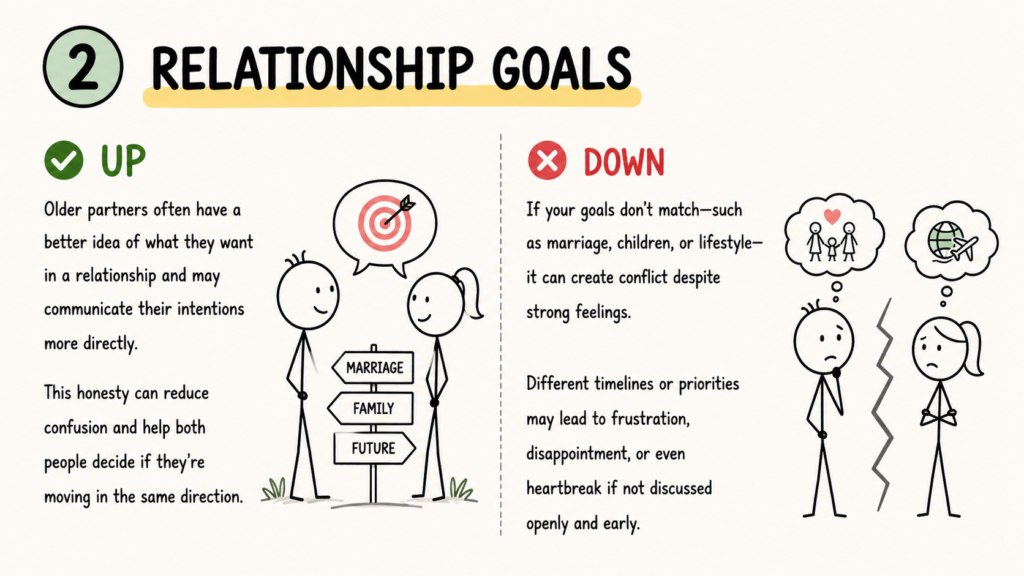
Older partners often have a clearer idea of what they want in a relationship and communicate their intentions more directly.
They may know whether they’re seeking a long-term commitment, marriage, or simply a compatible life partner.
This honesty can reduce confusion and help both people decide if they’re heading in the same direction.
Down
If your goals don’t align—such as views on marriage, children, career, or lifestyle—it can create conflict despite strong feelings.
One partner might be ready to settle down while the other wants to explore different opportunities or focus on personal growth.
These differences require honest conversations early on to navigate successfully.
3. Emotional Maturity
Up
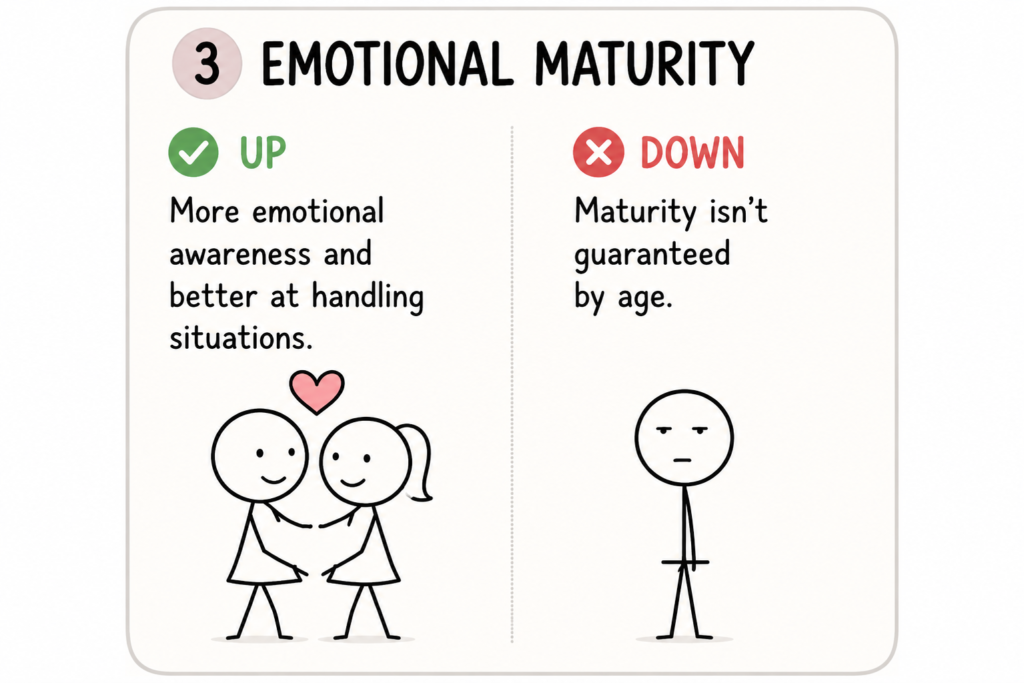
Many older adults develop healthier communication skills and better emotional control over time.
They tend to listen more, express feelings respectfully, and resolve disagreements without unnecessary drama.
Life experience often leads to greater patience, understanding, and emotional resilience.
Down
Emotional maturity varies widely, so age alone doesn’t guarantee a healthy relationship.
Some older individuals may still struggle with jealousy, poor communication, or unresolved emotional issues.
It’s important to evaluate behavior and character rather than assume maturity based on age.
4. Financial Stability
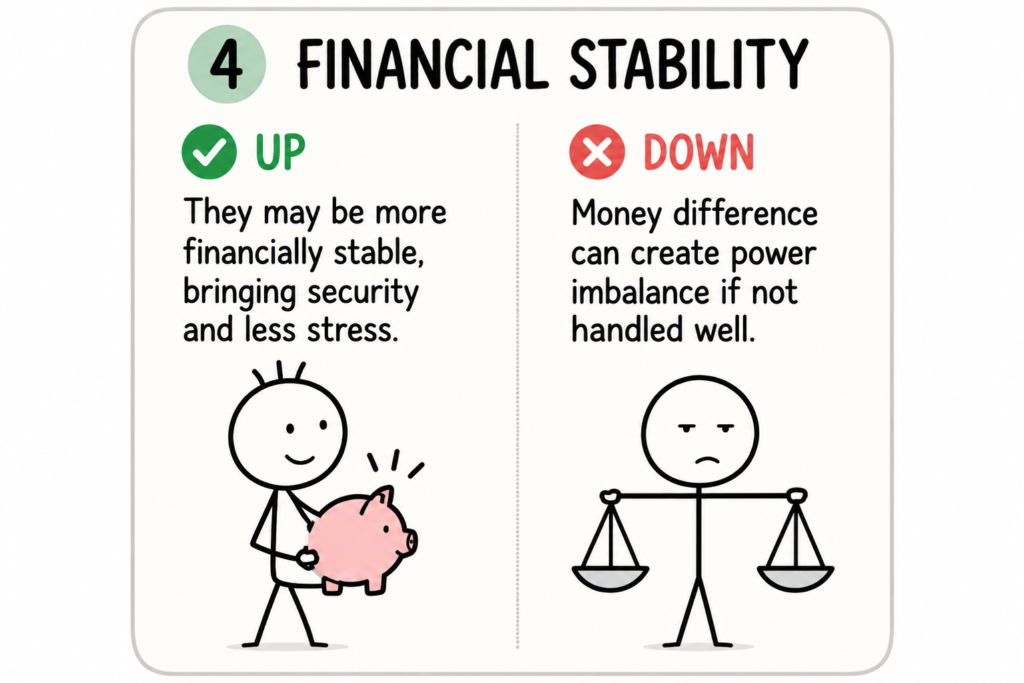
Up
An older partner may be more financially established, which can reduce life stresses.
They might have a stable career, savings, and a better understanding of budgeting and financial planning.
This can create greater security when planning a future together.
Down
Differences in income or financial experience can sometimes create unhealthy power imbalances.
If one person controls most financial decisions, the other might feel dependent or less able to express opinions.
Healthy relationships promote teamwork, transparency, and shared decision-making regardless of income.
5. Different Life Stages
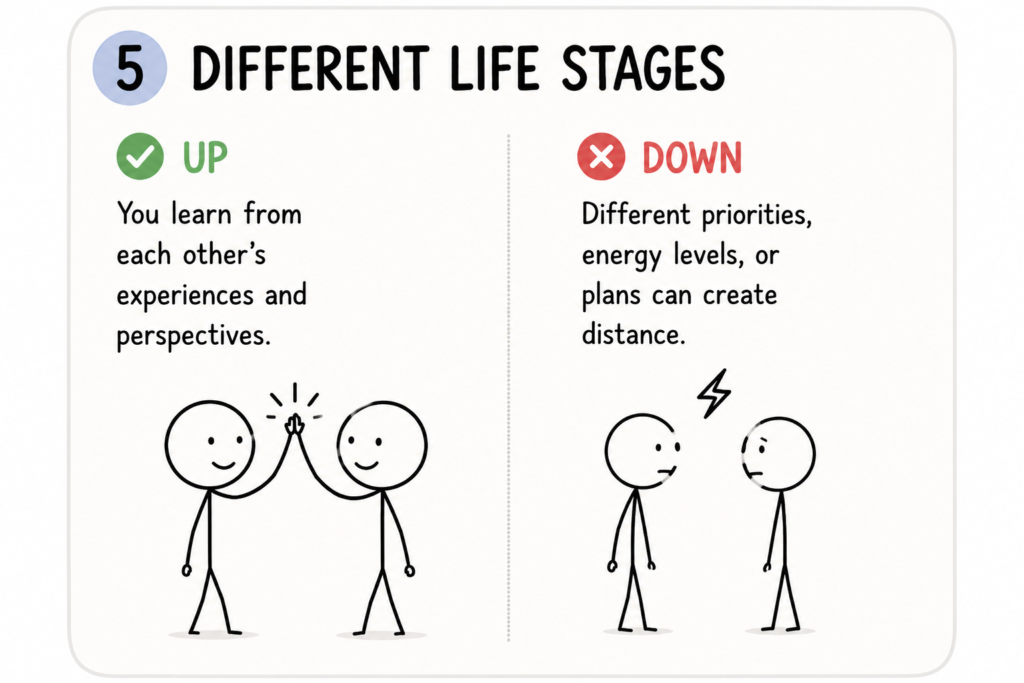
Up
You can learn from each other’s experiences and perspectives.
A younger partner may bring fresh ideas and enthusiasm, while an older partner offers wisdom, stability, and practical advice.
These differences can complement one another and encourage personal growth.
Down
Differing priorities, energy levels, or future plans may require honest discussion and compromise.
One partner might be focused on building a career while the other is thinking about retirement.
Even smaller differences like hobbies, travel, or daily routines need understanding and flexibility.
6. Social and Family Reactions
Up
Many couples grow stronger by supporting each other despite outside opinions.
Facing criticism together can foster trust, teamwork, and open communication.
Focusing on your relationship rather than outside judgment often deepens emotional connection.
Down
Friends or family may judge age-gap relationships, adding unnecessary pressure.
People might make assumptions about motives, maturity, or compatibility without knowing the relationship.
Handling criticism respectfully can protect your relationship from stress.
7. Long-Term Planning
Up
Older partners often think more seriously about commitment and stability.
They may prioritize building a secure future, planning finances, maintaining healthy communication, and creating lasting bonds.
This long-term mindset can provide a strong foundation for a committed partnership.
Down
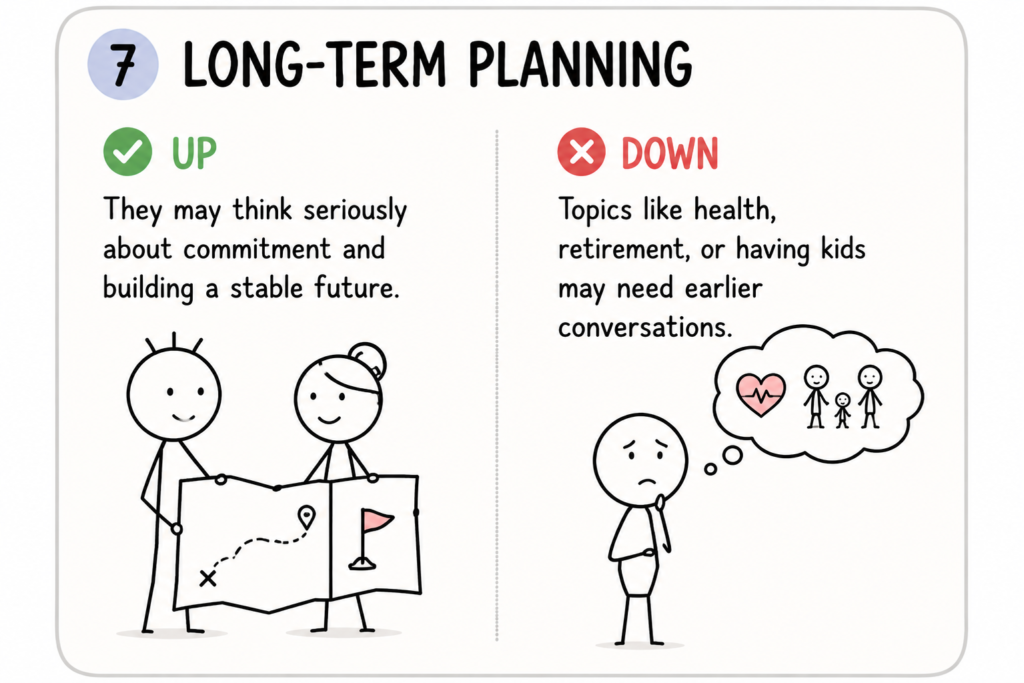
Topics like health, retirement, or family planning may arise sooner than expected.
Depending on the age gap, conversations about caregiving, children, or long-term health become important earlier.
Open communication about these issues helps both partners make informed decisions together.
Final Thoughts
Dating an older partner has advantages and challenges, just like any relationship.
Instead of focusing solely on age, pay attention to mutual respect, honest communication, shared values, and compatible life goals.
The healthiest relationships are built on trust, equality, kindness, and a willingness to grow together.
Age can influence experiences and expectations but should never be the only factor in judging a relationship’s potential.
Ultimately, the quality of the relationship matters far more than the number of years between two people.