
🤔🤔🤔
Modern dating can feel confusing. Sometimes words and actions don’t match, leaving people wondering: “What did she actually mean?”
Before jumping to conclusions, it’s important to remember one thing — not every statement is a lie, and every person is different.
Certain phrases are often misunderstood or interpreted differently depending on behavior, timing, and context.
Instead of blindly believing words or assuming the worst, the smarter approach is to pay attention to consistency, effort, and actions.
Common Phrases and Their Possible Meanings
1. “I’m not talking to anybody else — just you.”
At first, this sounds reassuring. But sometimes, it may simply mean the person hasn’t fully decided yet or isn’t ready to commit.

In modern dating, exclusivity and commitment are not always the same thing. Someone may enjoy talking to you while still figuring out their feelings or deciding where things are going.
The key question is this: Do their actions match their words?
- Are they making effort?
- Communicating consistently?
- Showing genuine interest?
Actions often reveal more than promises.
Lesson: Don’t just listen to sweet words — watch for consistency.
2. “He’s just a friend.”
This phrase can trigger insecurity, but context matters.
Sometimes, a friend is genuinely just a friend. Other times, emotional closeness, constant communication, or blurred boundaries may make things more complicated.
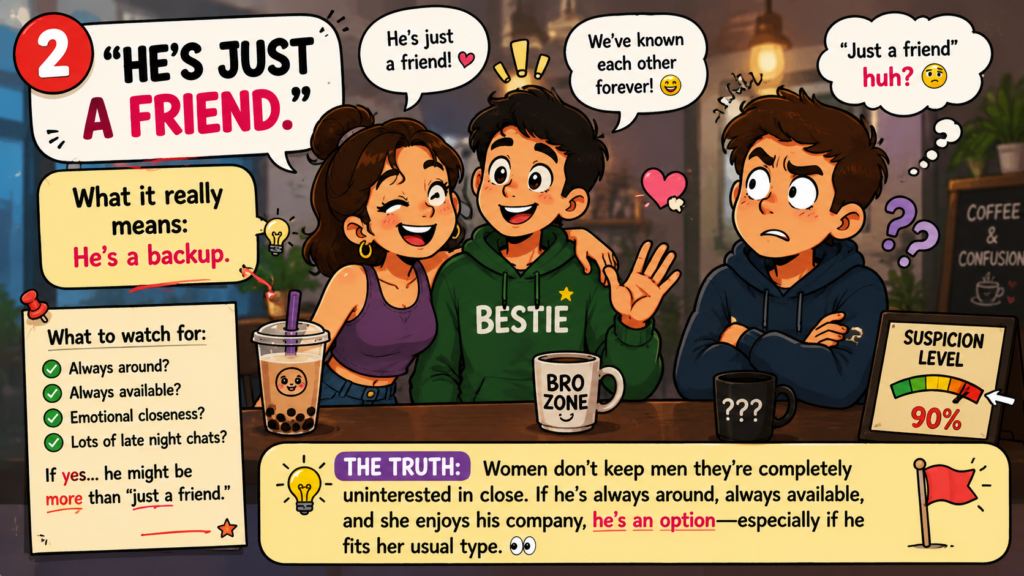
The important thing is not to become paranoid, but to observe respectfully:
- Are boundaries clear?
- Does the friendship feel transparent?
- Do actions build trust or confusion?
Healthy relationships thrive on openness and reassurance.
Lesson: Trust matters, but so do boundaries.
3. “I’m not ready for a relationship.”
This phrase often hurts because it feels like rejection.
Sometimes it genuinely means someone is emotionally unavailable, healing, overwhelmed, or simply not ready.
Other times, the hard truth is that they may not feel ready with you specifically.
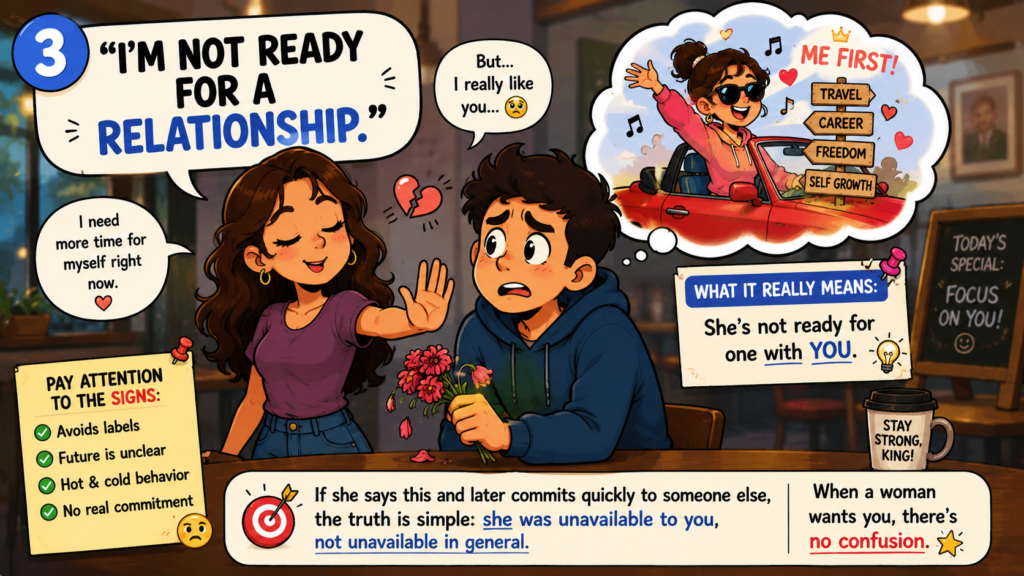
That doesn’t automatically mean something is wrong with you — attraction, timing, emotional readiness, and compatibility all matter.
Lesson: Don’t chase mixed signals. If someone is unsure, respect yourself enough to step back.
4. “I don’t usually do this.”
This line usually appears when someone worries about how they’re perceived.
It might mean:
- They don’t want to be judged
- They feel vulnerable
- They want reassurance
- Or they simply want to explain behavior that feels unusual for them
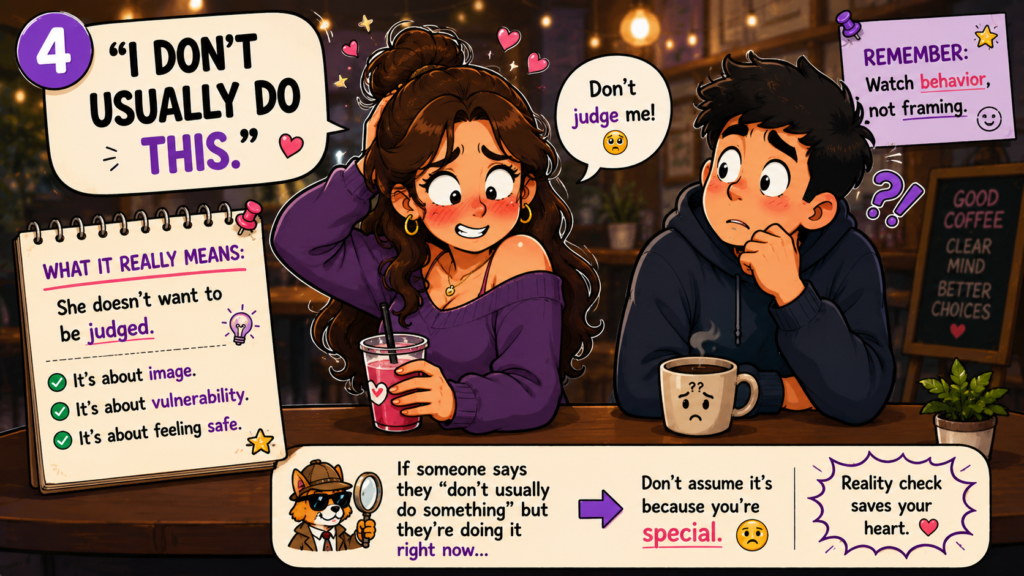
Rather than overanalyzing the sentence, focus on honesty and consistency.
Lesson: Don’t romanticize words — understand behavior.
5. “All my exes were toxic.”
If someone says every past relationship failed and every ex was terrible, it may be worth paying attention.
Of course, people can genuinely experience unhealthy relationships.
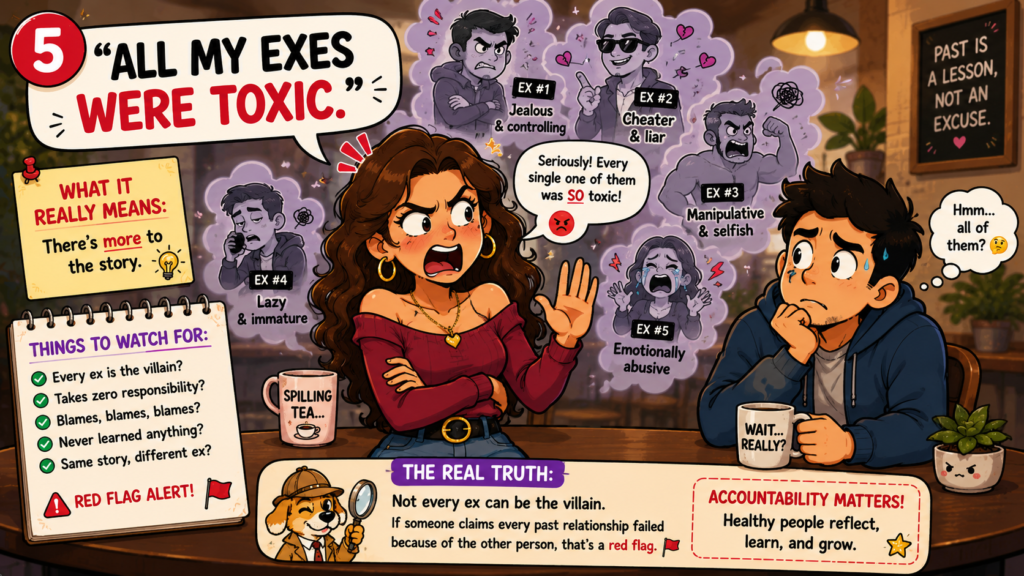
But if every story has the same villain and zero accountability, it could be a sign of emotional immaturity.
Healthy people usually reflect on both sides of a failed relationship and what they learned from it.
Lesson: Accountability matters in relationships.
6. “I don’t care about money.”
Many people misunderstand this statement.
For most women — and men too — it’s not about wanting luxury or riches. It’s often about stability, ambition, effort, responsibility, and direction.
You don’t need to be rich. But having goals, discipline, and purpose matters.
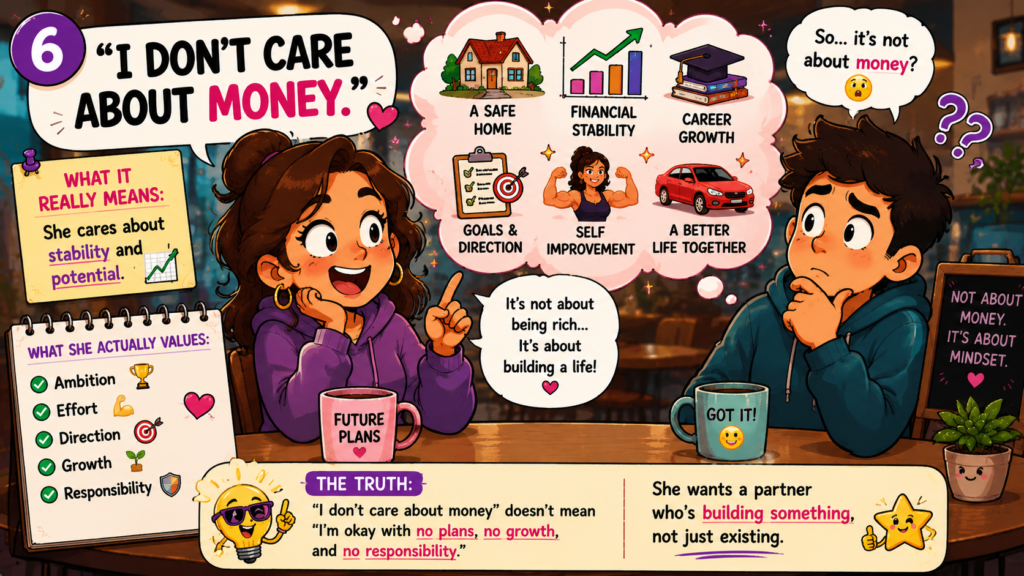
No one wants a partner with zero plans, no growth, and no accountability.
Lesson: It’s not always about money — it’s often about mindset and stability.
7. “I just want a nice guy.”
Being “nice” doesn’t mean being weak, overly passive, or losing self-respect.
What many people actually want is someone kind and confident:

- Respectful but confident
- Caring but emotionally strong
- Supportive but with boundaries
Kindness without confidence may feel passive. Confidence without kindness becomes arrogance. The healthiest balance is both.
Lesson: Be kind, but don’t lose yourself.
Final Thought
Dating becomes less confusing when you stop listening only to words and start noticing patterns.
A person’s actions, effort, consistency, accountability, and respect usually reveal more than emotional statements.
Not every phrase is manipulation. Not every person means harm.
But wisdom comes from learning to notice when words and behavior match — or don’t.
Because in relationships, actions often speak louder than words.