
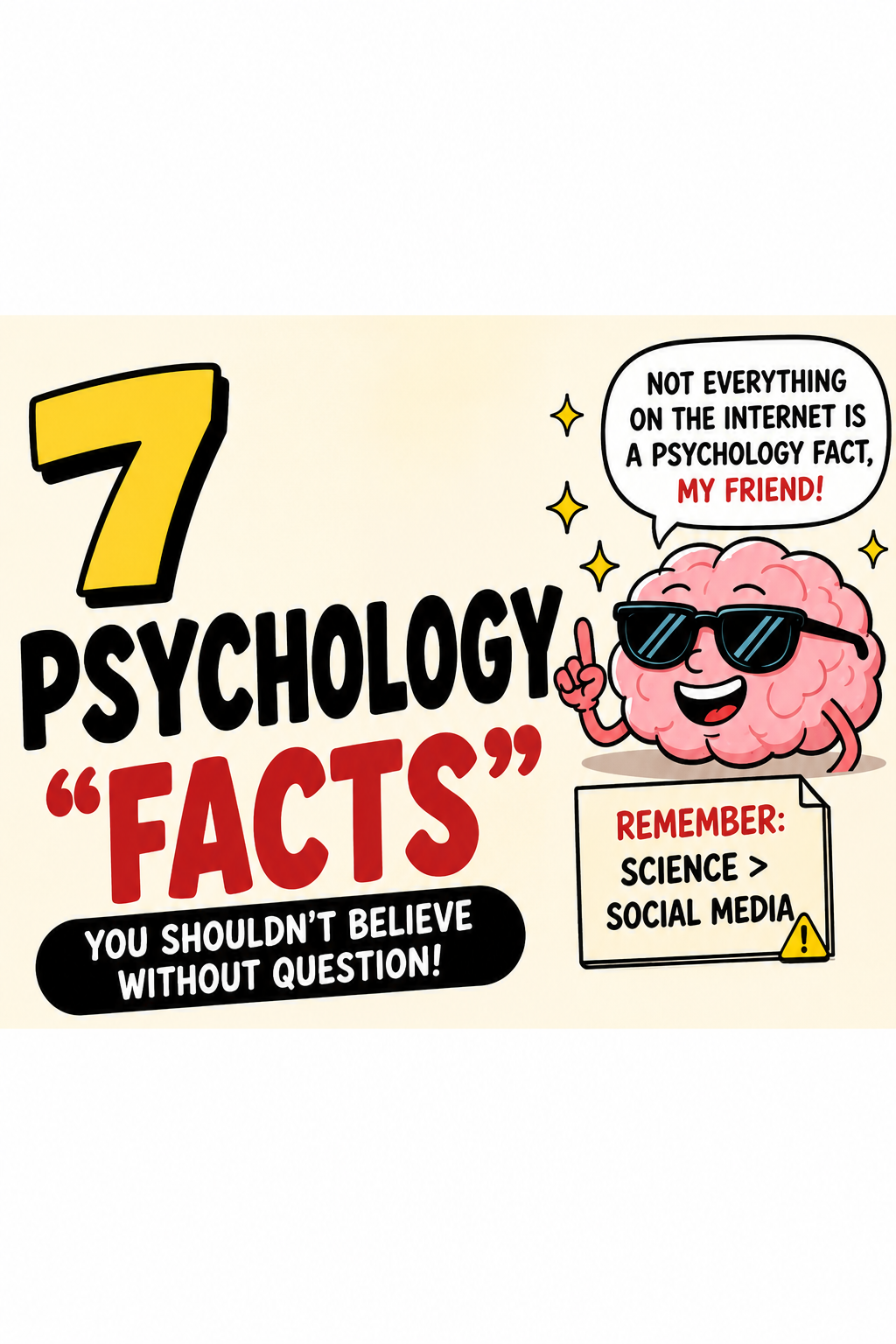
Psychology is one of the most fascinating subjects because it explores how our minds work, why we behave the way we do, and what shapes our emotions.
However, many so-called “psychology facts” circulating on social media are actually myths, oversimplifications, or claims with little scientific evidence.
Let’s take a closer look at some popular psychology statements and see what psychology research really says.
1. Your Favorite Color Is Based on the Worst Thing That Happened to You as a Kid
This claim sounds dramatic, but there is no scientific evidence supporting it.
Favorite colors are influenced by many factors, including culture, personal experiences, personality, trends, and even simple exposure to certain colors.
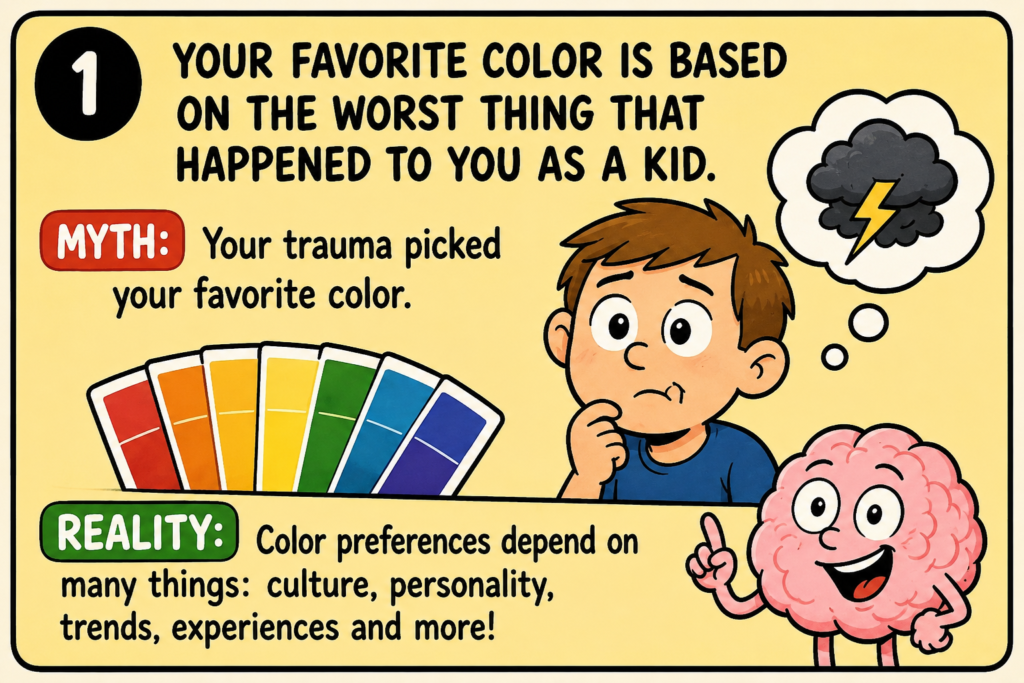
While childhood experiences can shape preferences, there is no proof that traumatic events determine your favorite color.
Reality: Color preferences are complex and cannot be traced to a single childhood event.
2. Your Brain Can Feel When a Stranger Is Staring at You from Behind
Many people believe they can sense when someone is watching them.
Research has shown that people often think they possess this ability, but controlled experiments generally fail to support the idea.
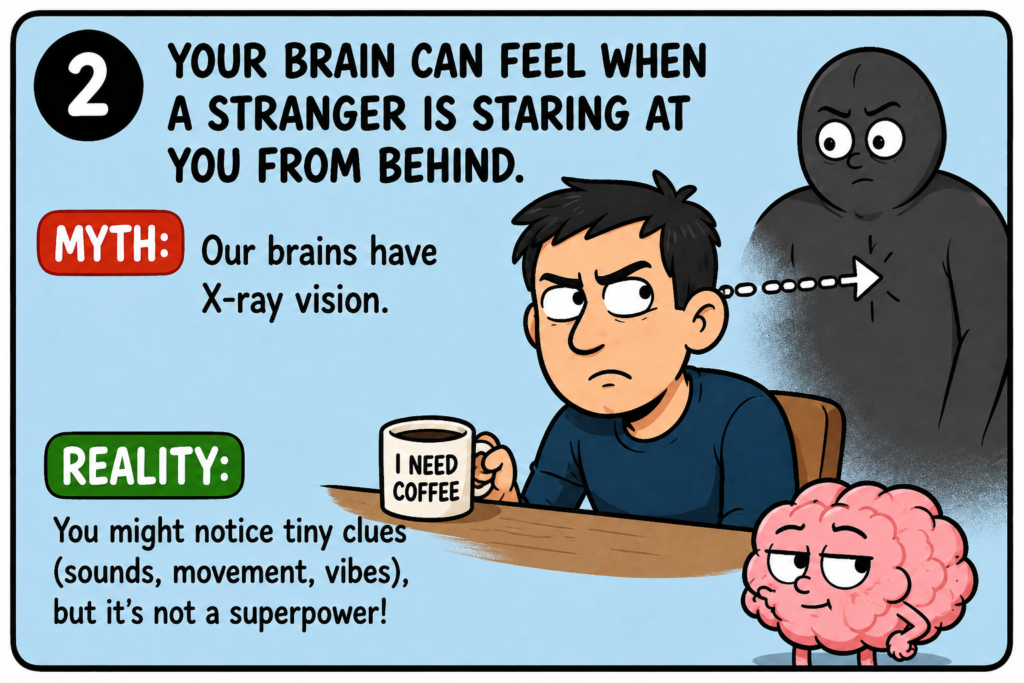
What usually happens is that we subconsciously notice small clues such as sounds, movement, or changes in our surroundings.
Reality: There is no confirmed “psychic” ability to detect someone’s gaze from behind.
3. The First Person You Think of When You Hear a Love Song Has a Piece of Your Soul
This statement is romantic, but it belongs more to poetry than psychology.
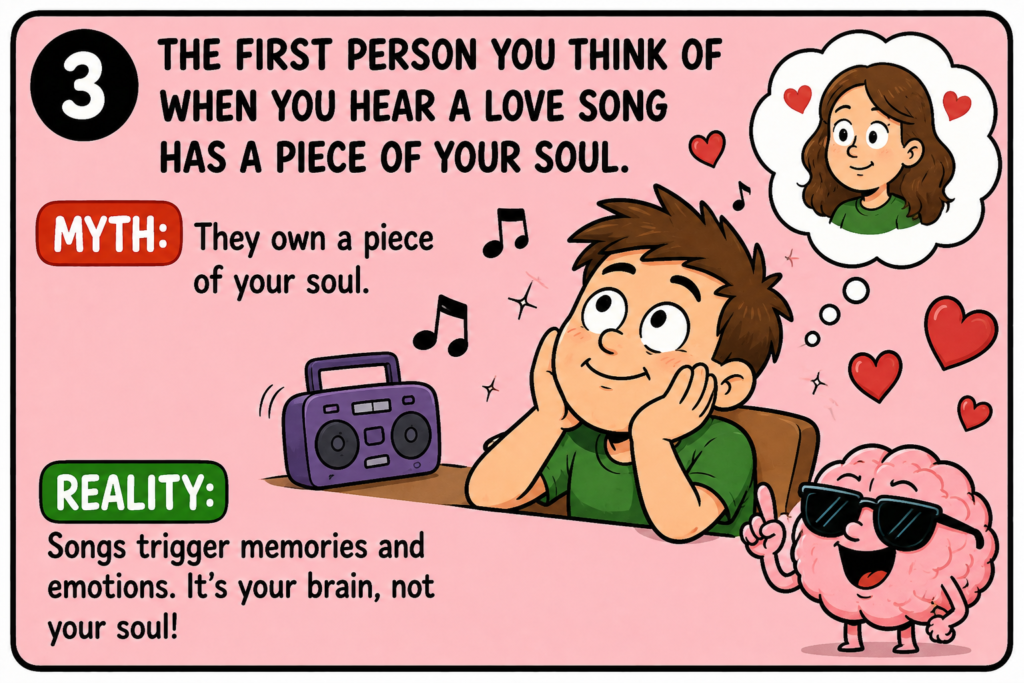
When a song reminds you of someone, it’s because your brain forms strong associations between memories, emotions, and music.
Certain songs can trigger memories of people who were emotionally significant in your life.
Reality: Music activates emotional memories, not pieces of souls.
4. People Who Stay Up Late Are More Intelligent but Less Happy
The truth is more complicated.
Some studies have found slight correlations between night owls and certain cognitive traits.
However, intelligence is not determined by sleep schedules.
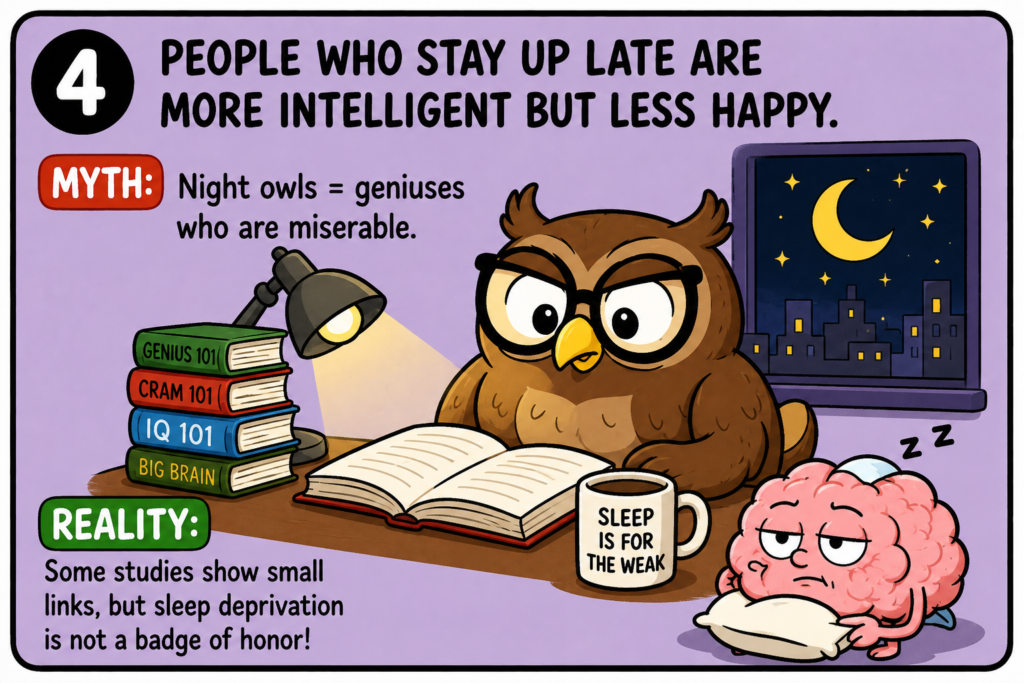
Staying up late regularly can also contribute to sleep deprivation, which may negatively affect mood, health, and productivity.
Reality: Sleep habits do not automatically make someone smarter.
5. The Music You Loved at 16 Shapes Your Personality for Life
There is some truth here.
Research suggests that music enjoyed during adolescence often becomes deeply meaningful because those years are important for identity formation.
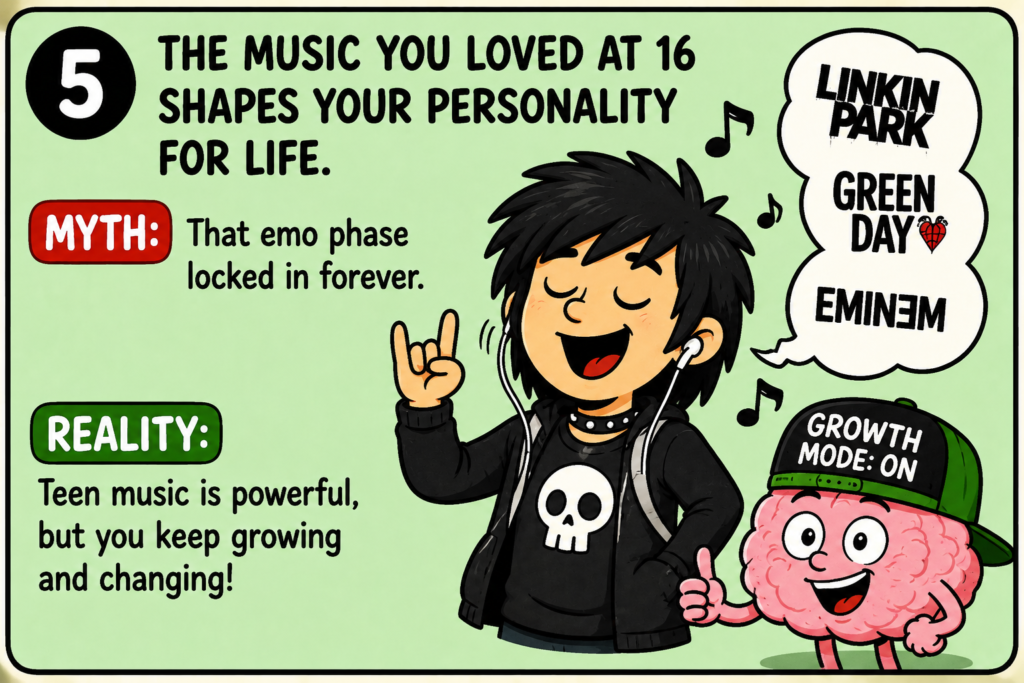
Songs from our teenage years can remain emotionally powerful throughout life.
However, your personality continues to develop long after age 16.
Reality: Teen music influences identity, but it doesn’t permanently define who you become.
6. People Who Hate Small Talk Have Deeper Minds Than Others
This is a popular belief, but psychology doesn’t support it.
Some people prefer meaningful conversations, while others enjoy casual interactions.
Neither preference automatically indicates intelligence, depth, or emotional maturity.
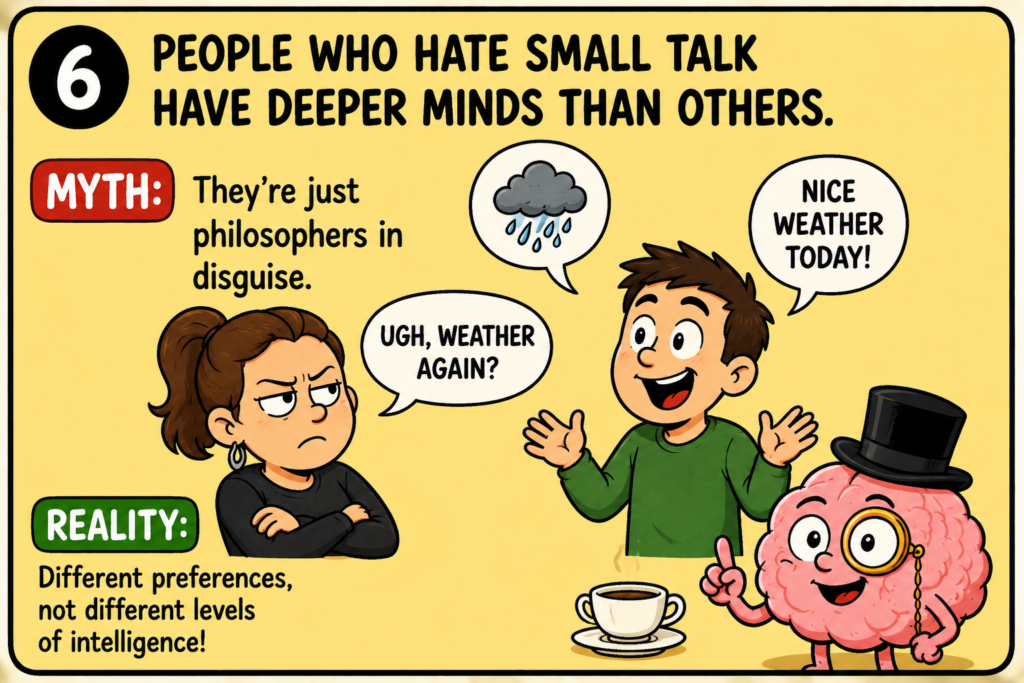
Small talk actually serves an important social purpose by helping people build trust and connections.
Reality: Preferring deep conversations doesn’t necessarily mean you have a deeper mind.
7. If You Remember a Dream Vividly, Your Brain Was Trying to Warn You About Something
Dreams remain one of psychology’s greatest mysteries.
Some theories suggest dreams help process emotions, memories, and experiences.
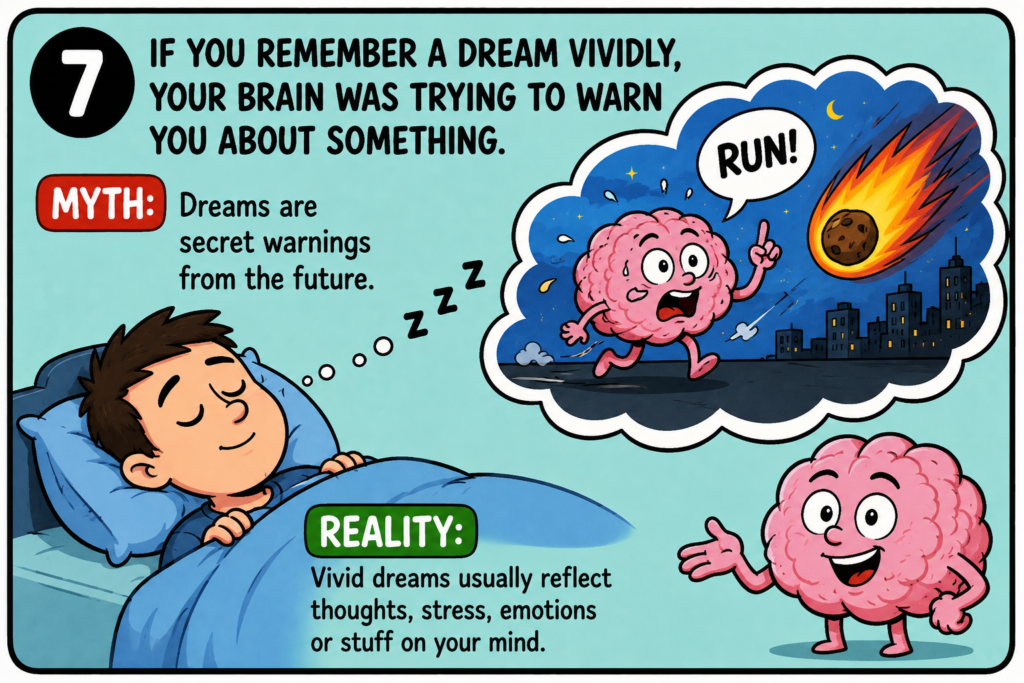
However, there is no reliable evidence that dreams are warnings about future events.
Most vivid dreams simply reflect thoughts, emotions, stress, or concerns already present in your life.
Reality: Dreams may reveal what’s on your mind, but they don’t predict the future.
Final Thoughts
The human mind is fascinating, which is why psychology-related posts spread so quickly online.
But not everything labeled as a “psychology fact” is actually supported by science.
The next time you see a surprising psychological claim, ask yourself:
- Is this based on scientific research—or is it just an interesting idea?
Understanding the difference can help you separate real psychology from internet myths and appreciate how truly complex the human mind really is.