

We like to believe that words tell the whole story. In reality, the human body often reveals thoughts and emotions long before a person says a single word.
While body language isn’t a mind-reading tool, certain behaviors can provide valuable clues about what someone is truly feeling.
1. The Feet Never Lie
Most people focus on facial expressions, but the feet often reveal hidden intentions.
A person can carefully control their smile and words, yet their feet may unconsciously point toward where they want to go.
For example, during a conversation, someone may appear interested, but if their feet are pointed toward the door, they may be thinking about leaving.
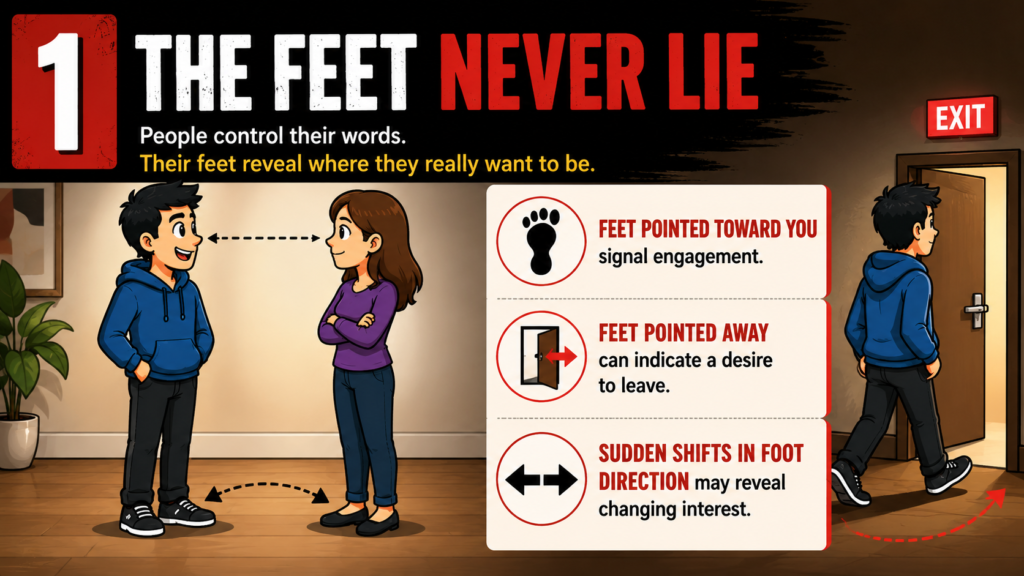
Feet tend to follow intention before action.
What It Means
- Feet pointed toward you often signal engagement.
- Feet pointed away can indicate a desire to leave.
- Sudden shifts in foot direction may reveal changing interest levels.
2. The Fake Smile
Not all smiles are created equal. A genuine smile activates the muscles around the eyes, creating slight wrinkles or a natural “eye smile.”
A fake smile usually affects only the mouth.
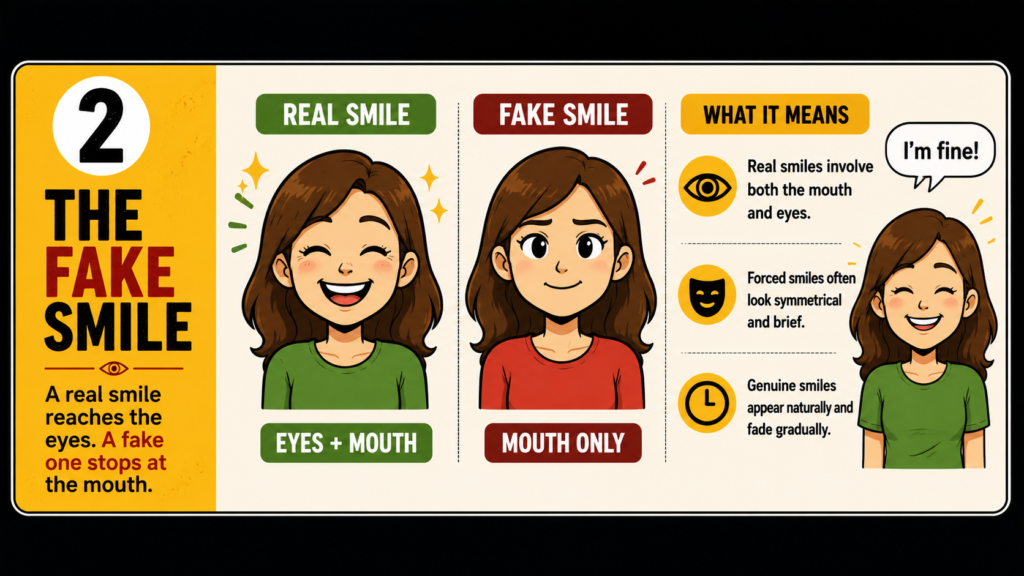
People often use polite smiles in social situations, but genuine happiness is much harder to fake.
What It Means
- Real smiles involve both the mouth and eyes.
- Forced smiles often look symmetrical and brief.
- Genuine smiles usually appear naturally and fade gradually.
3. The Comfort Test
When people feel safe and comfortable, their body naturally becomes more open.
They relax their shoulders, uncross their arms, and expose vulnerable areas like the neck or torso.
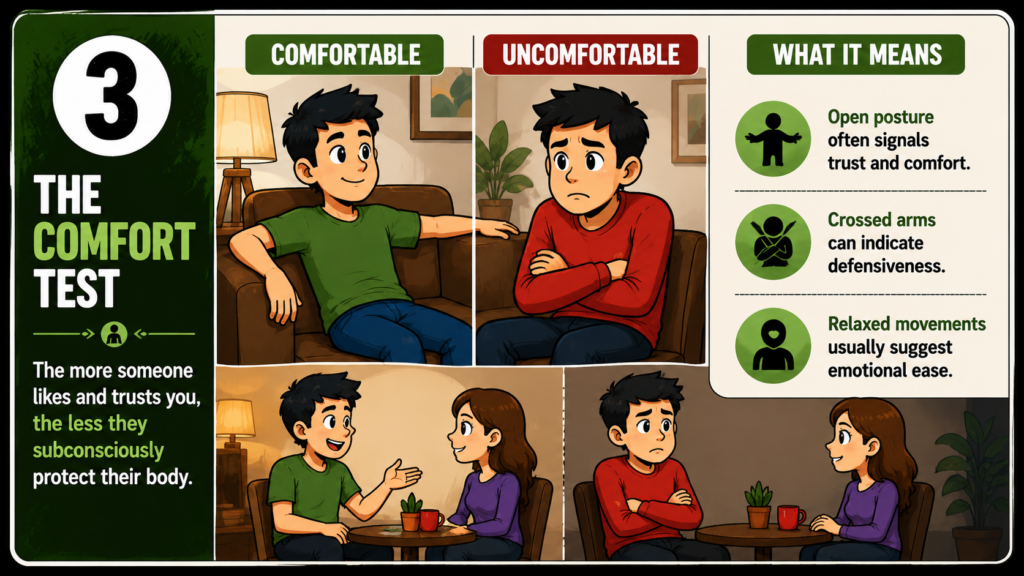
On the other hand, discomfort often causes defensive postures designed to create protection.
What It Means
- Open posture often signals trust and comfort.
- Crossed arms can sometimes indicate defensiveness.
- Relaxed movements usually suggest emotional ease.
4. The Eye Contact Myth
Many people believe that strong eye contact always means confidence. The truth is more complicated.
Too little eye contact can suggest nervousness, discomfort, or distraction.
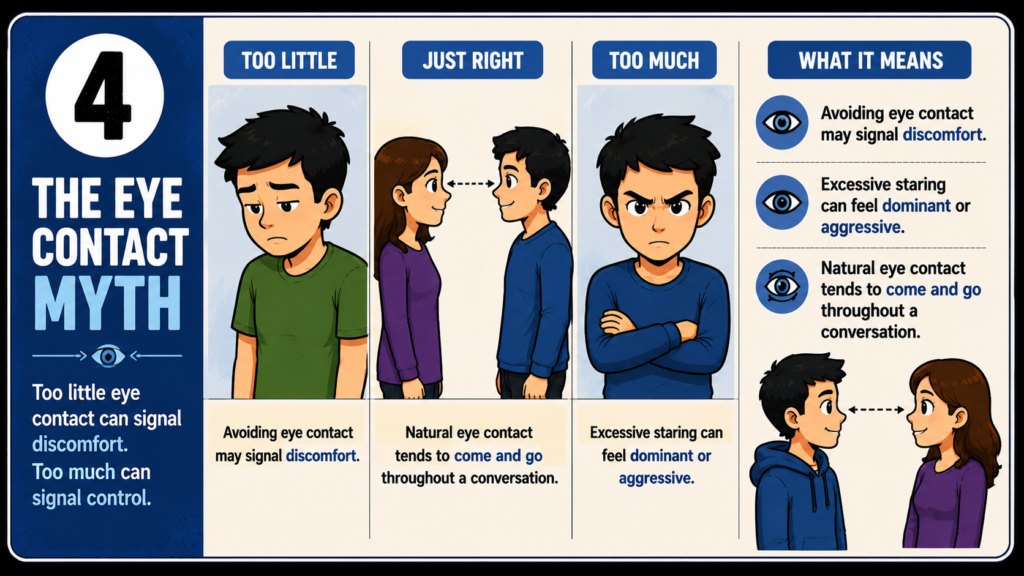
However, excessive eye contact can sometimes feel intimidating or controlling.
Healthy communication usually involves balanced eye contact rather than constant staring.
What It Means
- Avoiding eye contact may signal discomfort.
- Excessive staring can feel dominant or aggressive.
- Natural eye contact tends to come and go throughout a conversation.
5. The Distance Rule
Humans naturally manage distance based on emotion.
We often move closer to people, places, and things we value, and farther away from things that make us uncomfortable.
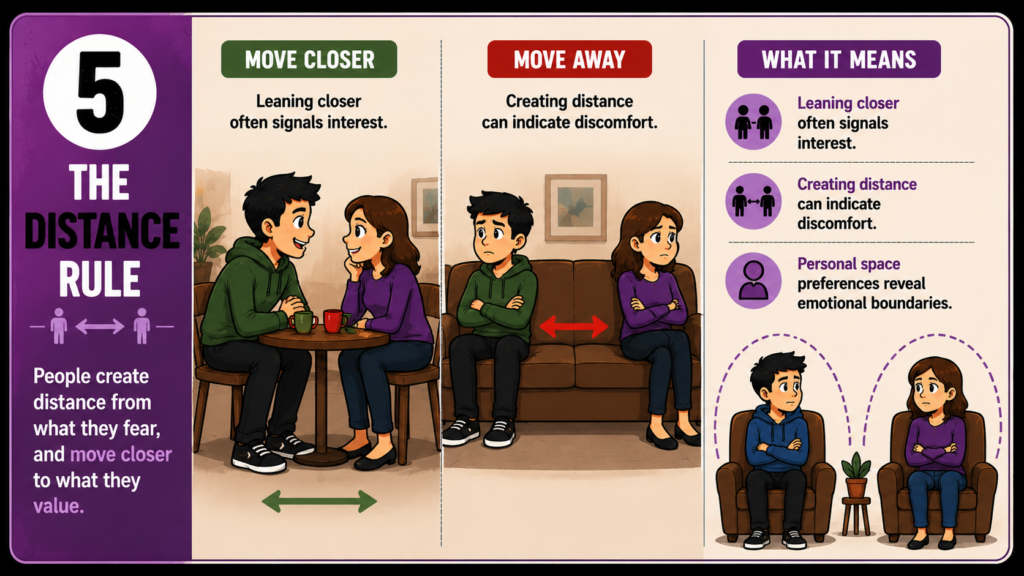
This behavior happens so automatically that many people don’t even notice it.
What It Means
- Leaning closer often signals interest.
- Creating distance can indicate discomfort.
- Personal space preferences reveal emotional boundaries.
Final Thoughts
Body language doesn’t provide perfect answers, but it offers valuable clues.
The feet, eyes, posture, facial expressions, and personal space often communicate feelings that words leave unsaid.
The next time you’re talking to someone, pay attention to more than what they say.
Their body may be telling a completely different story.