

Anxiety isn’t always caused by major life events. Often, it’s the small habits we repeat every day that quietly keep our minds in a constant state of stress.
These behaviors may seem harmless, but over time they can make you feel restless, worried, and emotionally drained without you realizing why.
The good news is that once you recognize these habits, you can start replacing them with healthier ones.
1. Checking Your Phone the Moment You Wake Up
Many people reach for their phone before getting out of bed. Within minutes, they’re reading messages, scrolling through social media, or catching up on the news.
This immediately shifts your brain into “reaction mode.” Instead of waking up calmly, your attention is pulled toward other people’s lives and problems.
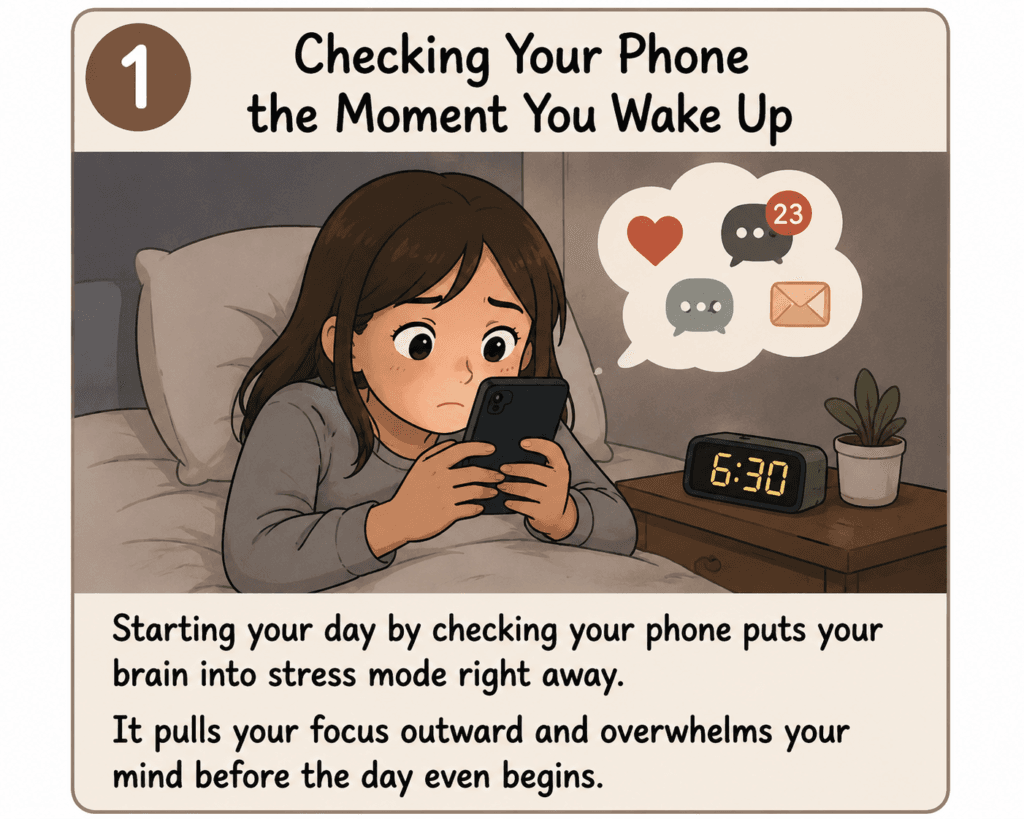
This can raise stress levels before your day has even begun.
Try giving yourself the first 15 to 30 minutes of the morning without your phone. Even a short period of quiet can help your mind start the day feeling more balanced.
2. Constantly Comparing Yourself to Others
Whether on social media, at work, or in daily life, comparing yourself to others can slowly increase anxiety.
Our brains naturally compare ourselves with others, but online we usually see only people’s highlights, not their struggles.
When you measure your life against someone else’s best moments, it’s easy to feel like you’re falling behind.
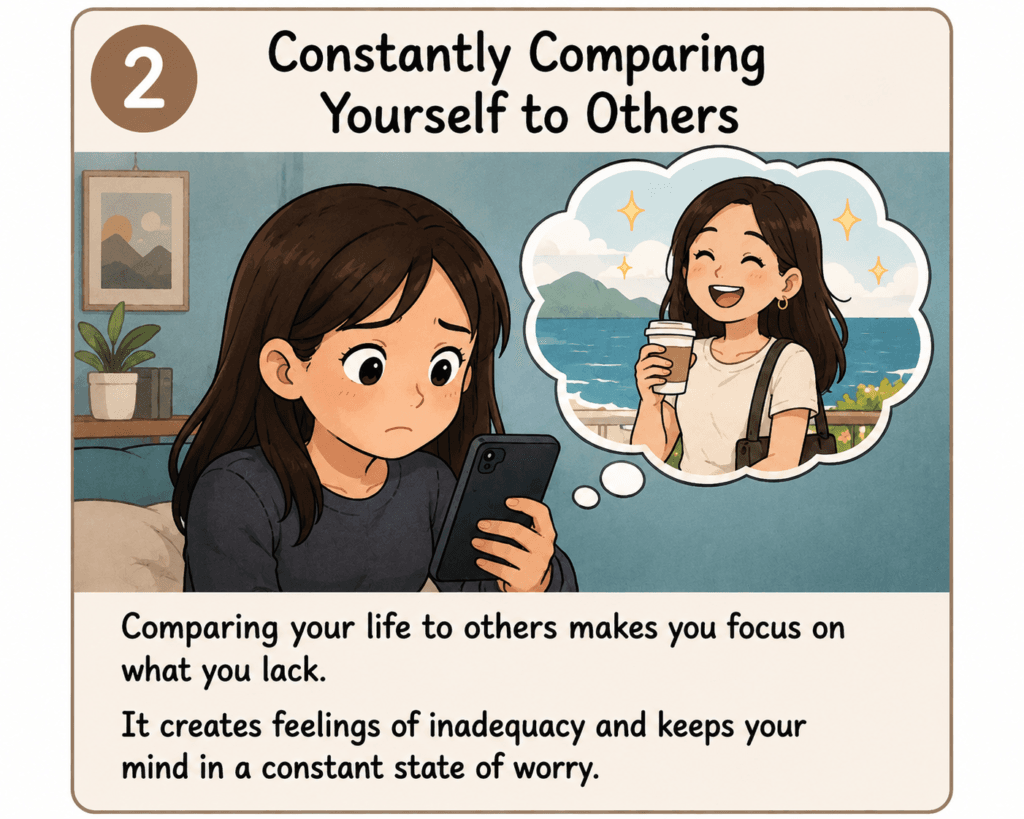
Remember that everyone moves through life at a different pace.
Comparing your progress to your own past is often much healthier than comparing it to someone else’s present.
3. Overthinking Every Small Decision
Some people spend excessive time deciding what to wear, what message to send, or whether they made the “right” choice.
This habit teaches your brain that every decision carries enormous consequences.
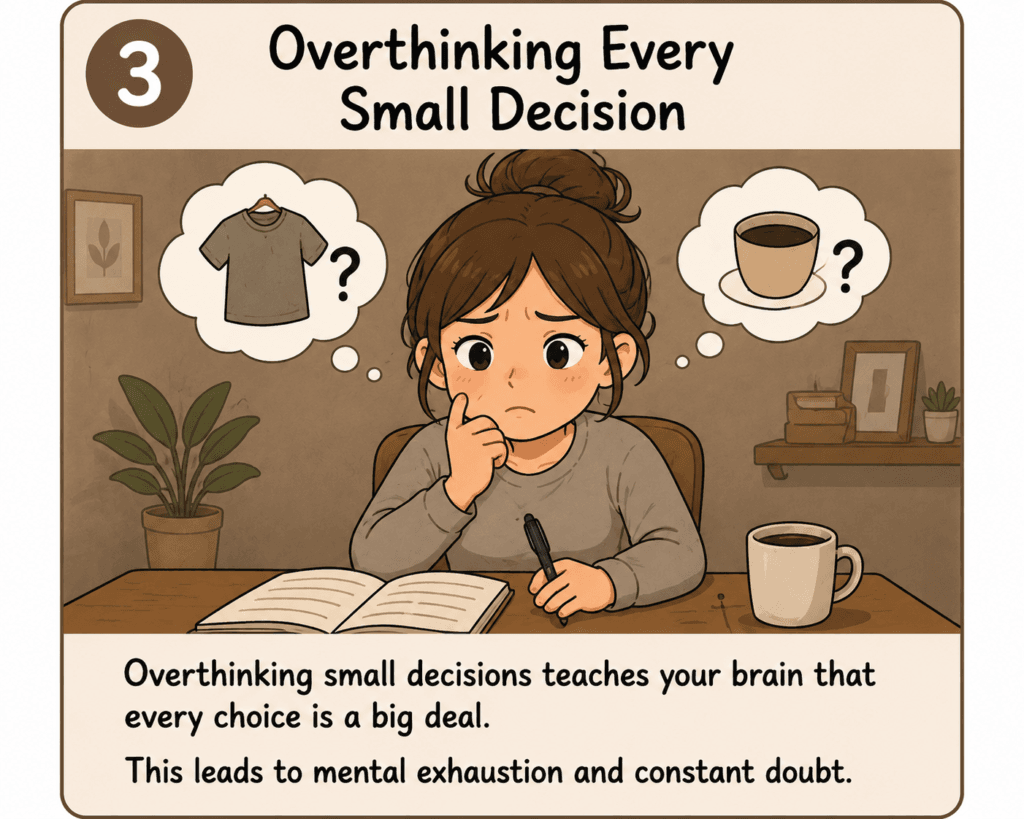
Over time, even simple choices begin to feel overwhelming.
Perfection isn’t necessary for most everyday decisions.
Learning to accept “good enough” can significantly reduce unnecessary mental stress.
4. Never Giving Your Brain Time to Rest
Many people fill every quiet moment with music, videos, podcasts, or endless scrolling.
While entertainment isn’t bad, constantly stimulating your brain leaves little room for mental recovery.
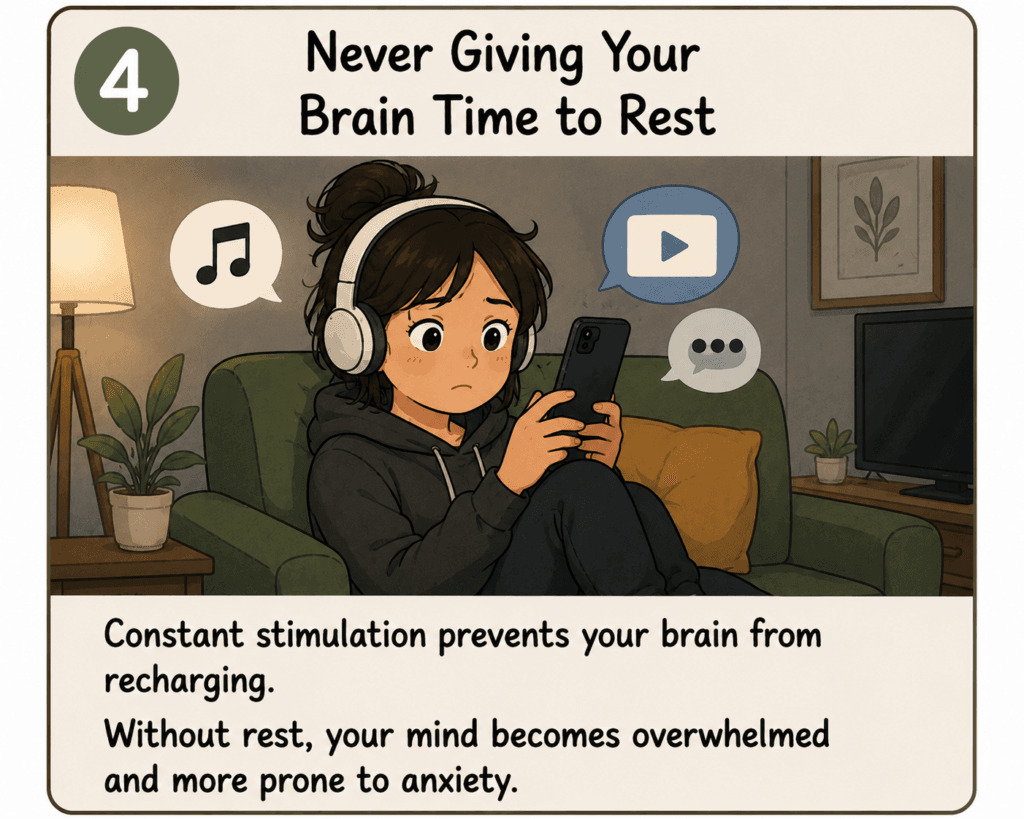
Your mind needs moments of silence to organize thoughts and regulate emotions.
Even a few minutes of quiet walking, deep breathing, or simply sitting without distractions can help reduce mental overload.
5. Ignoring Stress Until It Builds Up
Some believe that pushing through stress without acknowledging it makes them stronger.
In reality, emotions don’t disappear because they’re ignored.
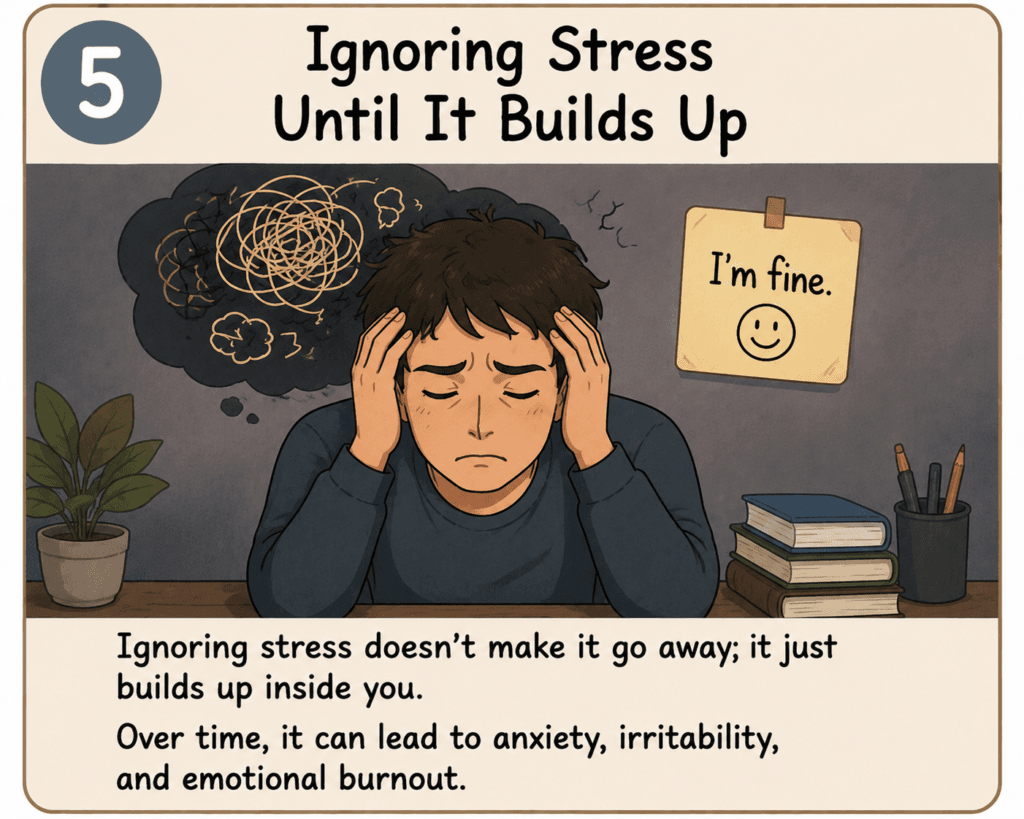
Stress often builds quietly beneath the surface until it shows up as anxiety, irritability, difficulty sleeping, or physical tension.
Taking a few minutes each day to reflect, write in a journal, or talk to someone you trust can help release emotional pressure before it becomes overwhelming.
6. Getting Too Little Sleep
Sleep and anxiety are closely connected.
When you don’t get enough quality sleep, the parts of your brain responsible for emotional regulation become less effective.
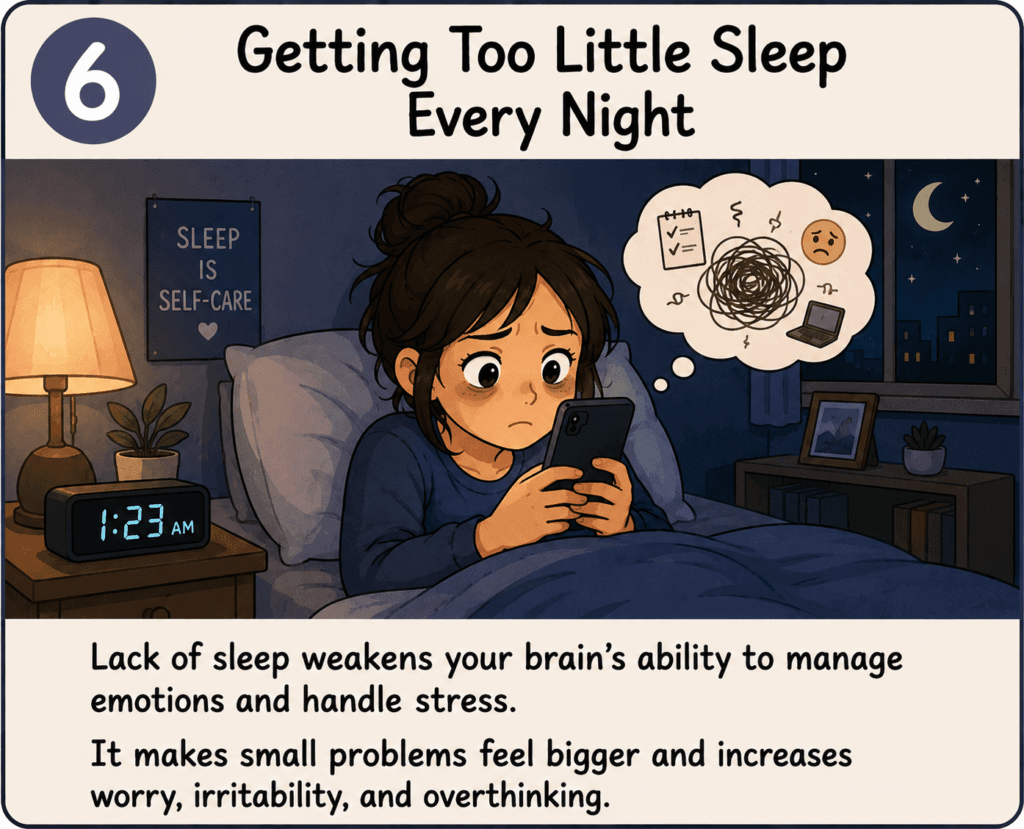
Small problems may suddenly feel much bigger than they really are.
Building a consistent sleep routine, limiting screen time before bed, and getting enough rest can improve your mood and your ability to handle everyday stress.
Final Thoughts
Anxiety doesn’t always begin with a single dramatic event.
Sometimes small habits repeated every day slowly increase mental stress without us noticing.
The encouraging part is that small habits can also create positive change.
Replacing just one unhealthy habit with a healthier one won’t eliminate anxiety overnight.
But over time, these small improvements can make a meaningful difference in how calm, confident, and emotionally resilient you feel.
Remember, everyone experiences stress from time to time.
If anxiety becomes severe, persistent, or interferes with your daily life, it’s important to seek support from a qualified mental health professional.