

Growing older doesn’t mean your intimate life has to disappear. While your body naturally changes with age, many couples continue to enjoy a fulfilling and satisfying sex life well into their 50s, 60s, and beyond.
The key is understanding these changes, taking care of your health, and maintaining a strong emotional connection with your partner.
1. Understand the Physical Changes That Come With Age
Aging affects everyone differently.
Women may experience menopause, which can reduce estrogen levels and cause vaginal dryness or discomfort during sex.
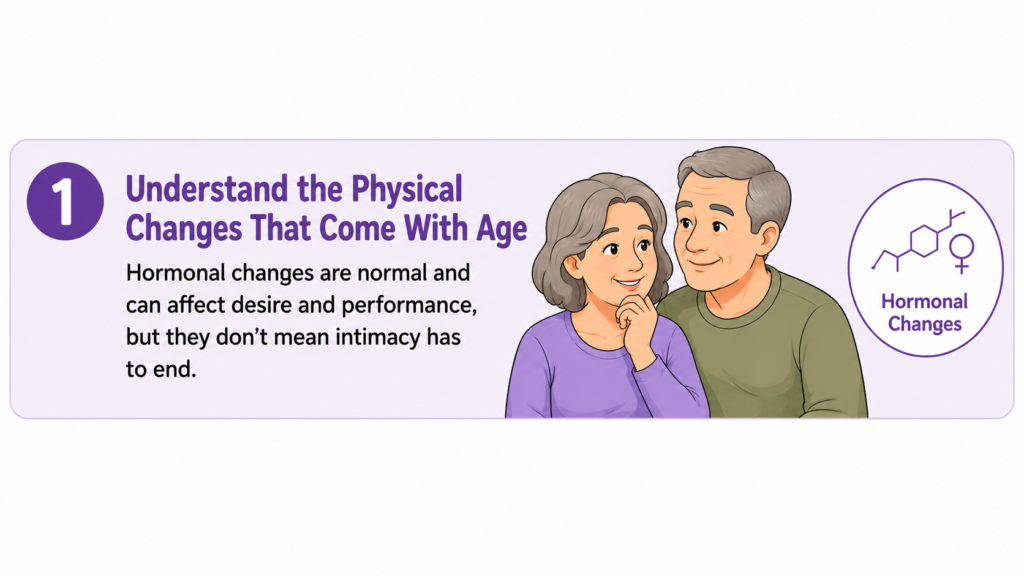
Men may notice changes in erectile function or a longer recovery time between sexual activity.
These changes are normal and don’t mean your intimate life is over. Understanding your body helps you adjust expectations and find new ways to stay close with your partner.
2. Prioritize Comfort and Lubrication
Comfort plays a major role in enjoyable intimacy, especially as the body changes with age.
For women, using a water-based lubricant can reduce friction and discomfort.

Taking more time for foreplay helps the body respond naturally.
Don’t ignore pain or persistent discomfort. Intimacy should feel comfortable and enjoyable, not something you have to endure.
3. Stay Physically Active
Regular exercise benefits far more than your heart and muscles.
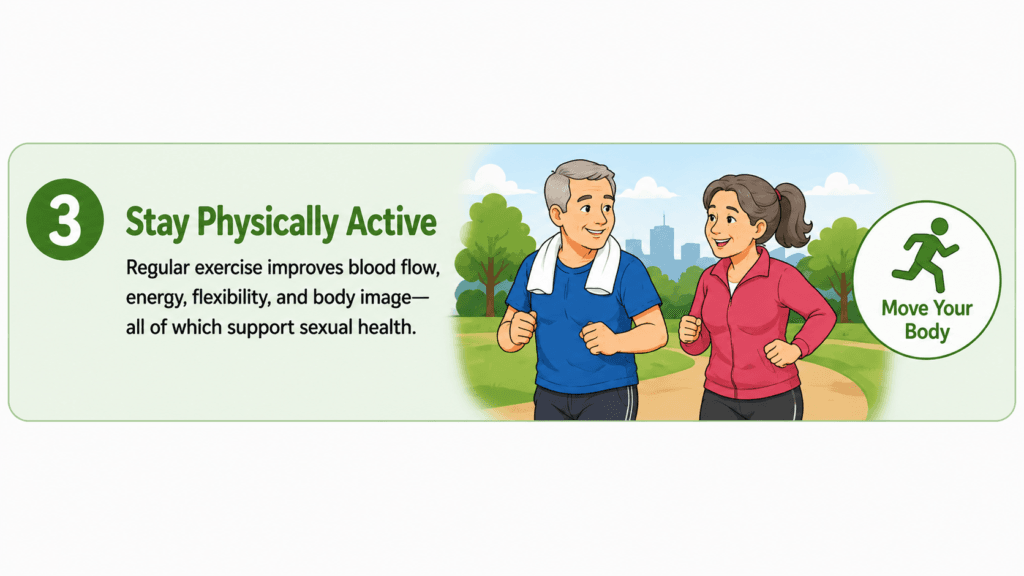
Physical activity improves blood circulation, boosts energy levels, increases flexibility, and helps maintain a healthy weight—all supporting sexual health.
Consider activities like:
- Walking
- Swimming
- Cycling
- Strength training
- Yoga
These improve fitness while increasing confidence and reducing stress.
4. Get Enough Quality Sleep
Poor sleep can lower energy, reduce libido, and affect mood.
Adults over 50 often experience changes in sleep patterns, making quality rest even more important.

Aim for seven to nine hours of sleep each night whenever possible.
Good sleep supports hormone balance, emotional well-being, and the energy needed for a healthy intimate relationship.
5. Manage Chronic Health Conditions
Health conditions such as diabetes, high blood pressure, obesity, heart disease, and depression can affect sexual function.
Some medications may influence desire or performance.
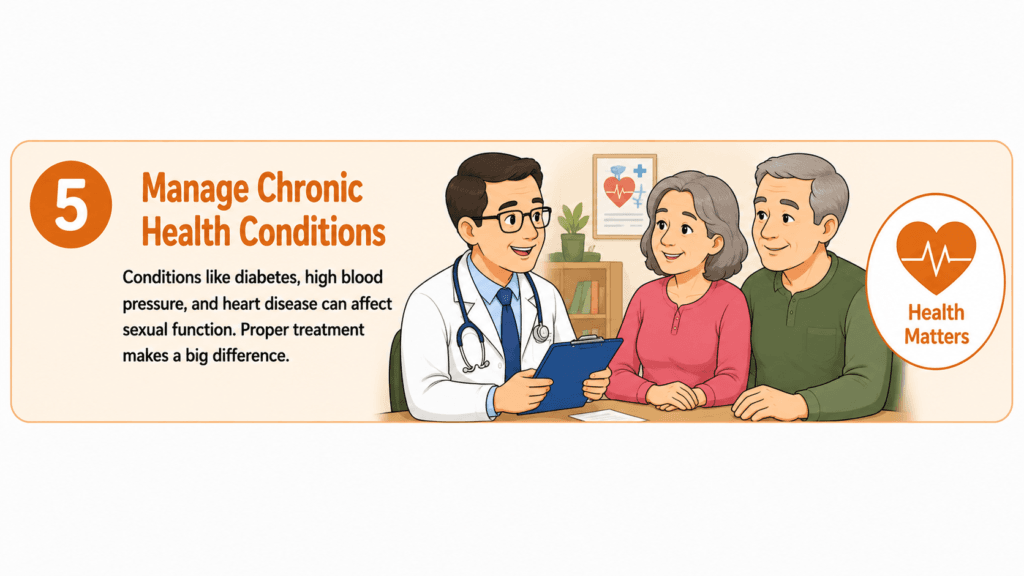
Managing these conditions with your healthcare provider often improves both overall health and your intimate life.
6. Talk Openly With Your Partner
Communication becomes even more important as couples grow older.
Your needs, comfort level, and expectations may change over time.
Discussing these honestly can strengthen your relationship.

Talk about what feels good, what has changed, and any concerns either of you may have.
Emotional intimacy often creates a stronger physical connection.
7. Know When to Seek Medical Advice
If you experience persistent pain during sex, ongoing erectile difficulties, significant loss of sexual desire, or other concerns affecting your relationship or quality of life, seek help.
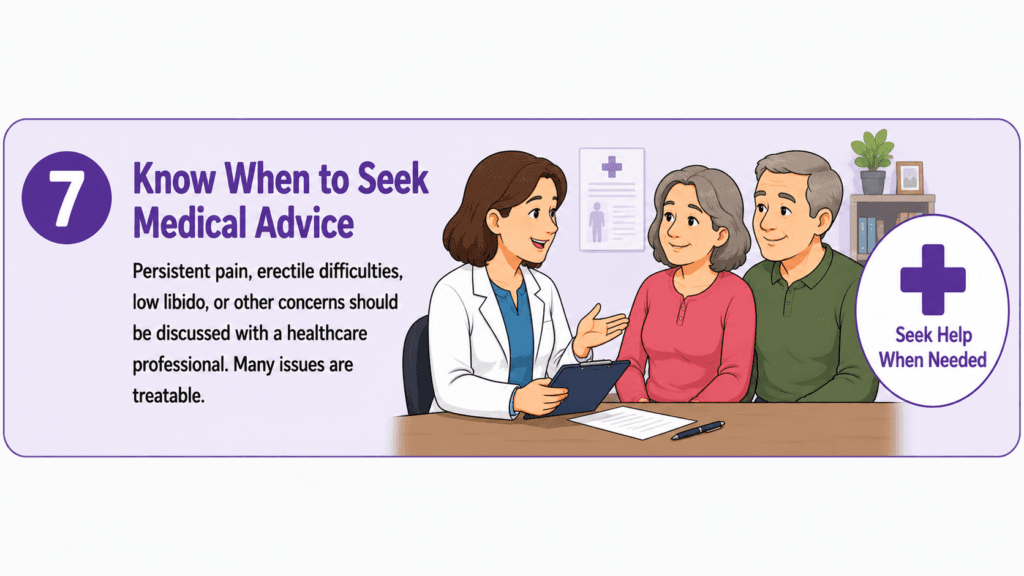
Many sexual health concerns after 50 have effective treatments.
Seeking medical advice is a proactive step toward maintaining your health and well-being.
Final Thoughts
A healthy sex life after 50 is possible for many couples.
While aging brings natural physical changes, it doesn’t mean the end of intimacy.
By staying active, managing your health, communicating openly, and seeking help when needed, you can continue building a loving, satisfying relationship for years.
Remember, intimacy is about more than sex.
Affection, trust, emotional closeness, and mutual respect all contribute to a strong and lasting connection at every stage of life.