
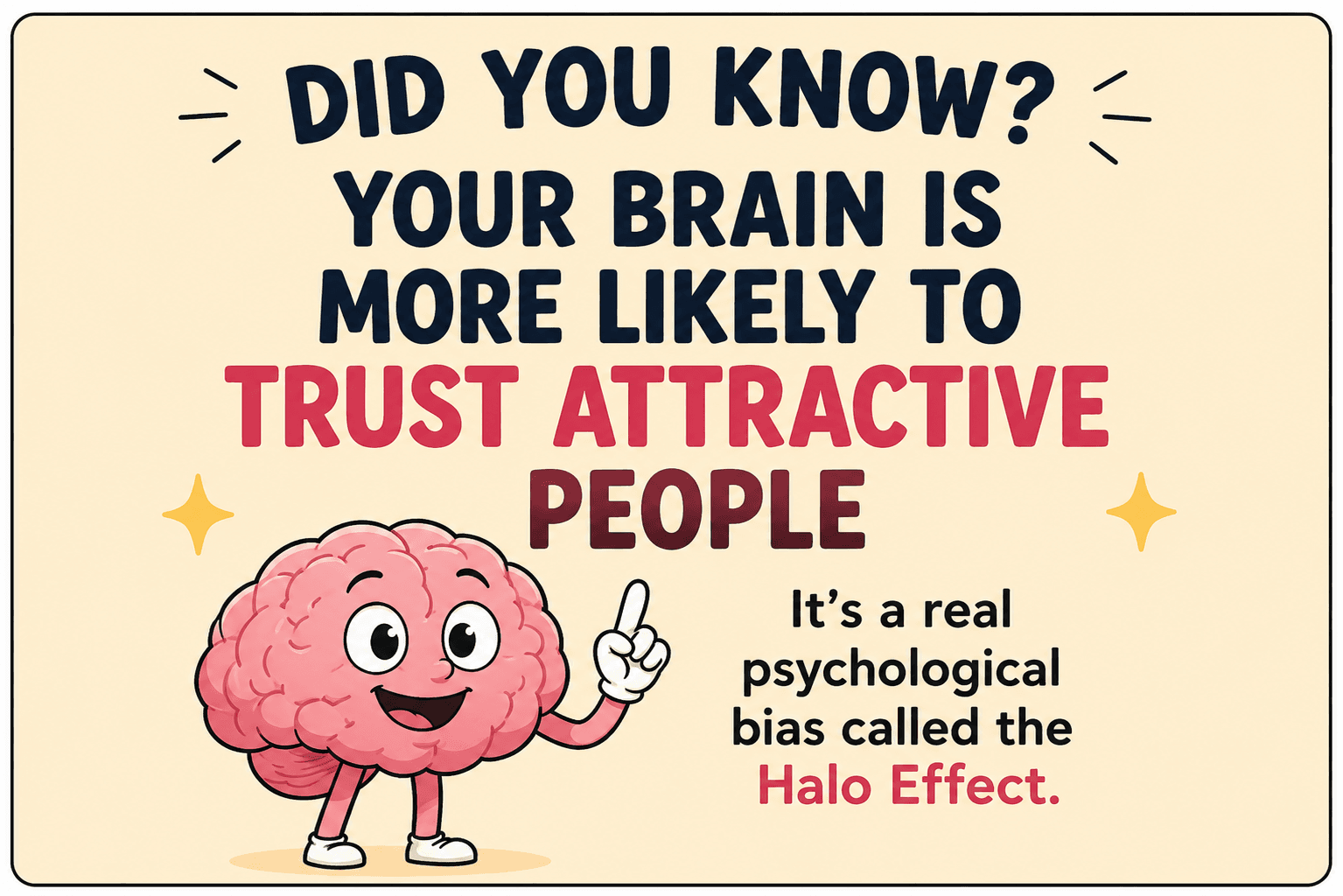
Have you ever met someone for the first time and immediately felt like they were kind, honest, or trustworthy—simply because they looked attractive?
Psychology suggests that our brains often make these assumptions automatically. This doesn’t mean attractive people are more honest or better than anyone else. Instead, it shows how our minds use shortcuts to make quick judgments.
This mental shortcut is known as the Halo Effect—a cognitive bias where one positive quality, such as physical attractiveness, influences how we perceive a person’s other traits.
Why Your Brain Trusts Attractive People
1. Your Brain Loves Quick Judgments
Our brains process a huge amount of information every second. To save time and energy, they rely on shortcuts called mental heuristics.
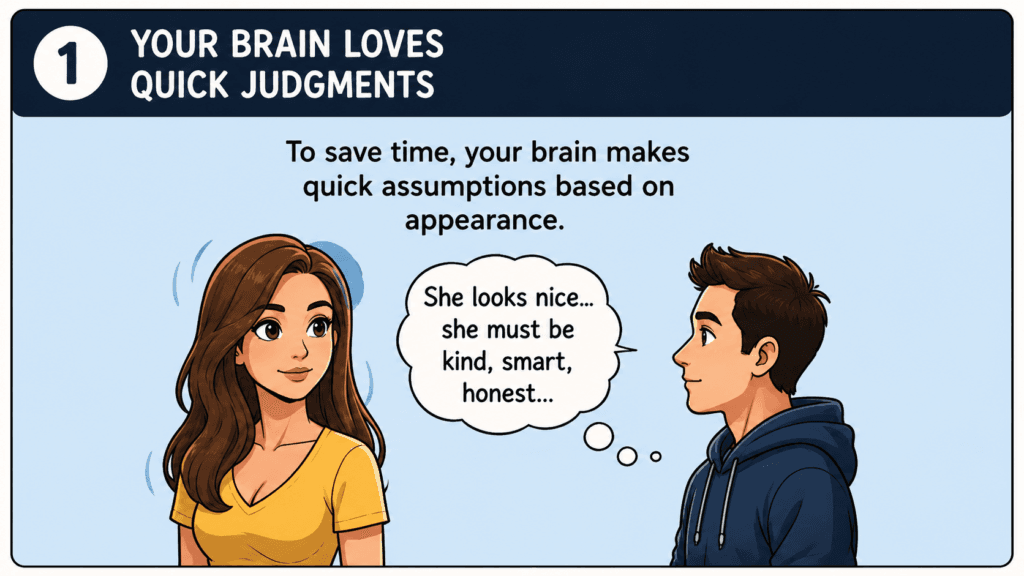
When someone appears attractive, your brain may unconsciously assume they also have other positive qualities like honesty, intelligence, or kindness—even before they say a word.
2. The Halo Effect Influences First Impressions
The Halo Effect causes one positive trait to “spill over” into other areas.
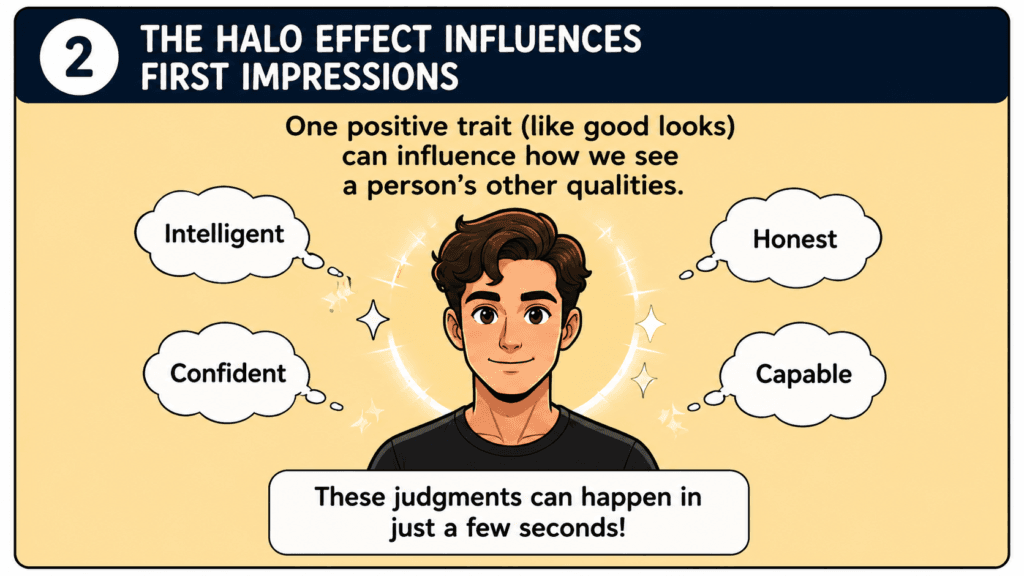
For example, if someone looks pleasant, we might also assume they are responsible, capable, friendly, or trustworthy—even without much evidence.
These first impressions can form in just a few seconds.
3. Movies and Media Reinforce the Bias
From childhood, many of us watch movies, TV shows, and ads where attractive characters are portrayed as heroes, successful professionals, or kind individuals.
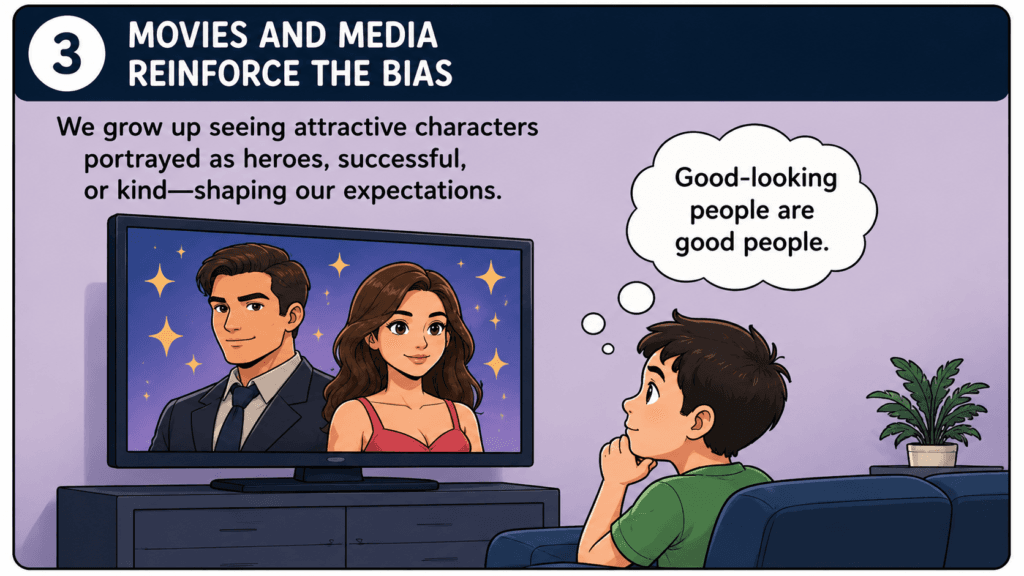
Over time, this repeated exposure shapes our expectations, making us link attractiveness with positive traits.
The Impact of Attractiveness on Social Perceptions
4. Attractive People Often Receive More Positive Responses
Research shows attractive individuals often get treated more positively in daily life.
They may receive more smiles, encouragement, and opportunities, which helps build confidence and social skills.
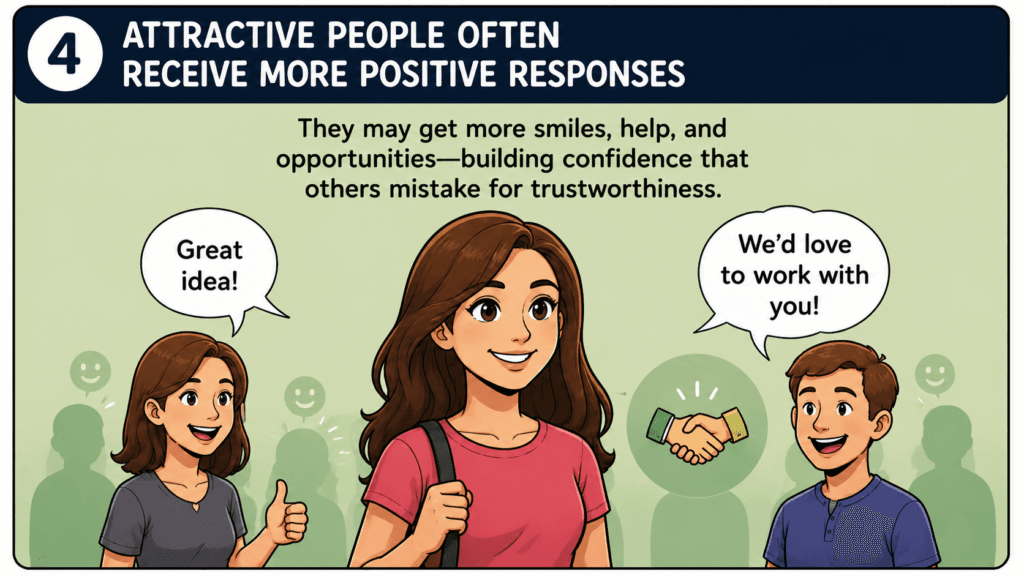
Others may then interpret that confidence as a sign of trustworthiness—even though confidence and honesty are different.
5. We Mistake Confidence for Credibility
People who speak confidently often seem more believable.
When confidence is paired with attractiveness, the effect grows stronger.
However, confidence doesn’t guarantee truthfulness, and looks don’t reveal character.
Building Trust Beyond Appearance
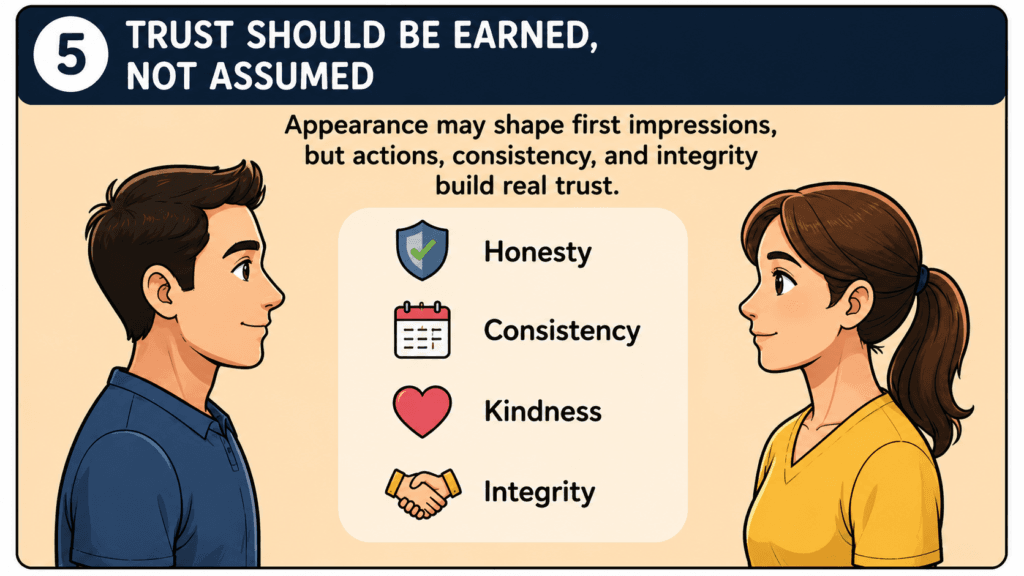
6. Trust Should Be Earned, Not Assumed
While appearance influences first impressions, lasting trust comes from actions, consistency, honesty, and integrity.
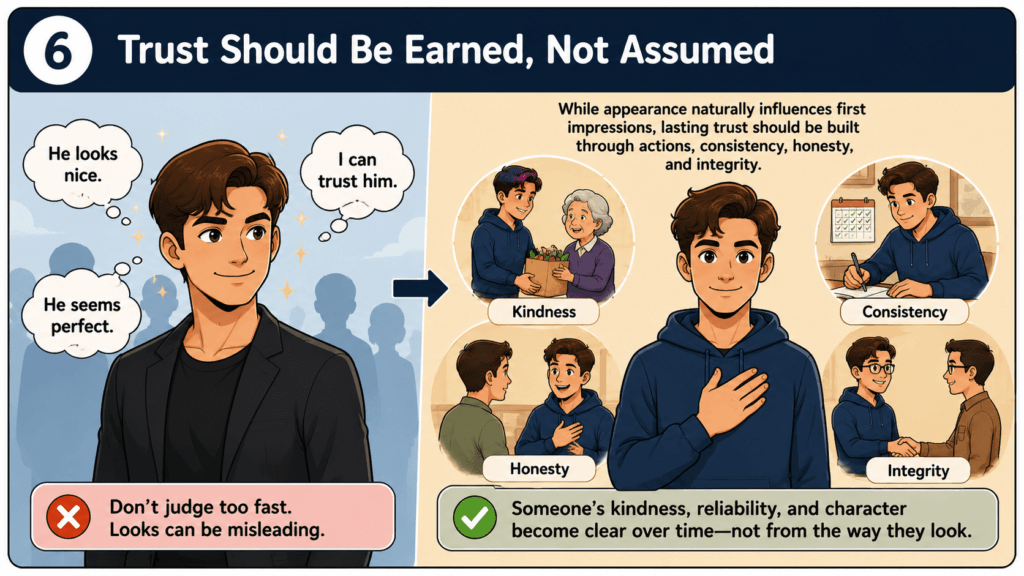
Kindness, reliability, and true character reveal themselves over time—not through looks.
Final Thoughts
Your brain naturally forms quick impressions, and physical attractiveness influences these judgments more than you might realize.
This doesn’t mean attractive people are dishonest or less attractive people are more trustworthy. It highlights a common psychological bias that affects almost everyone.
Next time you meet someone new, remember that while appearance shapes your first impression, only consistent actions show who a person truly is.