
People influence each other every day, but sometimes that influence crosses the line into manipulation. Understanding these behaviors can help you recognize unhealthy dynamics and protect your confidence.
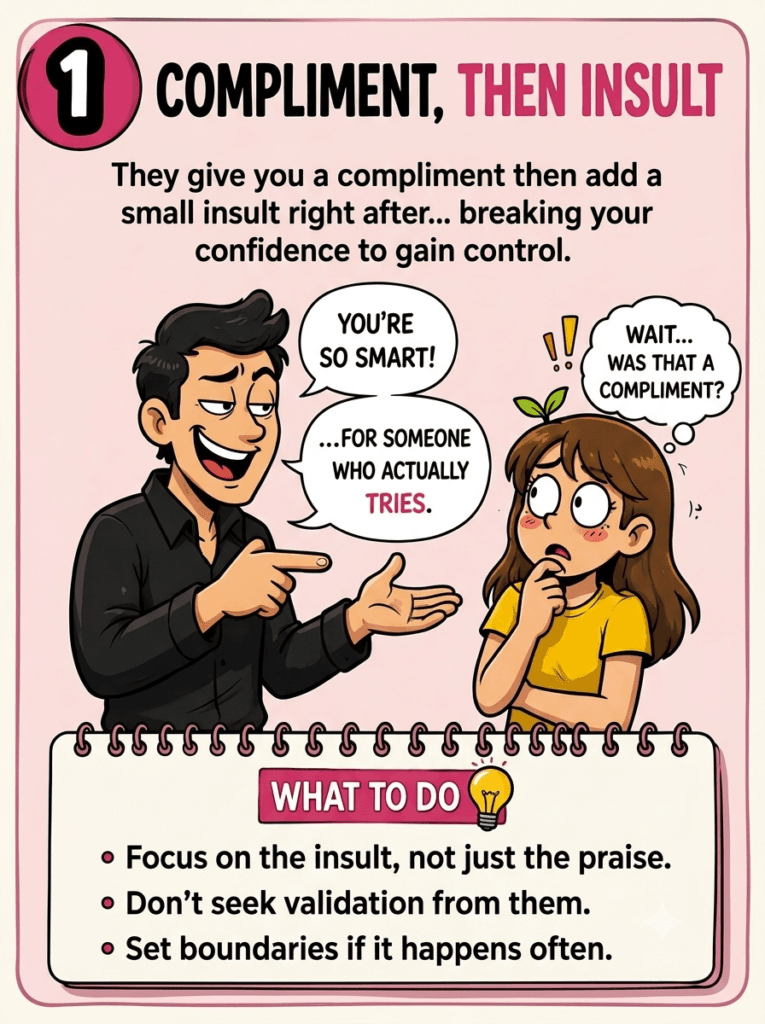
1. The Compliment-Insult Combination
Have you ever heard someone say:
“You’re actually pretty smart… for someone like you.”
At first, it sounds like a compliment, but it’s immediately followed by a subtle insult.
Why It Happens
This tactic creates self-doubt by mixing praise with criticism. The compliment lowers your guard, while the insult leaves you questioning yourself.
What To Do
- Focus on the insult, not just the praise.
- Avoid seeking validation from the person using this tactic.
- Set boundaries if the behavior becomes frequent.
2. Asking Many Questions While Revealing Little
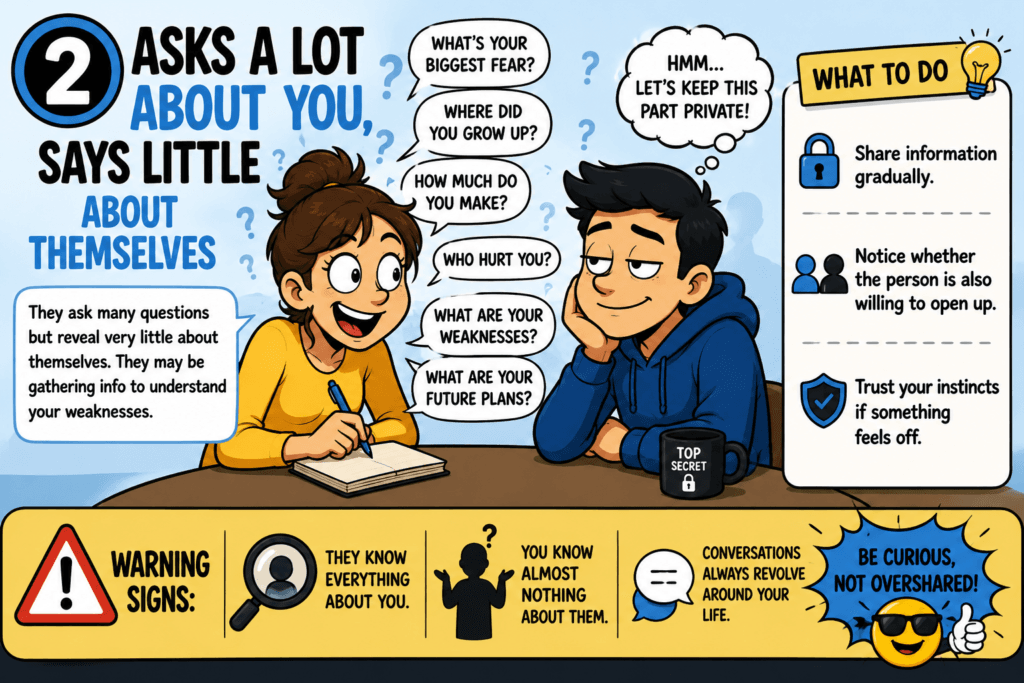
Some people share very little about themselves but ask endless questions about you.
Why It Happens
Not everyone who does this is manipulative. Some are simply shy or curious. However, in some cases, a person may be gathering information to better understand your fears, insecurities, or emotional triggers.
Warning Signs
- They know everything about you.
- You know almost nothing about them.
- Conversations always revolve around your life.
What To Do
- Share information gradually.
- Notice if the person is also willing to open up.
- Trust your instincts if something feels off.
3. Hot-and-Cold Attention
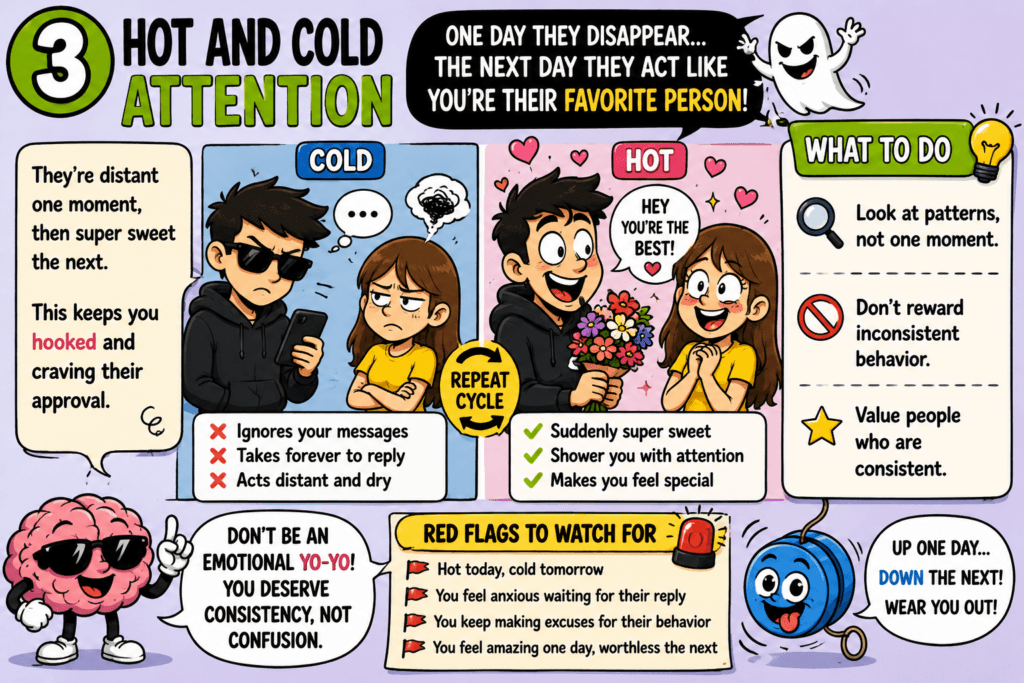
One day they ignore you. The next day they’re incredibly sweet and attentive.
Why It Happens
This unpredictable behavior makes people crave approval and attention. The inconsistency keeps you emotionally invested because you’re always waiting for the next positive interaction.
Common Examples
- Taking hours or days to reply, then suddenly becoming affectionate.
- Acting distant, then showering you with attention.
- Giving mixed signals in friendships or relationships.
What To Do
- Pay attention to patterns, not isolated incidents.
- Don’t reward inconsistent behavior with extra effort.
- Value people who communicate consistently.
Final Thoughts
Not every rude comment, personal question, or delayed reply is a manipulation tactic. Context matters.
However, if you notice repeated patterns that leave you feeling confused, insecure, or dependent on someone’s approval, it may be time to reevaluate that relationship.
The best defense against manipulation is self-awareness, healthy boundaries, and confidence in your own judgment.