
An earthquake can be frightening, especially when you’re several floors above the ground. Many people instinctively want to run for the stairs or rush outside, but that can actually increase the risk of injury.
Knowing the right actions before, during, and after an earthquake can make a significant difference.
Practical Safety Tips to Protect Yourself
1. Stay Calm and Don’t Rush to the Stairs
Your first reaction may be to run out of the building, but stairwells can become crowded or damaged during strong shaking.
Moving while the ground is shaking increases your chances of falling or being struck by debris.
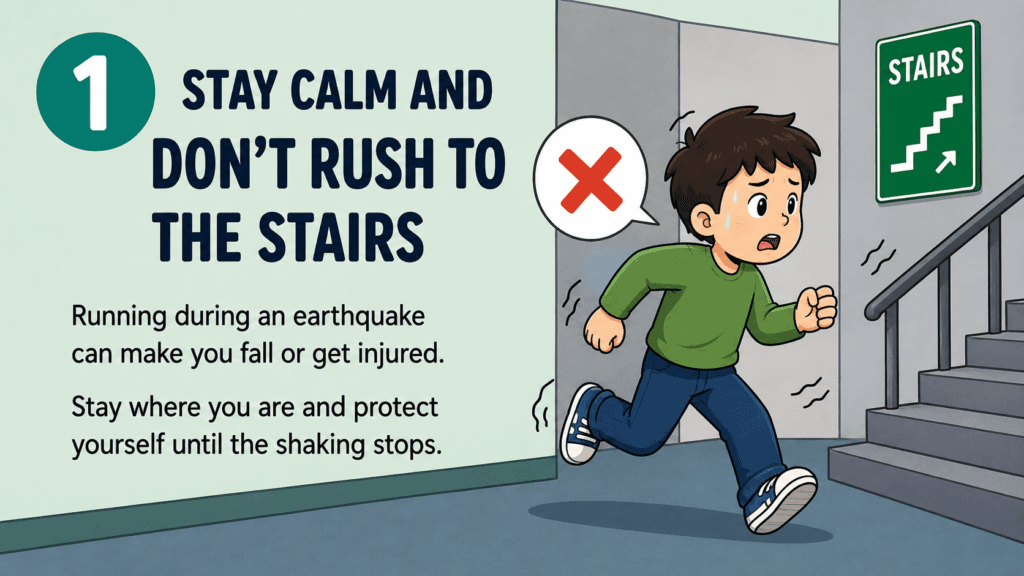
Instead, stay where you are and focus on protecting yourself until the shaking stops.
2. Drop, Cover, and Hold On
The safest action during most earthquakes is to drop to your hands and knees.
Take cover under a sturdy desk or table if available, and hold on until the shaking ends.
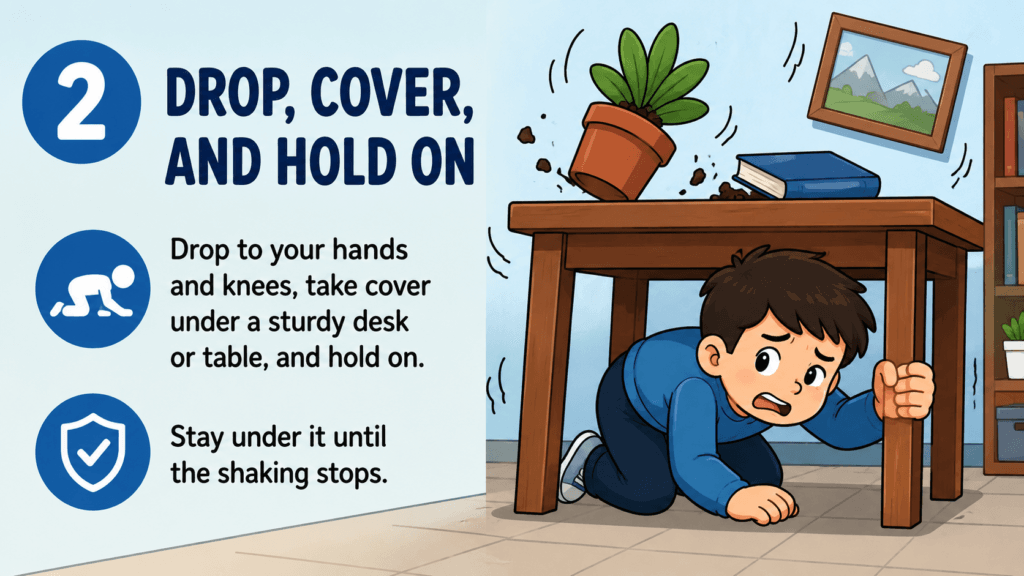
If no table is nearby, protect your head and neck with your arms while staying close to an interior wall away from windows.
3. Stay Away from Windows and Heavy Objects
Glass windows can shatter without warning.
Bookshelves, cabinets, televisions, or hanging lights may fall during intense shaking.
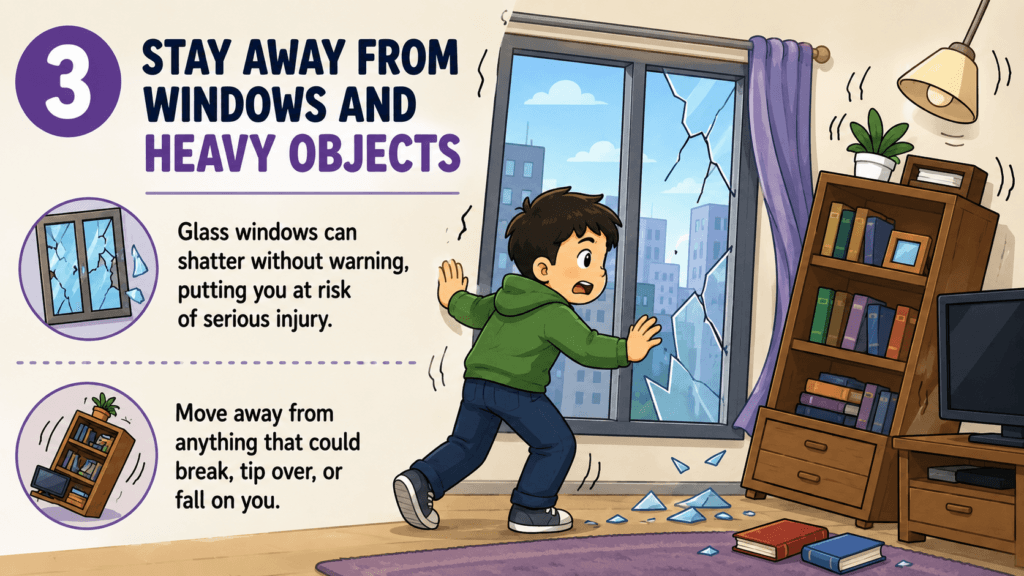
Move away from anything that could break, tip over, or fall on you.
4. Never Use the Elevator
Elevators may stop working due to power outages or system failures during an earthquake.
In some cases, the doors may not open until help arrives.
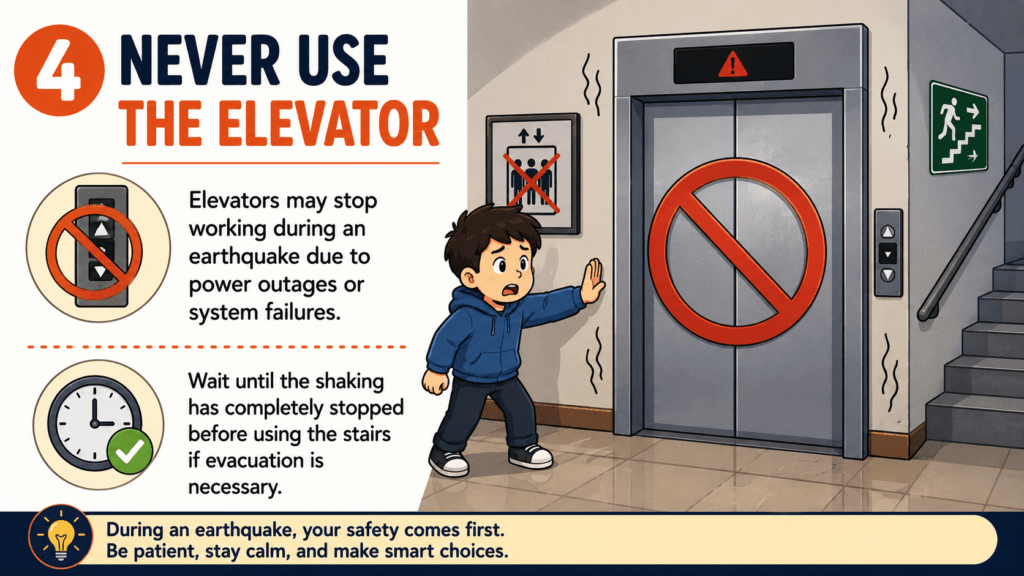
Wait until the shaking has completely stopped before using the stairs if evacuation is necessary.
5. Be Ready for Aftershocks
Large earthquakes are often followed by aftershocks.
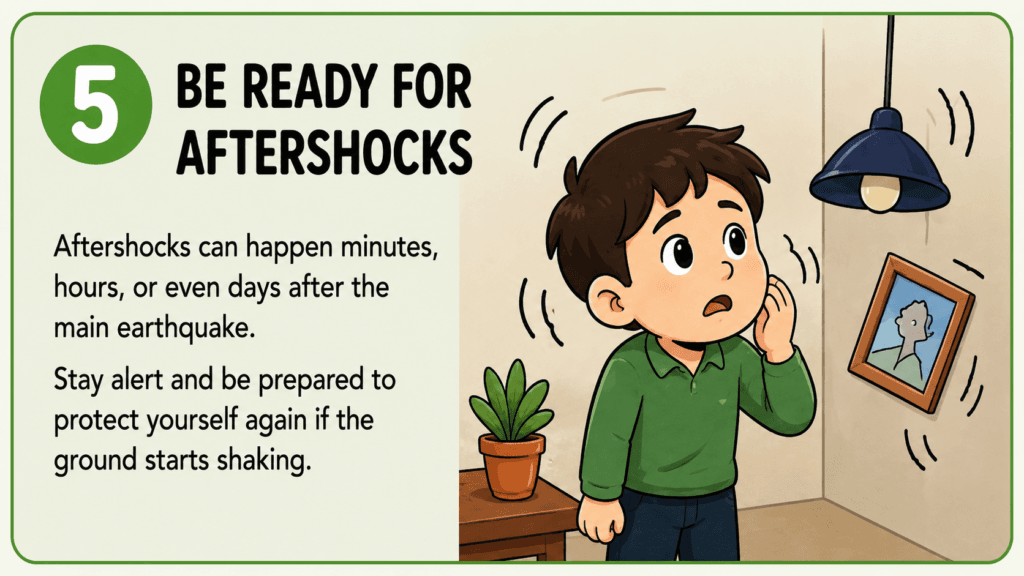
These can be strong enough to cause additional damage.
Stay alert and be prepared to protect yourself again if the ground starts shaking.
After the Shaking Stops
6. Check for Injuries and Hazards
Check yourself and those around you for injuries.
If it’s safe, look for hazards such as:
- Broken glass
- Damaged electrical wires
- Gas leaks
- Small fires
Avoid touching damaged electrical equipment.
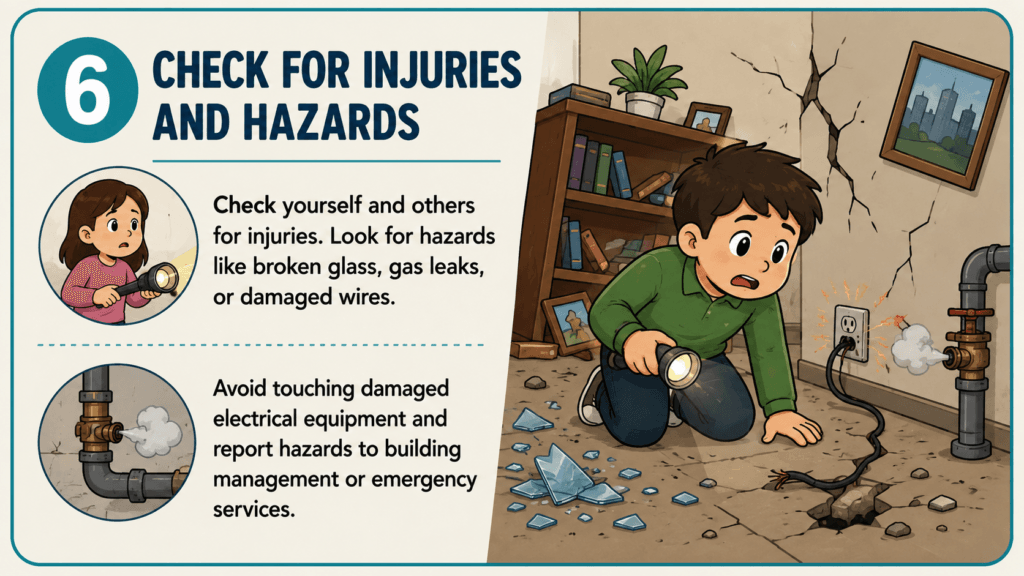
Report dangerous conditions to building management or emergency services.
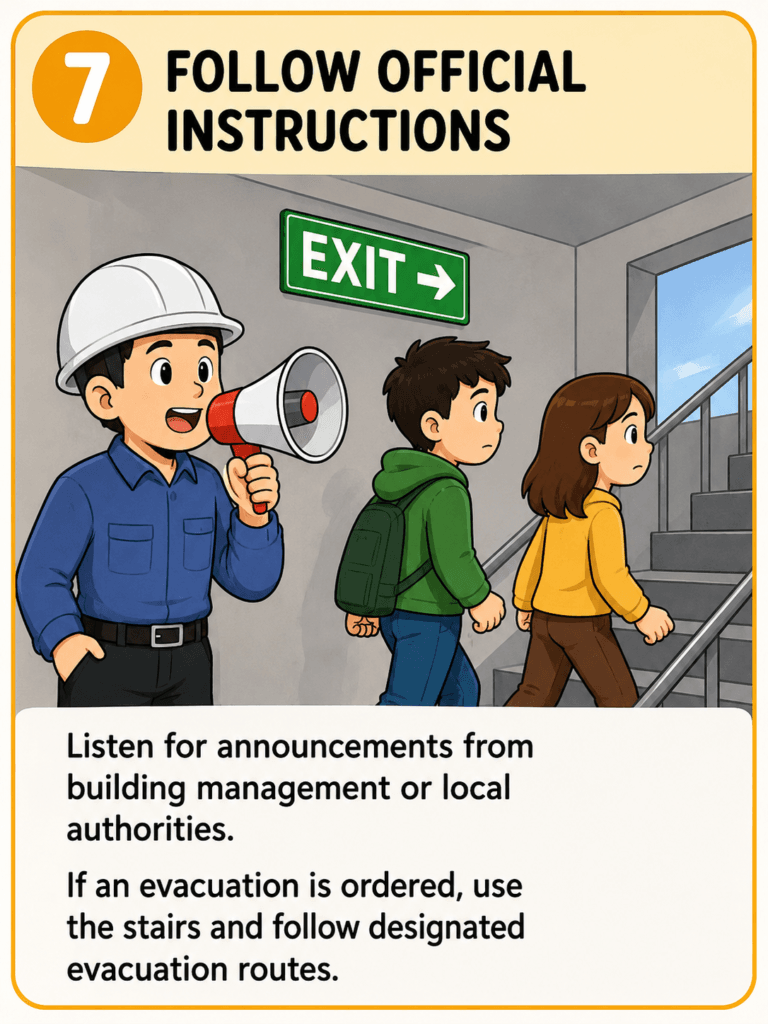
7. Follow Official Instructions
Listen for announcements from building management or local emergency authorities.
If an evacuation is ordered, leave the building calmly using the stairs.
Follow designated evacuation routes and avoid returning inside until officials confirm it is safe.
Final Thoughts
Earthquakes happen without warning, but preparation can greatly reduce your risk of injury.
In a multi-story building, the safest response is usually to stay inside during shaking.
Protect yourself from falling hazards, avoid elevators, and follow official guidance afterward.
Learning these simple steps today could help save your life in a real emergency.