
Most of us grow up hearing the same advice: “Always tell the truth.” Honesty is one of the most important qualities a person can have. It builds trust, strengthens relationships, and helps people communicate openly.
But life isn’t always black and white. There are moments when telling the complete truth can be more complicated than it seems. Sometimes people struggle to balance honesty with kindness, privacy, or safety.
This doesn’t mean lying should become a habit. Instead, it reminds us that every situation deserves careful thought.
Here are seven situations worth thinking about.
1. When Someone’s Safety Is at Risk
Protecting yourself or another person can sometimes take priority over complete honesty.
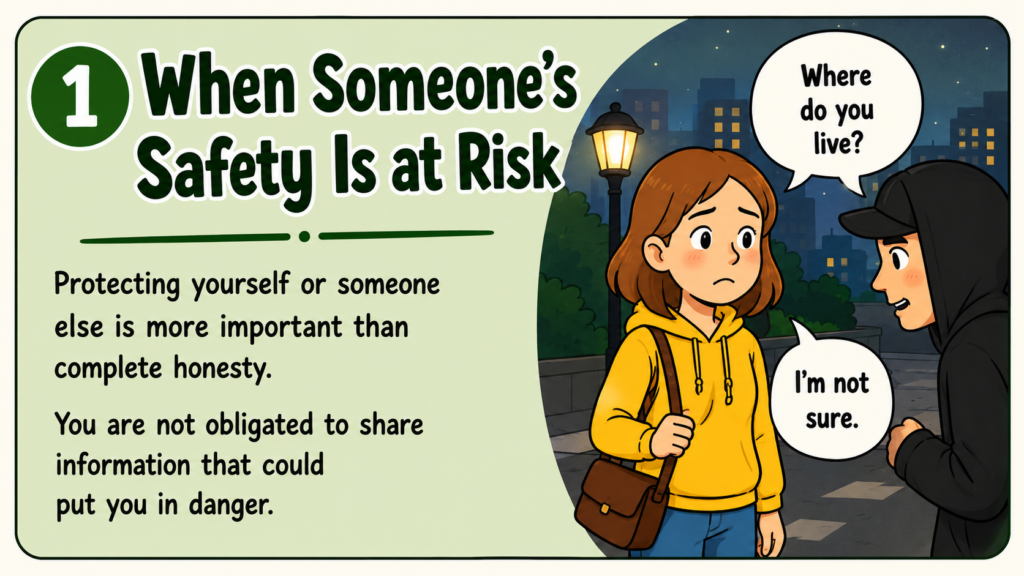
For example, if a stranger asks for personal information that could put you in danger, you are not obligated to reveal the truth. Keeping yourself or someone else safe is often the wiser choice.
Key takeaway: Your safety should never be sacrificed in the name of honesty.
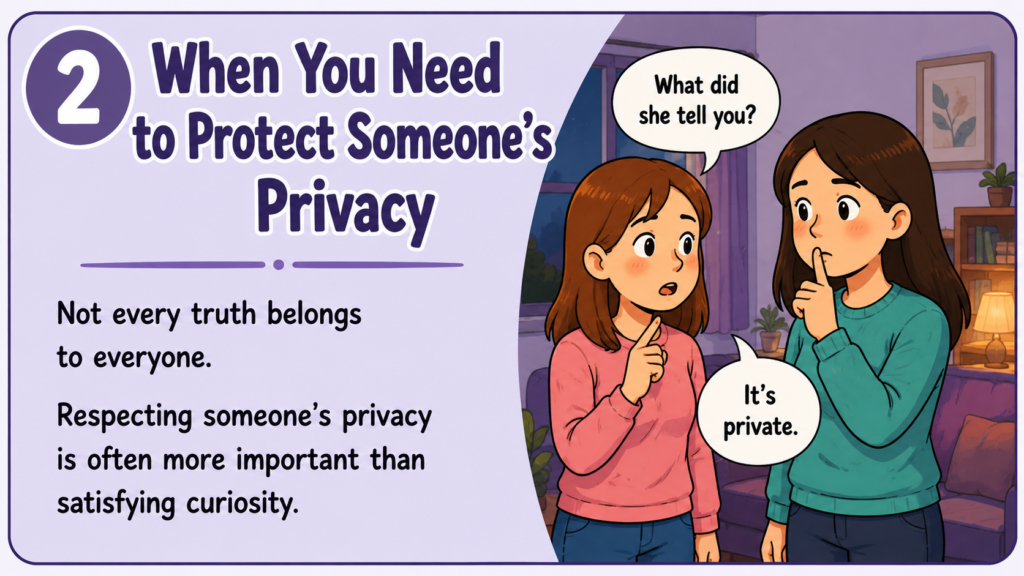
2. When You Need to Protect Someone’s Privacy
Not every truth belongs to everyone.
If someone shares something personal with you in confidence, you don’t have to reveal it just because someone asks. Respecting another person’s privacy is often more important than satisfying someone’s curiosity.
Key takeaway: Protecting confidential information is not the same as being dishonest.
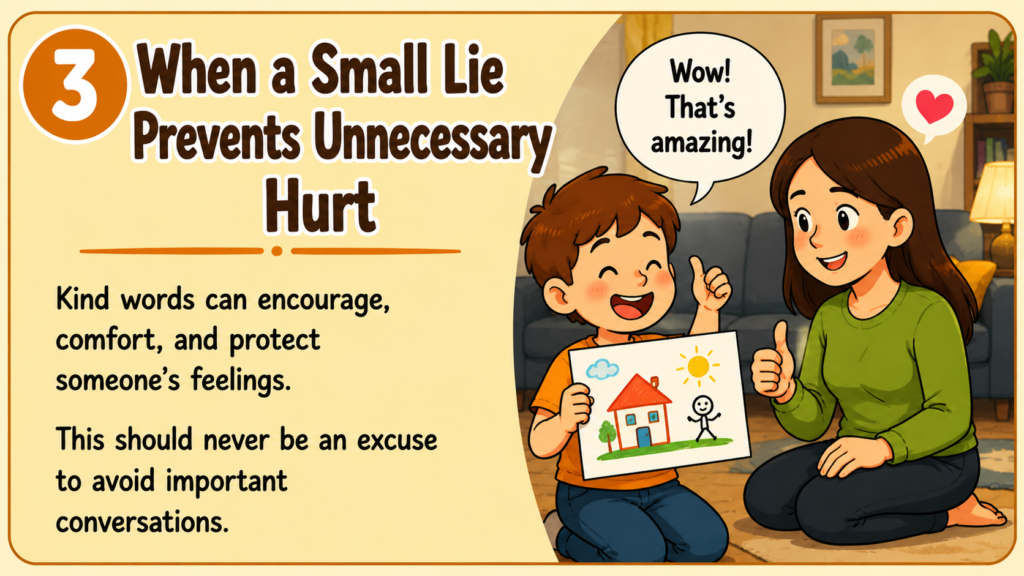
3. When a Small Lie Prevents Unnecessary Hurt
Imagine a child proudly shows you a drawing they spent hours making. You probably wouldn’t criticize every mistake you notice.
Sometimes people choose gentle words instead of harsh honesty to encourage, comfort, or protect someone’s feelings. However, this should never become an excuse to avoid important conversations.
Key takeaway: Kindness should guide your words, but it shouldn’t replace honesty when the truth truly matters.
4. When the Truth Can Wait for a Better Time
Being honest doesn’t always mean saying everything immediately.
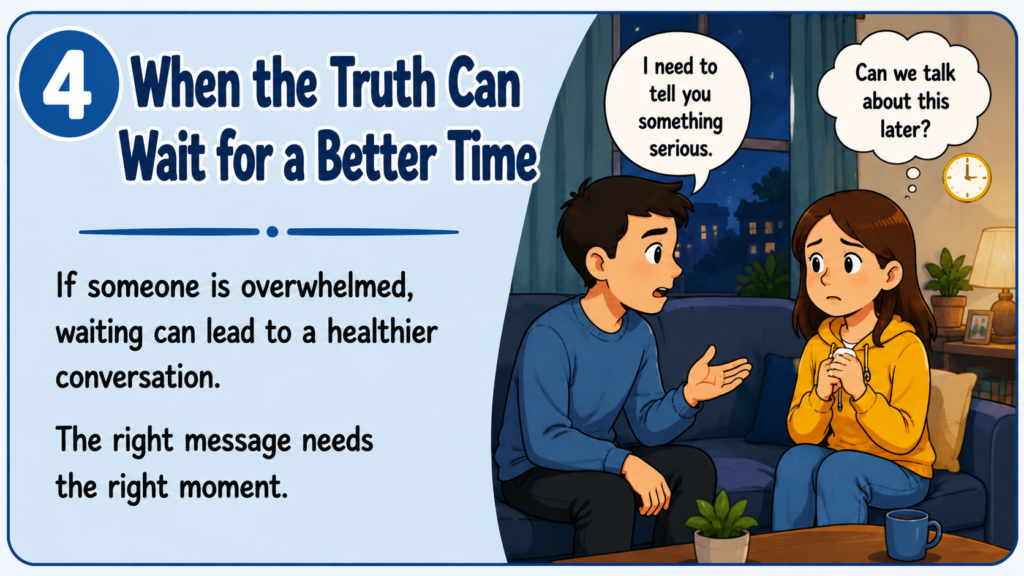
If someone is overwhelmed by grief, shock, or intense emotions, waiting until they are calmer may lead to a healthier conversation. Timing can make the difference between helping someone understand and making a difficult moment even harder.
Key takeaway: Sometimes the right message needs the right moment.
5. When You Need Healthy Personal Boundaries
You are not required to answer every question people ask.
Questions about your finances, relationships, family, or personal life don’t always deserve detailed answers. Politely changing the subject or choosing not to answer is often a better option than feeling pressured to reveal private information.
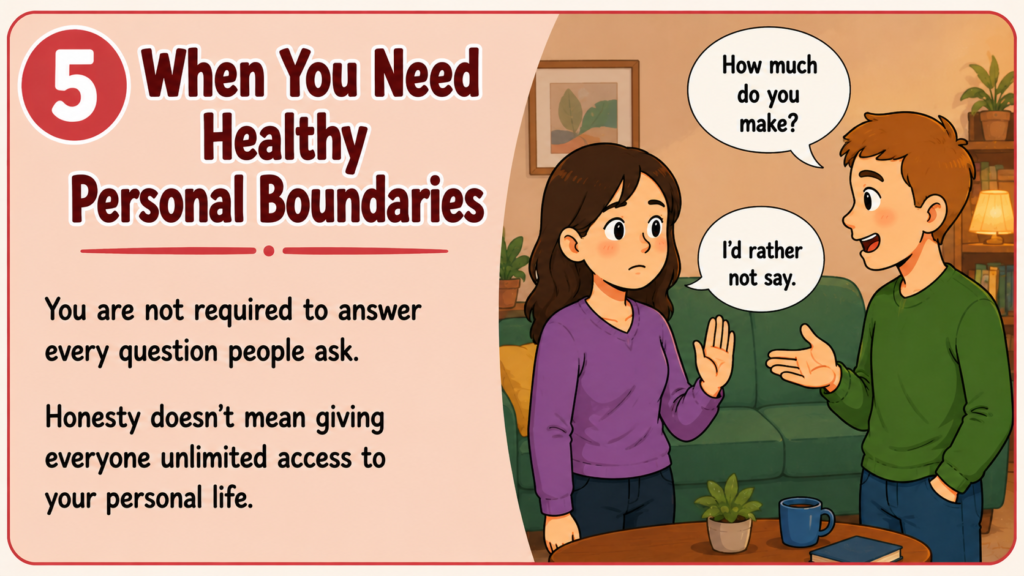
Key takeaway: Honesty doesn’t mean giving everyone unlimited access to your personal life.
6. When Telling the Truth Would Break Someone’s Trust
Suppose a friend shares a personal struggle and asks you to keep it confidential.
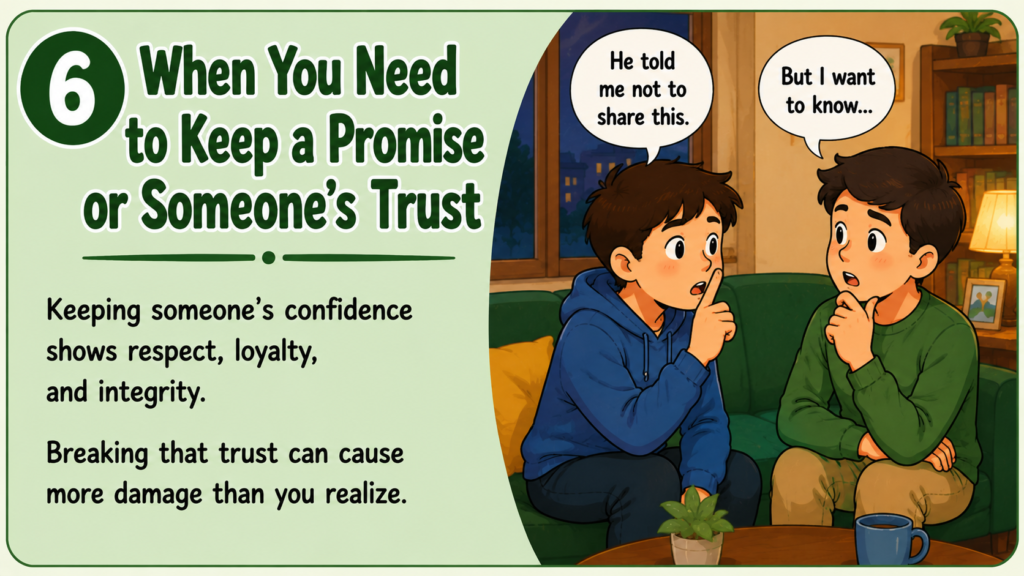
Unless someone’s safety is in immediate danger, keeping that confidence is often the more respectful choice. Loyalty and trust depend on knowing that personal conversations won’t be shared carelessly.
Key takeaway: Keeping a promise can sometimes be more important than revealing information to others.
7. When You’re Tempted to Lie for Your Own Benefit
This is where honesty matters most.
If the reason for lying is to avoid responsibility, hide a mistake, gain an unfair advantage, or manipulate someone, it’s usually a sign that honesty is the better path. While the truth may be uncomfortable in the moment, it often prevents much bigger problems later.
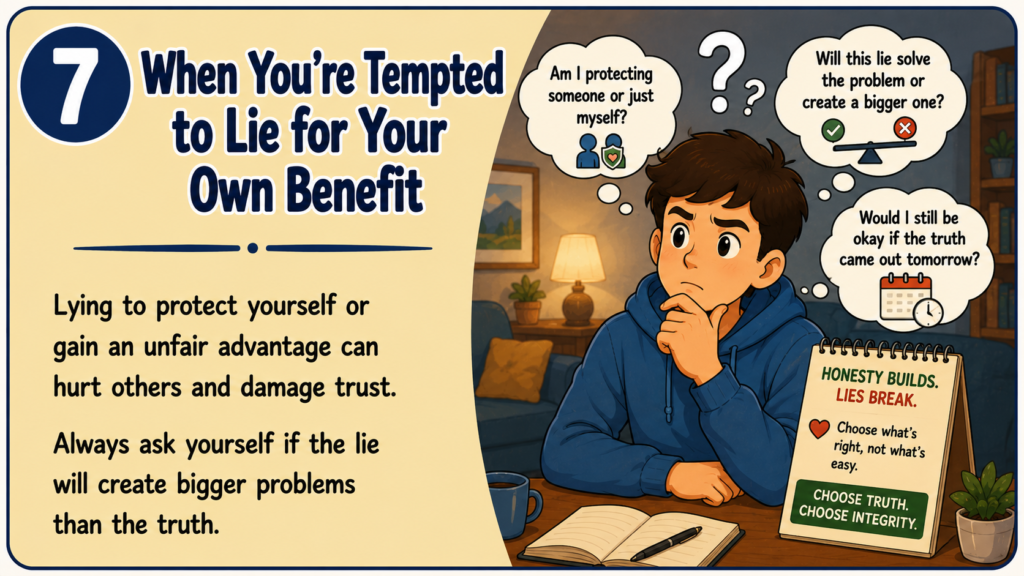
Before saying something untrue, ask yourself:
- Am I protecting someone—or only protecting myself?
- Will this lie solve the problem or create a bigger one?
- Would I still feel comfortable if the truth came out tomorrow?
Key takeaway: If a lie mainly benefits you at someone else’s expense, it’s usually not worth telling.
Final Thoughts
Honesty remains one of the strongest foundations of trust. In most situations, telling the truth is the right choice because it builds stronger relationships and encourages genuine communication.
At the same time, life presents situations where safety, privacy, compassion, or timing require careful judgment. Rather than asking, “Is lying always right or always wrong?”, a better question is:
“What choice is most honest, responsible, and kind in this situation?”
The goal isn’t to become comfortable with lying. It’s to become someone who values truth while also treating others—and yourself—with wisdom, respect, and compassion.