
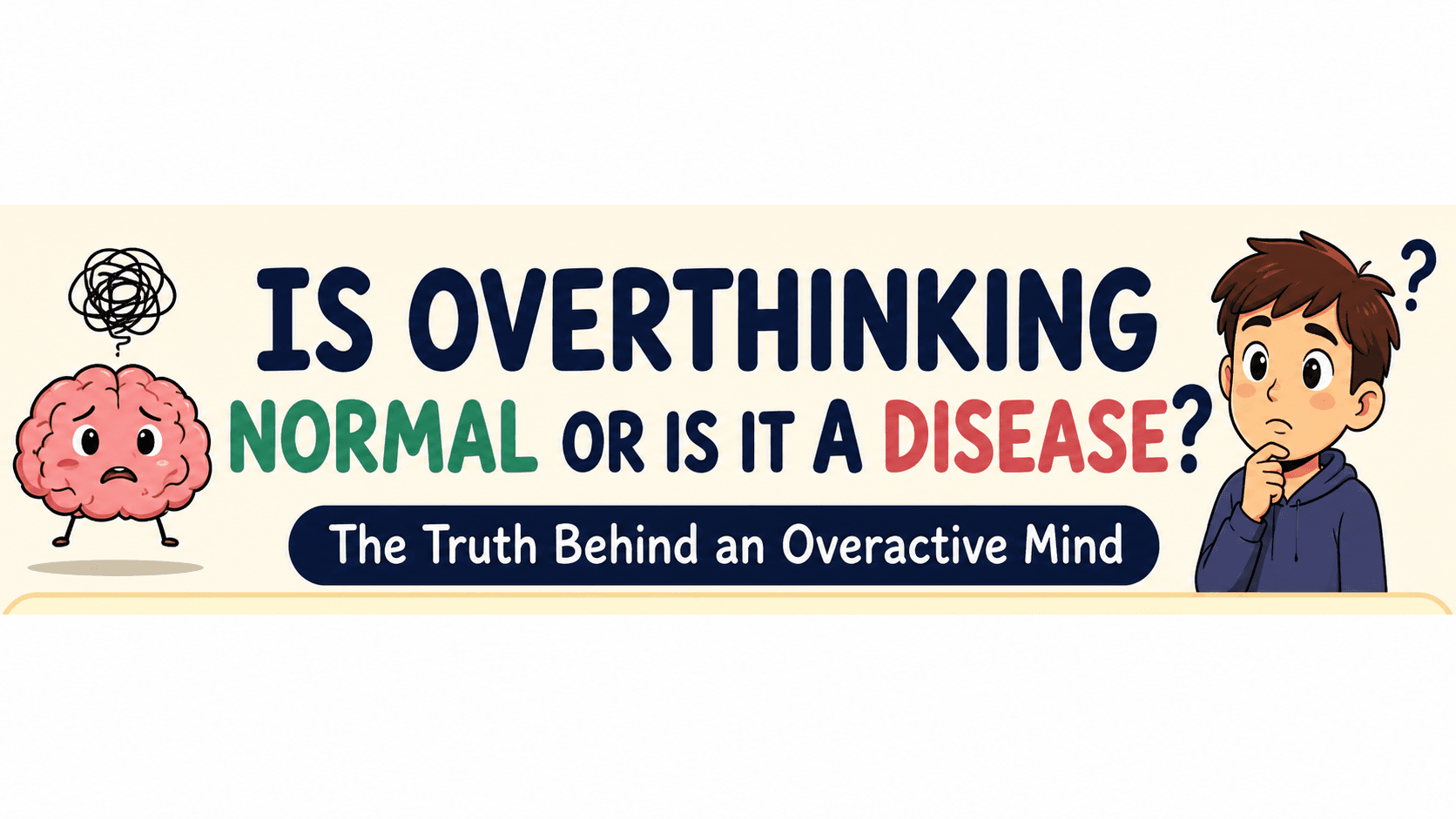
Did you know? Almost everyone overthinks at some point in life.
Before a big decision, an important conversation, or a stressful event, your brain naturally tries to predict what might happen.
But when overthinking becomes constant, it can affect your happiness, confidence, and daily life.
Overthinking Is Usually Normal
1. Overthinking Is Not a Disease
Overthinking itself is not a disease. It is a mental habit where a person repeatedly analyzes situations, conversations, or future events.

Many people do this occasionally, especially during stressful or emotional moments.
Some People Naturally Overthink More Than Others
2. Personality Traits Influence Overthinking
Certain personality traits make overthinking more likely.
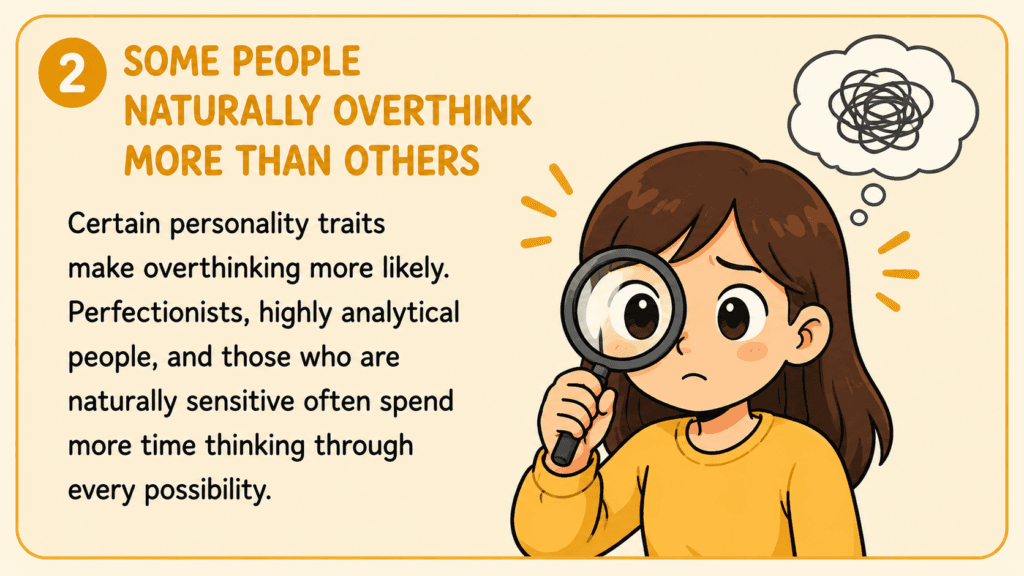
People who are perfectionists, highly analytical, or naturally sensitive often spend more time thinking through every possibility before making a decision.
Past Experiences Can Train the Brain to Overthink
3. How Life Events Affect Overthinking
People who have experienced heartbreak, failure, betrayal, or major disappointments may develop the habit of overthinking.
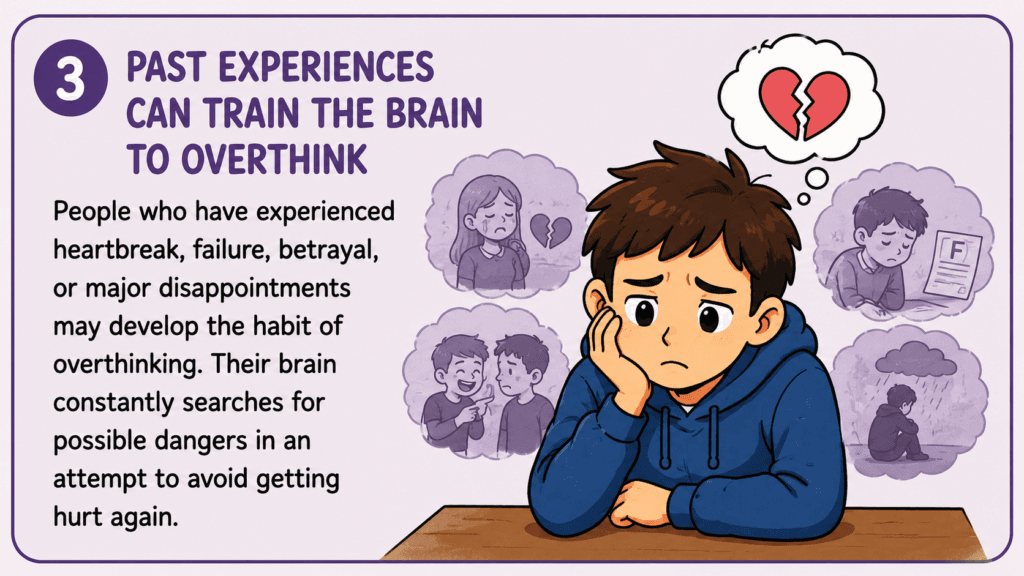
Their brain constantly searches for possible dangers to avoid getting hurt again.
Anxiety Can Make Overthinking Worse
4. The Link Between Anxiety and Overthinking
While overthinking is not a disease by itself, it can sometimes be connected to anxiety.

People with anxiety often imagine worst-case scenarios, replay conversations, and worry about problems that may never happen.
When Does Overthinking Become a Problem?
5. Signs Overthinking Is Unhealthy
Overthinking becomes unhealthy when it:
- Happens almost every day
- Is difficult to control
- Causes constant stress
- Affects sleep
- Makes it hard to make even simple decisions
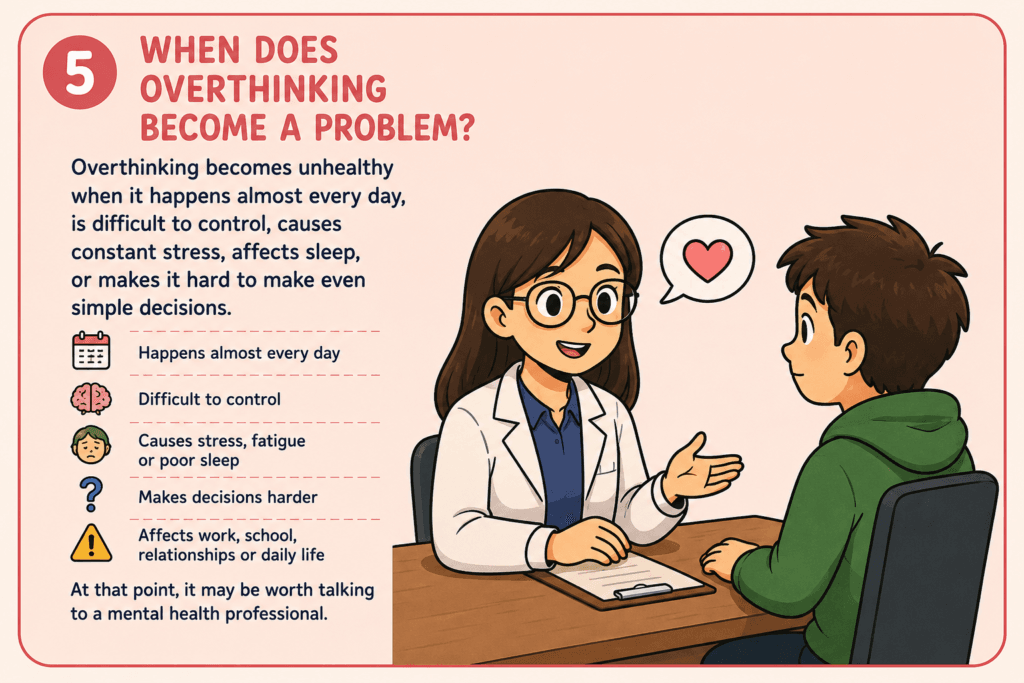
At this point, it may be worth talking to a mental health professional to see if an anxiety-related condition is involved.
You Can Learn to Manage It
6. How to Quiet an Overactive Mind
The good news is that overthinking is a habit many people can improve.
Some helpful approaches include:
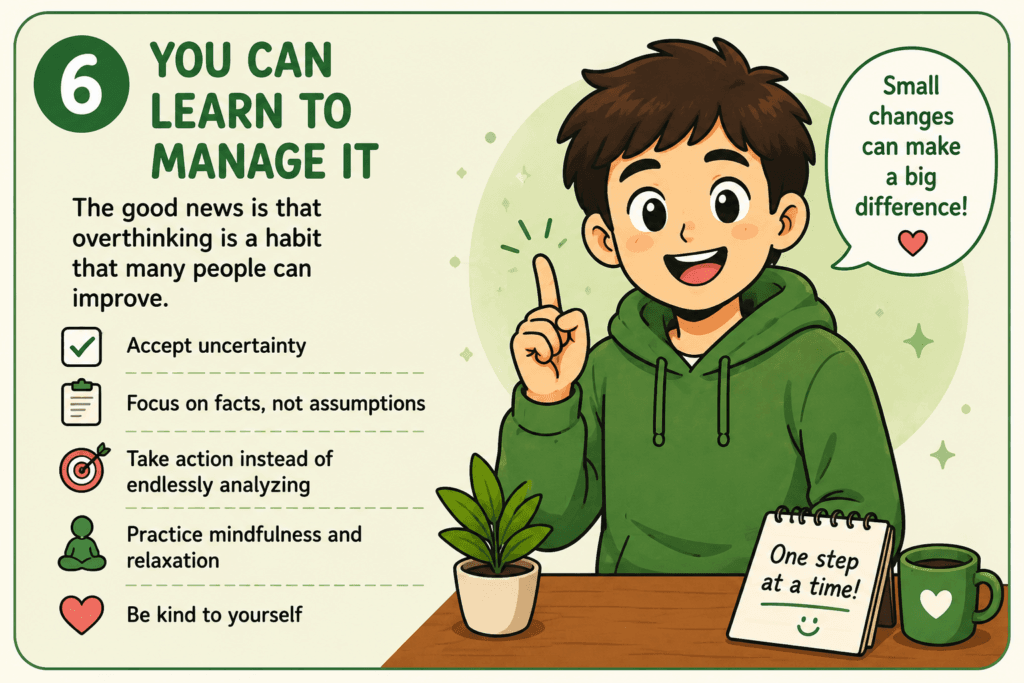
- Accepting uncertainty
- Focusing on facts instead of assumptions
- Taking action instead of endlessly analyzing
Over time, these strategies can help calm an overactive mind.
Final Thoughts
Being an overthinker doesn’t mean you are weak, broken, or mentally ill.
It simply means your brain spends more time analyzing situations than most people.
In moderation, careful thinking can be helpful.
But when thinking never leads to action, it can become a burden.
The goal isn’t to stop thinking—it’s to recognize when you’ve thought enough and trust yourself to move forward.