

Have you ever found yourself waiting for one final conversation, one heartfelt apology, or one clear explanation before you could truly move on?
Many people believe that closure is the key to healing after a breakup, friendship, or painful life event. But psychology suggests that healing doesn’t always depend on getting answers from someone else.
In fact, waiting for closure can sometimes keep you emotionally trapped. Here are six psychology-based reasons why you don’t always need closure to heal.
1. Your Brain Wants Certainty, Not Necessarily the Truth
The human brain naturally dislikes unanswered questions. When a relationship ends without explanation, your mind keeps searching for reasons because uncertainty feels uncomfortable.

However, finding an answer doesn’t always bring peace. Sometimes, simply accepting that not every question has a satisfying answer allows your mind to stop chasing what it cannot change.
2. Not Everyone Can Give You the Answers You Want
Even if you get the chance to ask “Why?”, the other person may not fully understand their own actions.
They may avoid the truth, protect your feelings, or simply be unable to explain what happened.
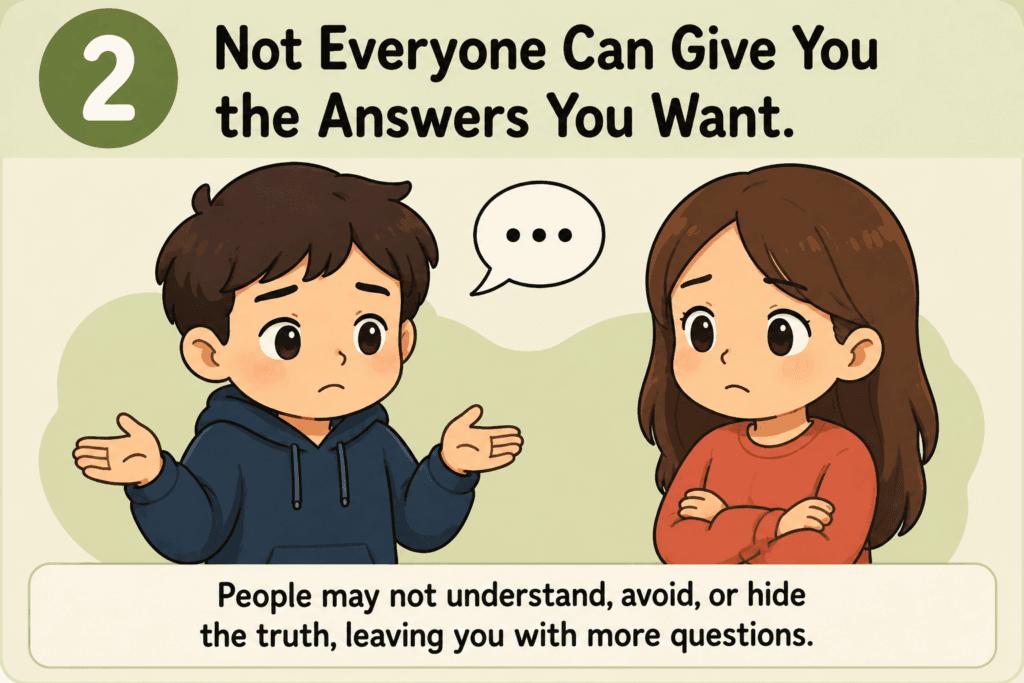
This means that the closure you’re hoping for may never arrive—or it may leave you with even more questions than before.
3. Waiting for Closure Gives Someone Else Control Over Your Healing
When you believe you need another person’s explanation before moving on, you’re placing your emotional recovery in their hands.
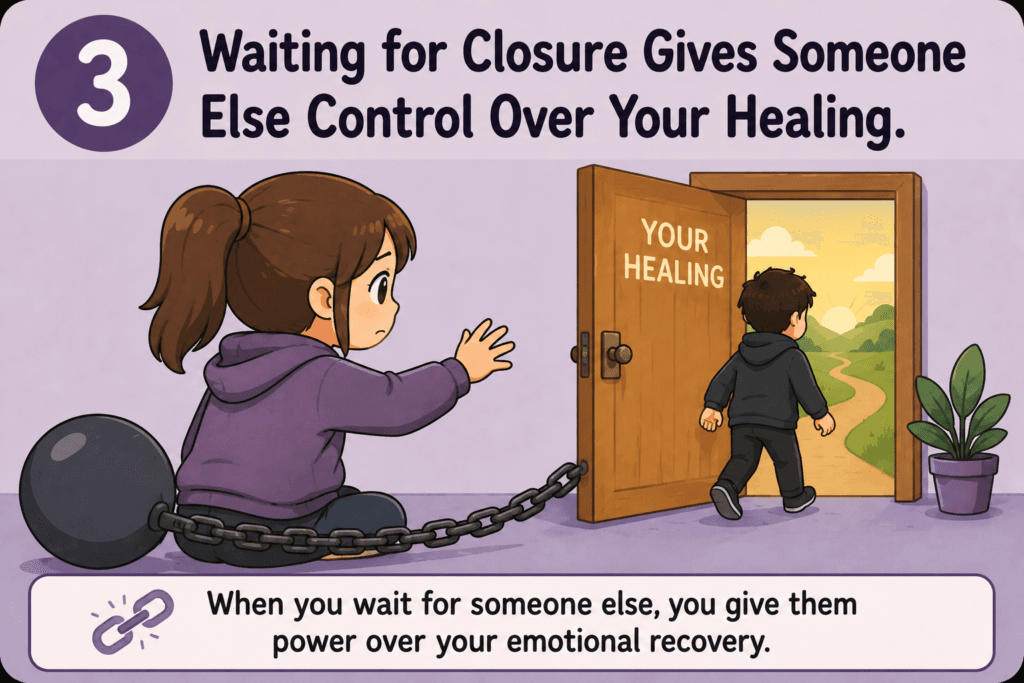
Healing becomes delayed because you’re waiting for someone else’s decision.
True emotional freedom begins when you realize your recovery doesn’t require their permission.
4. Acceptance Is More Powerful Than Understanding
Many people believe they must understand everything before they can let go.
But psychology shows that acceptance often matters more than complete understanding.
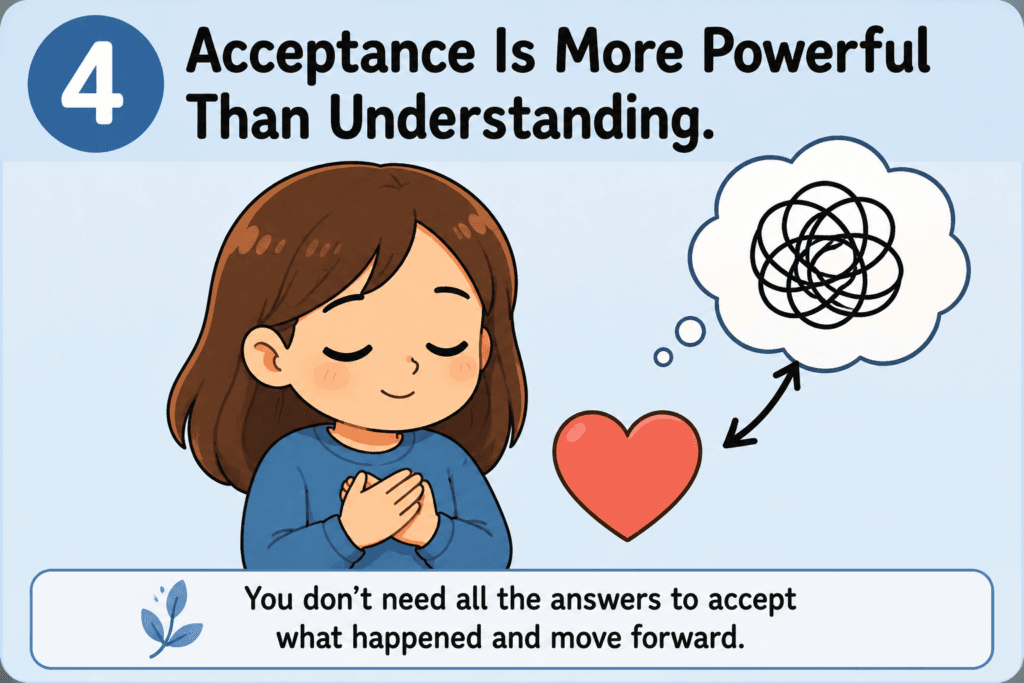
You may never know exactly why someone left, changed, or hurt you. Yet you can still accept what happened, learn from it, and continue building a meaningful life.
5. Your Actions Heal You More Than Their Words
Real healing usually comes from what you do after the pain—not from what someone else says.

Spending time with loved ones, building healthy habits, discovering new goals, and practicing self-care gradually teach your brain that life continues.
Over time, these experiences become more powerful than any explanation you could have received.
6. Closure Often Comes From Within
One of the greatest psychological truths is that closure is often a personal decision, not a gift someone else gives you.
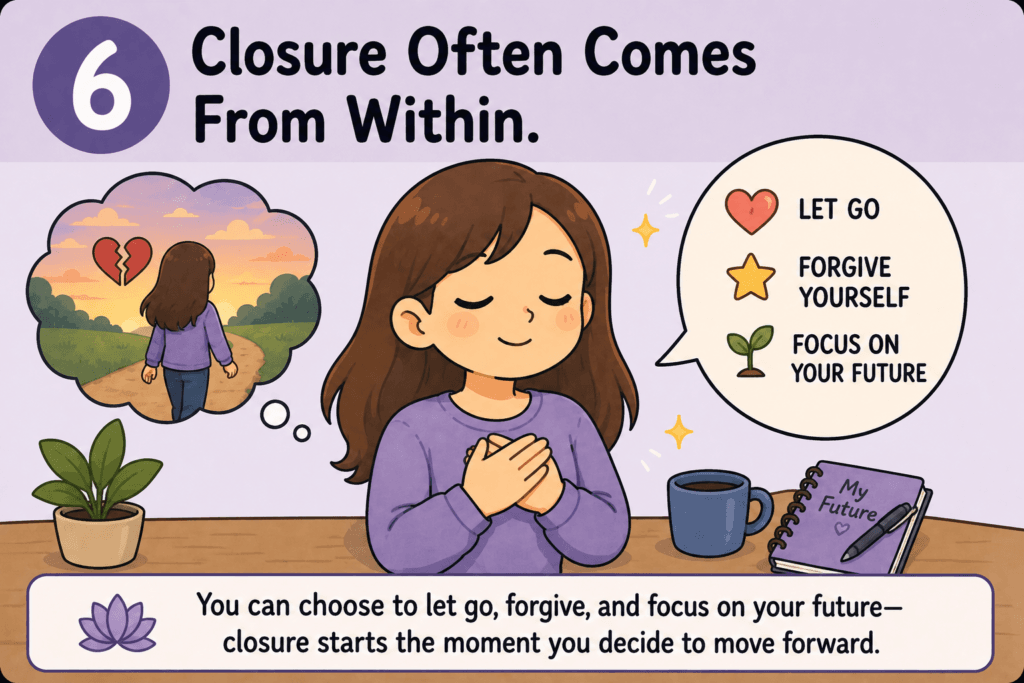
It happens when you choose to stop replaying the past, forgive yourself for what you cannot control, and focus on creating a better future.
You don’t have to wait for an apology, a message, or a final conversation to begin healing.
Final Thoughts
Closure can certainly help in some situations, but it isn’t the only path to healing.
Sometimes the peace you’re searching for doesn’t come from another person’s words—it comes from your own decision to let go.
The moment you stop waiting for someone else to give you closure is often the moment your healing truly begins.
Moving forward doesn’t always require answers. Sometimes, it simply requires courage.