

In today’s world, people often feel pressure to explain everything—every decision, opinion, and action. Many believe that speaking more makes them appear smarter, more confident, or more persuasive. However, psychology suggests the opposite is often true.
People who speak thoughtfully rather than excessively are usually seen as more confident, emotionally mature, and trustworthy. This doesn’t mean staying silent all the time. Instead, it means choosing your words carefully and letting your actions speak just as loudly.
Why Saying Less Can Earn You More Respect
1. Silence Creates Confidence
Confident people rarely feel the need to prove themselves through constant talking.
They don’t rush to fill every silence or justify every decision.

Psychologists link calm, measured communication to emotional security. When someone is comfortable with silence, others tend to see them as self-assured rather than insecure.
2. People Value Words That Are Rare
Scarcity increases value—not just for products but also for communication.
When someone speaks constantly, others may start tuning them out.

But when someone speaks only after thinking carefully, people naturally pay closer attention because those words are likely to matter.
Quality often has a stronger impact than quantity.
3. Listening Builds Respect
One of the fastest ways to earn respect is to make others feel heard.
Active listening shows empathy, patience, and emotional intelligence.

Instead of preparing your next response while someone is talking, listening carefully lets you understand their perspective before sharing your own.
People often remember how you made them feel more than how much you talked.
The Power of Thoughtful Communication
4. Speaking Less Reduces Unnecessary Conflict
Many arguments escalate because people react immediately without thinking.
Pausing before responding gives your brain time to regulate emotions and choose words carefully.
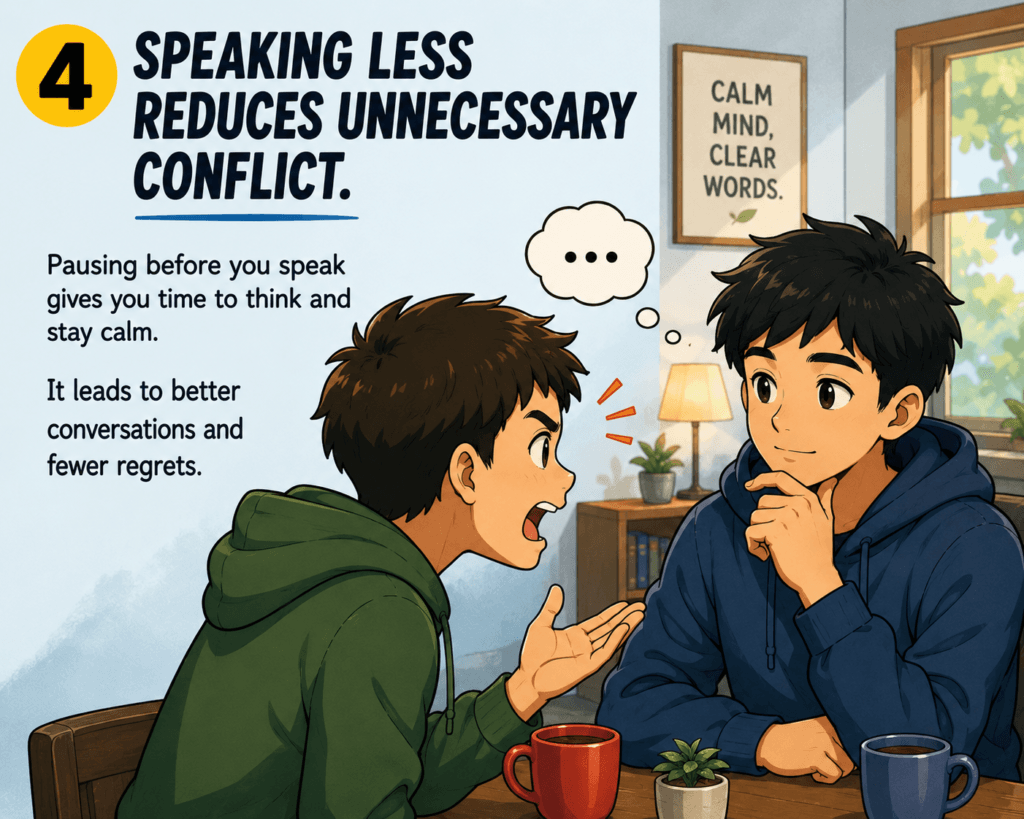
This doesn’t guarantee agreement, but often leads to calmer, more productive conversations.
Thoughtful communication is usually more persuasive than emotional reactions.
5. Mystery Naturally Sparks Curiosity
People are naturally curious about those who don’t reveal everything about themselves right away.
Sharing every opinion, plan, and personal detail all at once leaves little room for curiosity.

Maintaining healthy boundaries makes interactions feel more meaningful while protecting your privacy.
Being private isn’t the same as being secretive—it means choosing what to share and when.
6. Actions Build Credibility Better Than Explanations
It’s easy to promise, explain, or defend yourself.
It’s much harder—and far more convincing—to consistently follow through with your actions.

Psychology shows that people judge trustworthiness more by behavior over time than by persuasive words.
Reliability, consistency, and integrity speak louder than long explanations.
7. Emotional Control Commands Respect
People who stay calm during stressful conversations often gain more respect than those who react impulsively.
Choosing not to respond immediately isn’t weakness. Sometimes it’s emotional discipline.
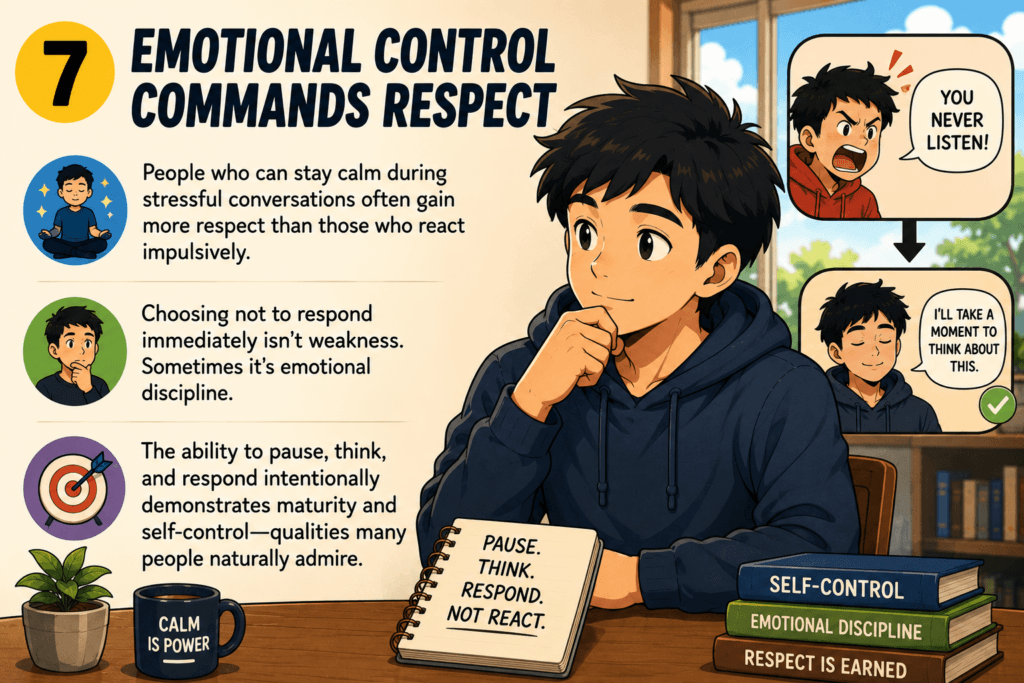
The ability to pause, think, and respond intentionally shows maturity and self-control—qualities many people admire.
Final Thoughts
Speaking less doesn’t mean becoming quiet, distant, or afraid to express yourself.
It means communicating with intention instead of impulse.
The goal isn’t to say fewer words just for silence’s sake. It’s to make your words meaningful, your listening genuine, and your actions consistent.
In many situations, respect isn’t earned by who speaks the loudest. It’s earned by those whose words carry thought, whose actions reflect integrity, and whose presence speaks even when they aren’t saying much.
Disclaimer
This article discusses general psychological principles and communication patterns.
People’s perceptions vary depending on culture, personality, and context.
Speaking less doesn’t automatically earn respect.
Open communication remains essential in healthy relationships, teamwork, and situations where expressing your thoughts is important.