
Turning 30 doesn’t magically make life easier. You still deal with stress, responsibilities, disappointments, and uncertainty. But something slowly changes as you grow older: your perspective.
Many people discover that peace becomes more important than validation. Energy becomes more valuable than drama. And protecting your mental health starts to matter more than trying to impress everyone around you.
Here are some things many emotionally mature adults slowly stop caring about after 30.
1. Trying to Impress Everyone
When you’re younger, it’s easy to care too much about what other people think.
You want people to approve of your choices, your appearance, your lifestyle, or even your success.

But after enough life experience, many people realize something important: no matter what you do, someone will always judge you anyway.
Emotionally mature adults learn that constantly seeking validation is exhausting. Instead of trying to impress everyone, they focus on building a life that genuinely makes them happy.
2. Comparing Your Life to Other People
Social media makes comparison feel unavoidable.
Someone is always getting married, traveling, buying a car, earning more money, or achieving something faster.

But after 30, many people start understanding that life is not a race.
- People grow at different speeds
- Some succeed early
- Some succeed later
- Some completely change direction halfway through life
Comparing timelines only creates unnecessary pressure and anxiety.
3. Toxic Friendships
One of the biggest mindset changes that comes with age is realizing that not every friendship is meant to last forever.
After 30, many people stop forcing connections that drain them emotionally.

They begin valuing peace, loyalty, honesty, and emotional safety more than popularity or large social circles.
A smaller circle often feels healthier than constantly surrounding yourself with negativity.
4. Always Saying Yes
Younger people often feel guilty for saying no.
But emotionally mature adults understand that protecting your time and energy is important.
Saying yes to everything can lead to stress, burnout, and emotional exhaustion.
Sometimes saying no is not selfish. It’s necessary.
Healthy boundaries are one of the most valuable forms of self-respect.
5. Looking Perfect All the Time
After a certain age, many people stop obsessing over unrealistic standards.
Perfect bodies, perfect skin, perfect lifestyles, and perfect online images become less important compared to feeling healthy, emotionally stable, and genuinely happy.
Maturity teaches people that authenticity feels better than pretending.
6. Winning Every Argument
Not every disagreement needs to become a battle.
After 30, many people realize that protecting their peace matters more than proving they are right all the time.
Some arguments only waste energy.
Some people simply refuse to understand.
And sometimes silence is more powerful than explaining yourself repeatedly.
7. Fear of Starting Over
Many adults secretly feel behind in life.
But one important lesson that often comes with age is understanding that it’s never too late to change direction.
People change careers.

People heal from heartbreak.
People rebuild their lives from nothing.
People discover new passions later in life.
Starting over is not failure. Sometimes it’s growth.
8. Living Based on Other People’s Expectations
Society constantly creates pressure about where you should be by a certain age.
- Have a stable career
- Get married
- Buy a house
- Become successful quickly
But life rarely follows a perfect timeline.

Emotionally mature people slowly stop building their lives around other people’s expectations and start focusing on what truly gives them meaning and peace.
Final Thoughts
Getting older doesn’t mean you stop caring completely.
It means you become more careful about what deserves your energy.
After 30, many people realize that peace is valuable.
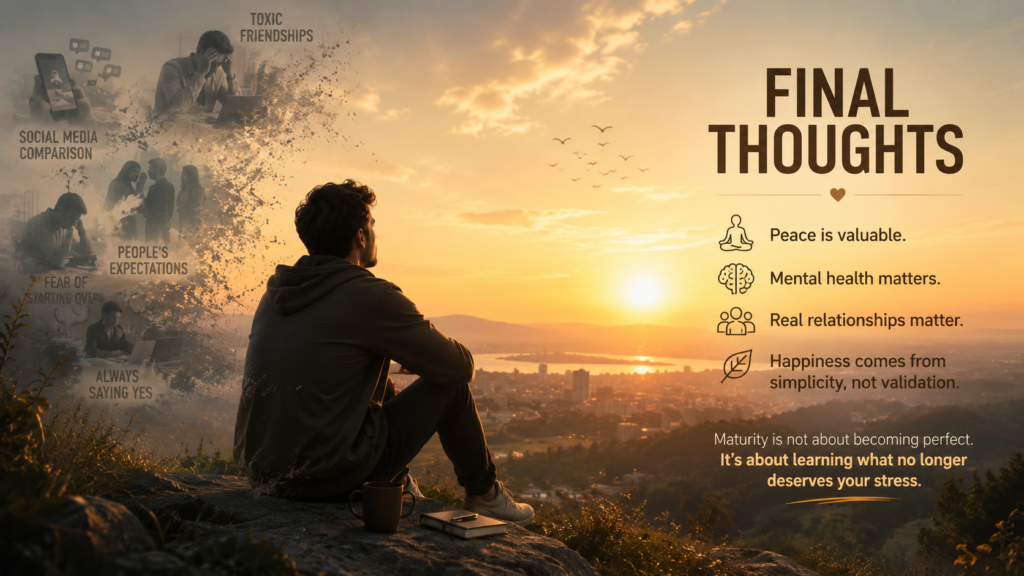
Mental health matters.
Real relationships matter.
And happiness often comes from simplicity, not constant validation.
Maturity is not about becoming perfect. It’s about learning what no longer deserves your stress.