

Few things can be as emotionally exhausting as suspecting your partner is being unfaithful without clear evidence. Every unanswered text, late night at work, or change in behavior can make your mind race.
However, suspicion alone doesn’t confirm that someone is cheating.
Before making accusations that could damage your relationship, take a step back and approach the situation carefully. Here are seven healthy ways to handle your concerns.
1. Don’t Jump to Conclusions
Suspicion is not proof.
Changes in behavior can happen for many reasons, including stress, work pressure, family problems, or mental health struggles.
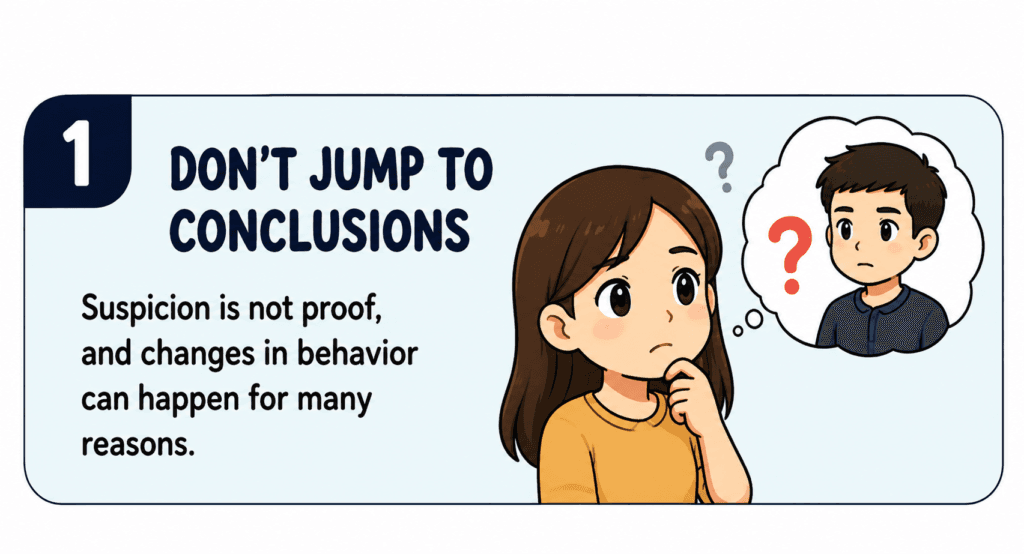
Acting solely on fear may create problems that didn’t exist before.
Give yourself time to separate facts from assumptions.
2. Ask Yourself Why You Feel This Way
Take an honest look at what’s fueling your suspicion.
Ask yourself:
- Has your partner’s behavior changed consistently?
- Did something specific happen to make you suspicious?
- Could past experiences or previous betrayals be affecting how you see the situation?
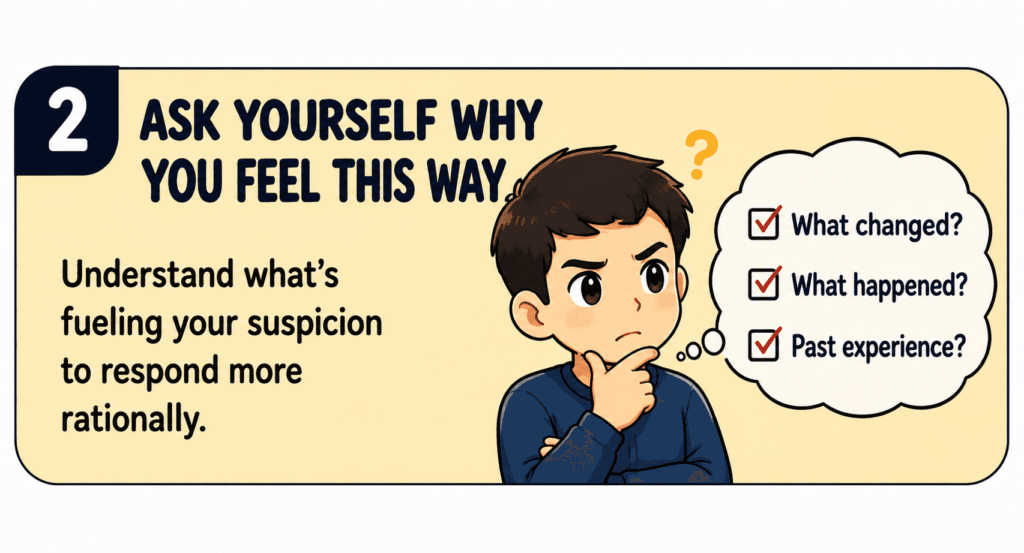
Understanding your emotions helps you respond more rationally.
3. Observe Patterns, Not Isolated Incidents
One late night or one forgotten message doesn’t automatically mean someone is cheating.
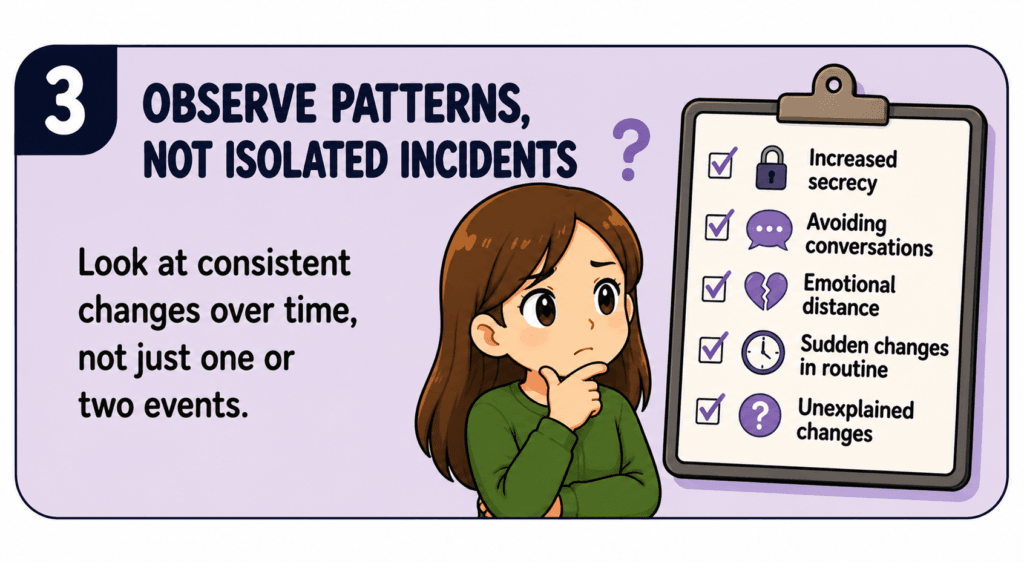
Instead, pay attention to consistent changes over time, such as:
- Increased secrecy
- Avoiding conversations
- Sudden emotional distance
- Unexplained changes in routine
Looking at long-term patterns is more reliable than reacting to isolated events.
4. Have an Honest Conversation
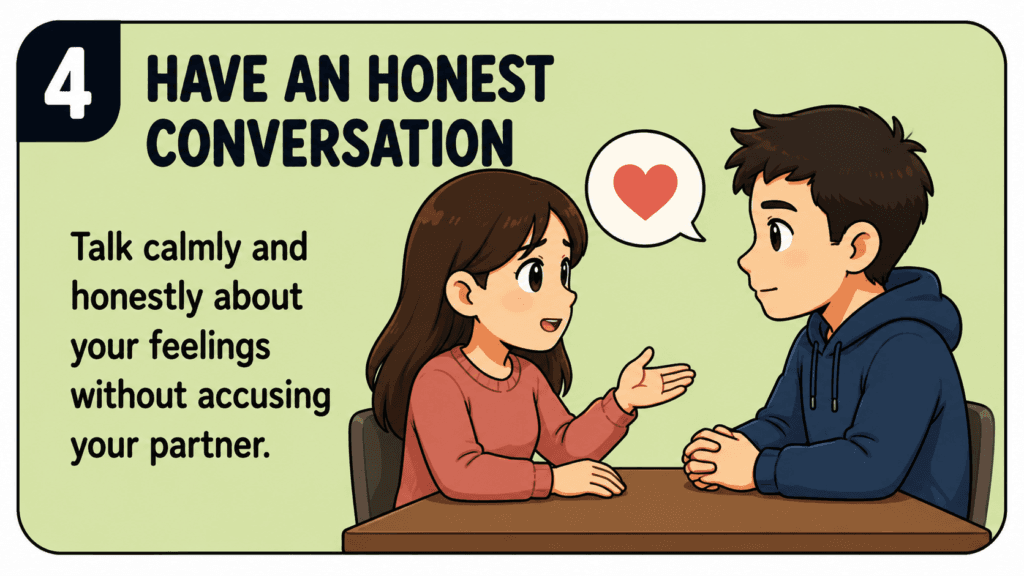
Choose a calm moment and share your concerns without making accusations.
Instead of saying:
“I know you’re cheating on me.”
Try saying:
“I’ve been feeling insecure lately because I’ve noticed some changes between us. Can we talk about it?”
A respectful conversation creates a better chance for honesty than accusations fueled by anger.
5. Avoid Becoming a Detective
It may be tempting to secretly check phones, social media accounts, or private messages.
While curiosity is understandable, invading someone’s privacy can damage trust, even if they haven’t done anything wrong.
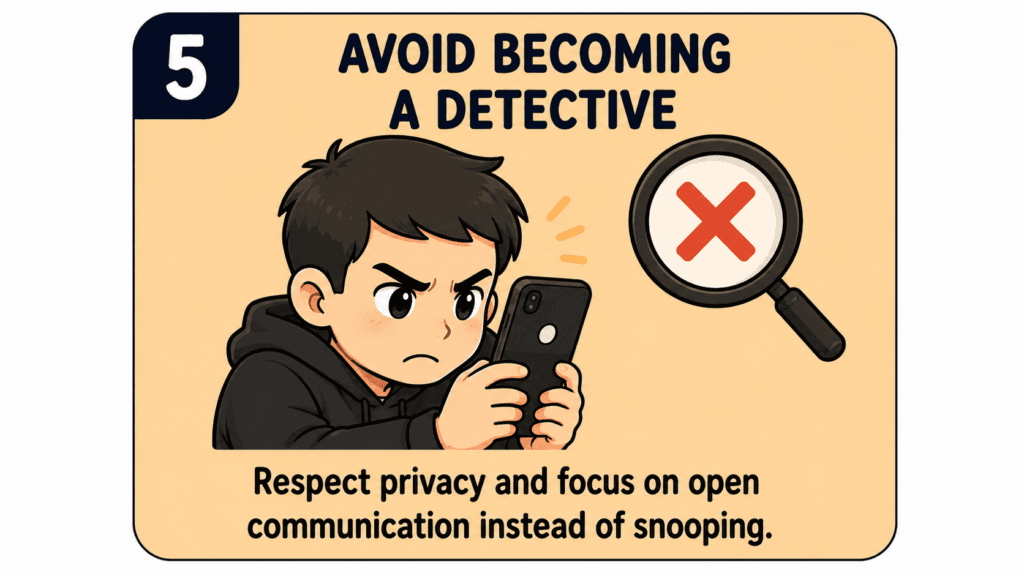
Focus on open communication before resorting to surveillance.
6. Protect Your Emotional Well-Being
Living with constant suspicion can become emotionally draining.

Continue taking care of yourself by:
- Spending time with trusted friends and family
- Maintaining your hobbies and personal goals
- Managing stress in healthy ways
Your emotional health matters regardless of the outcome.
7. Accept Whatever the Truth Turns Out to Be
Sometimes your concerns are resolved through honest communication.
Other times, your suspicions may be confirmed.

Whatever happens, remember that you deserve honesty, respect, and trust in a relationship.
If trust has been broken beyond repair, choosing to move forward may be healthier than staying in a relationship built on constant doubt.
Final Thoughts
Suspecting your partner of cheating without proof is one of the hardest situations to navigate.
Reacting impulsively can cause lasting damage, while ignoring your concerns entirely can also be unhealthy.
The best approach is to stay calm, observe consistent patterns, communicate honestly, and make decisions based on facts rather than fear.
Whether your relationship grows stronger or comes to an end, handling the situation with patience, honesty, and self-respect will help you move forward with confidence.