
Love is often described as something that lasts forever, but in reality, feelings can change over time. Many long-term relationships go through periods where one or both partners feel emotionally distant, less excited, or even question whether they are still in love.
If you’ve found yourself wondering, “Do I still love my partner?”, you’re not alone. Psychology suggests that falling out of love isn’t always sudden. It often results from many small changes over months or years.
The important question isn’t simply whether love has faded—it’s what you choose to do next.
1. Understand the Difference Between Love and Temporary Emotional Distance
Stress, financial pressure, parenting, work responsibilities, illness, and unresolved conflict can all reduce feelings of closeness.
Sometimes people mistake emotional exhaustion for the end of love.
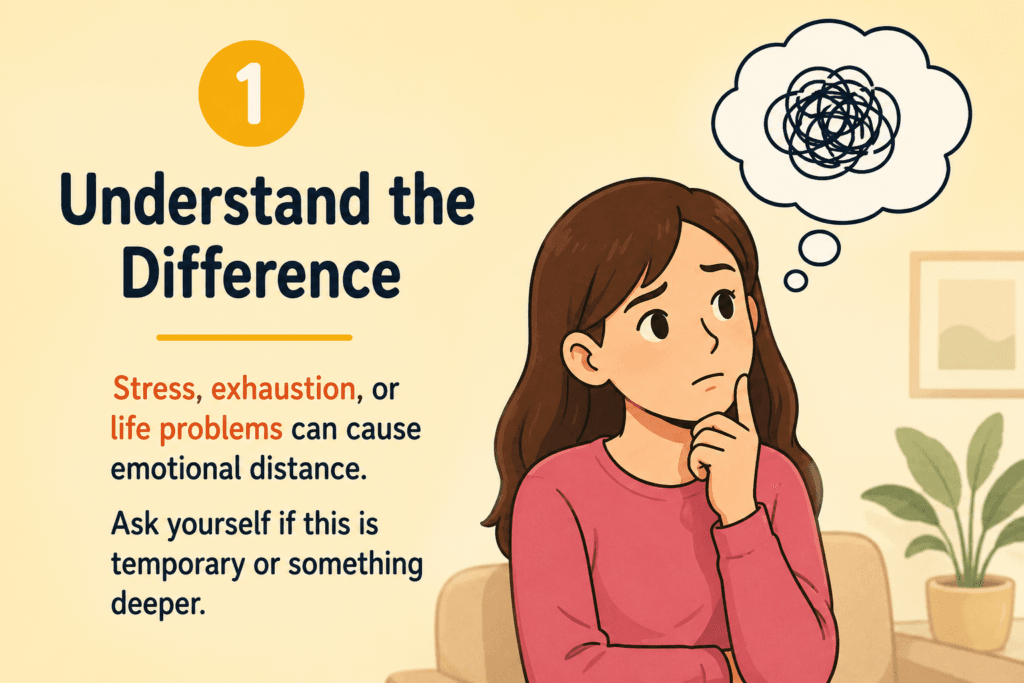
Before making major decisions, ask yourself:
- Have I felt disconnected for a long time?
- Do I still care about my partner’s happiness?
- Am I emotionally overwhelmed by other parts of life?
- Have we stopped spending meaningful time together?
A temporary emotional distance may improve once the underlying problems are addressed.
2. Ask Yourself Why Your Feelings Changed
Feelings rarely disappear without a reason.
Reflect on questions such as:
- Have we stopped communicating honestly?
- Have unresolved arguments built resentment?
- Have we grown into different people?
- Have our priorities changed over time?
- Do I feel emotionally safe in this relationship?
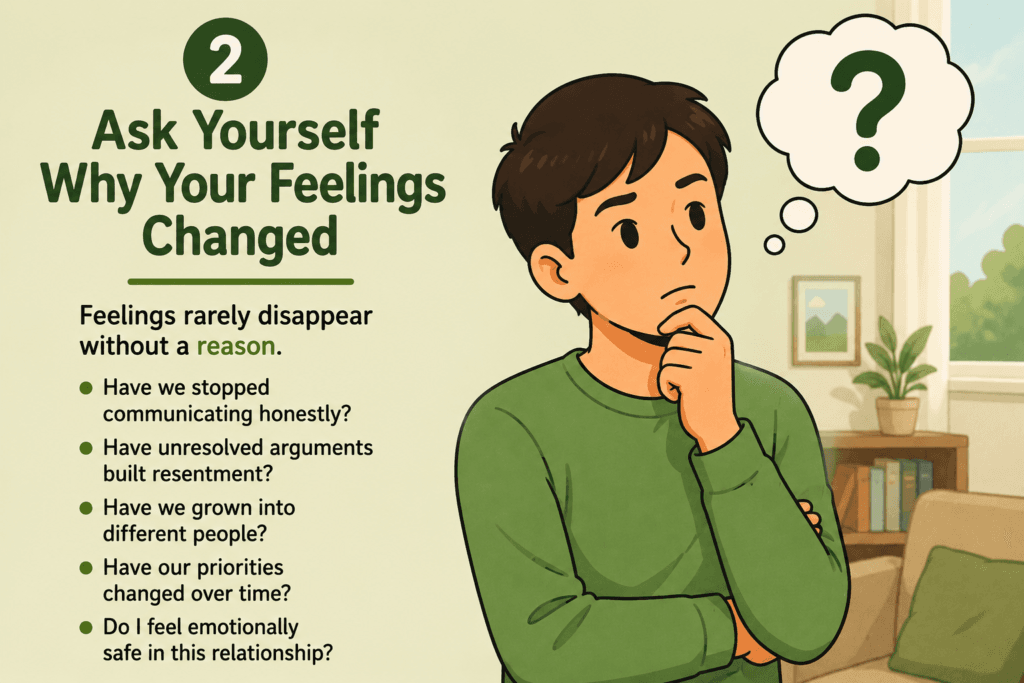
Understanding why your feelings changed is often more helpful than simply recognizing that they changed.
3. Remember That Love Is More Than Just Emotion
Psychologists often describe healthy long-term relationships as involving more than romantic feelings alone.
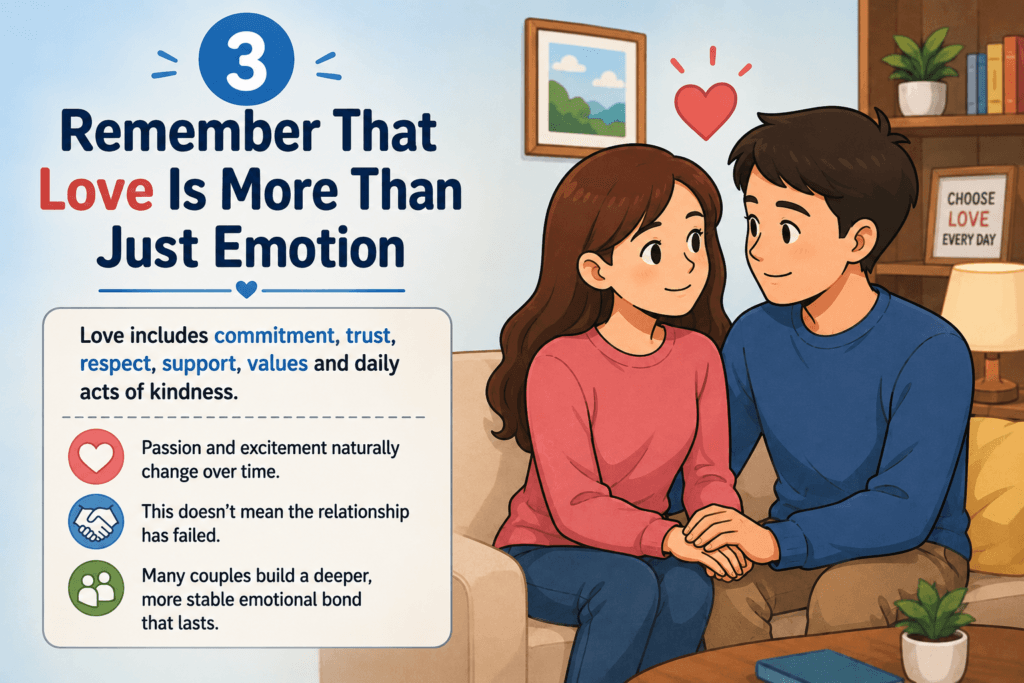
Love also includes:
- Commitment
- Trust
- Respect
- Emotional support
- Shared values
- Daily acts of kindness
The intense excitement of early romance naturally changes over time. This doesn’t necessarily mean the relationship has failed.
Many couples replace passionate love with a deeper, more stable emotional bond.
4. Talk Before You Decide
If your feelings have changed, avoiding the conversation usually makes the situation worse.
Instead of blaming your partner, focus on expressing your own experience.
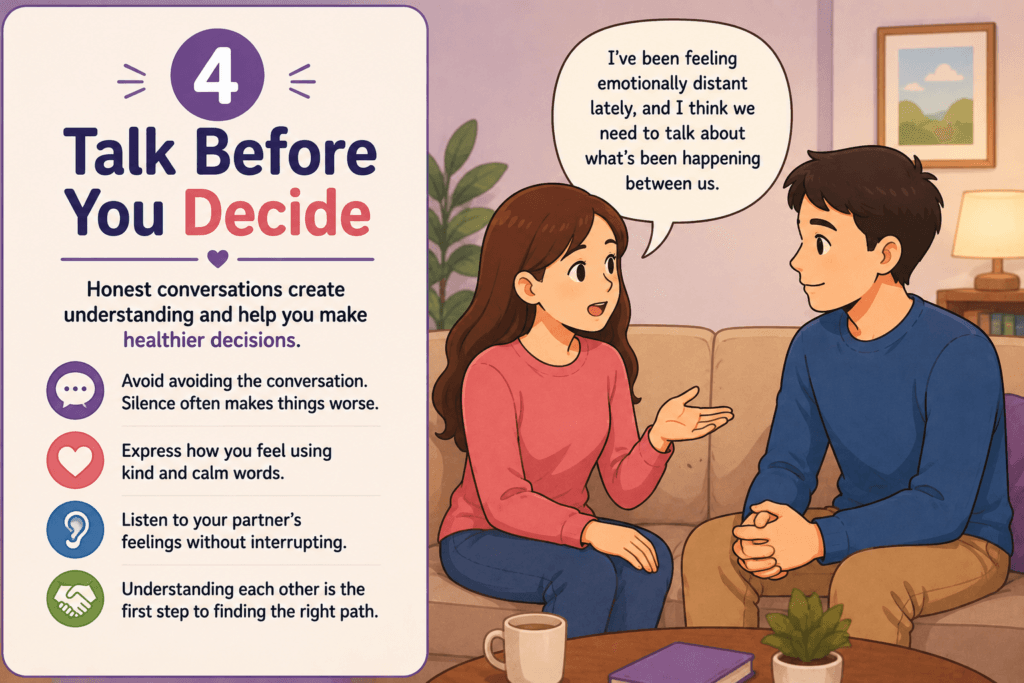
For example:
“I’ve been feeling emotionally distant lately, and I think we need to talk about what’s been happening between us.”
Honest conversations create an opportunity to understand each other before making life-changing decisions.
5. Ask Whether the Relationship Can Be Rebuilt
Research suggests that emotional connection can sometimes return when both partners are willing to invest in the relationship.
This may involve:
- Spending quality time together
- Improving communication
- Resolving long-standing conflicts
- Rebuilding trust
- Seeking couples counseling when needed
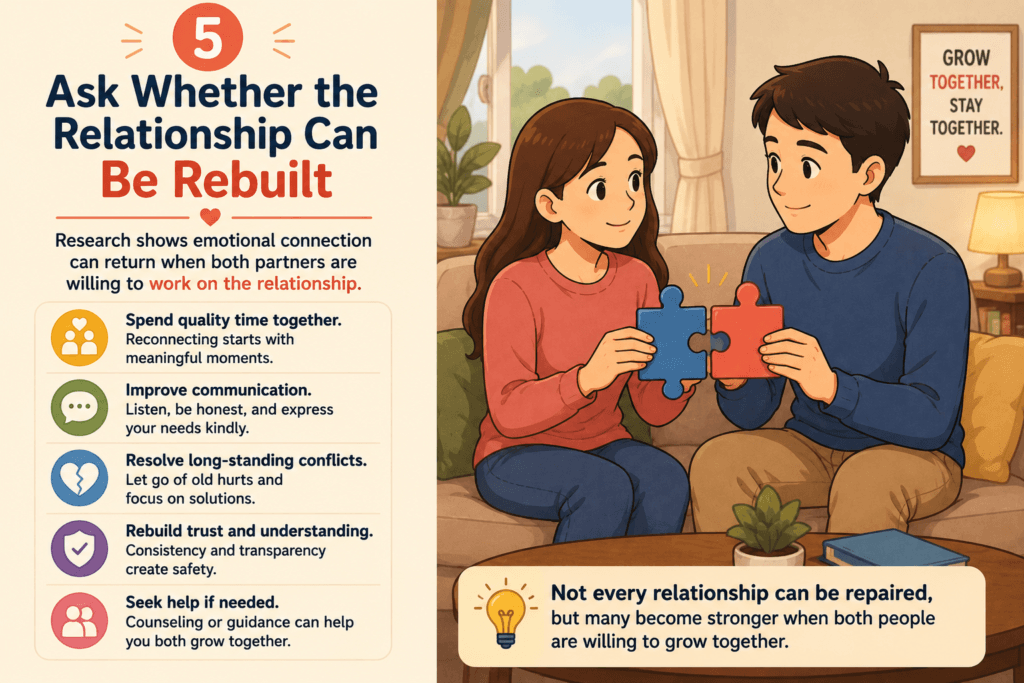
Not every relationship can be repaired, but many improve when both people actively work toward the same goal.
6. Don’t Stay Only Because You Feel Guilty
One of the hardest truths is that staying in a relationship without genuine emotional commitment can eventually hurt both people.
Remaining together solely because you fear hurting your partner may lead to:
- Emotional loneliness
- Constant resentment
- Lack of intimacy
- False hope
- Greater pain later
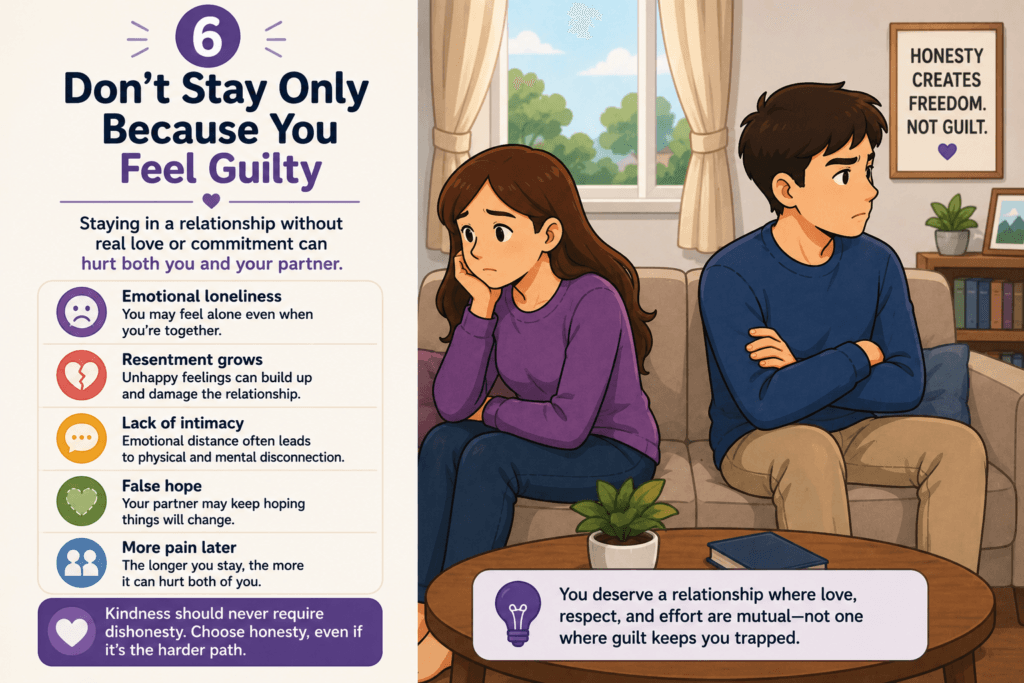
Kindness should never require dishonesty.
7. If It’s Truly Over, End It With Compassion
If you’ve reflected carefully, communicated honestly, and realized your romantic feelings are gone, ending the relationship respectfully may be healthier than pretending everything is fine.
A respectful ending includes:
- Being honest without being cruel
- Taking responsibility for your feelings
- Avoiding blame or unnecessary criticism
- Giving both people the opportunity to heal
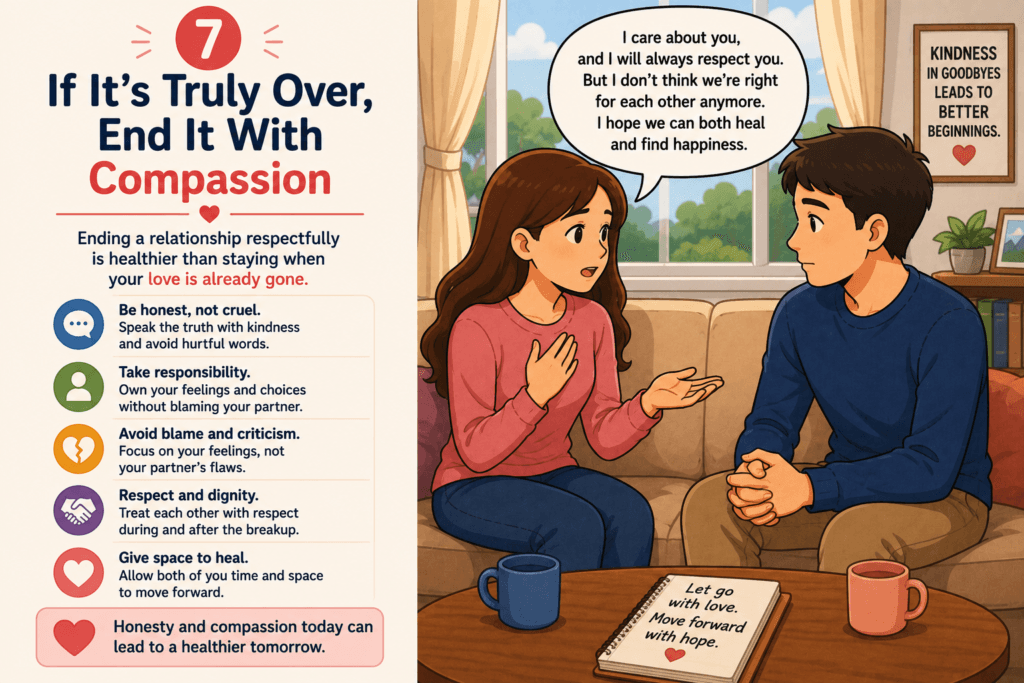
While breakups are painful, honesty often causes less long-term harm than living in a relationship built on false hope.
Final Thoughts
Love naturally changes throughout life. Sometimes it grows deeper, sometimes it becomes strained, and sometimes it fades completely.
Psychology doesn’t suggest that every relationship should be saved or ended. Instead, it encourages self-awareness, honest communication, and thoughtful decision-making.
Whether your relationship becomes stronger or comes to an end, treating each other with honesty, empathy, and respect gives both people the best chance to move forward in a healthy way.