

The Psychology Behind One of the Most Painful Emotional Experiences
Being rejected is painful. Whether it’s a job application, a friendship, or a romantic relationship, hearing “no” can sting deeply.
Yet many psychologists believe that being ignored can hurt even more than being rejected.
Why? Because rejection provides an answer. Being ignored leaves you trapped in uncertainty.
Why Being Ignored Causes Deeper Emotional Pain
Here are six psychology-backed reasons why being ignored often causes more emotional pain than rejection.
1. Your Brain Hates Uncertainty
One of the hardest things for the human brain to tolerate is uncertainty.
When someone rejects you, the situation becomes clear. You may not like the answer, but at least you know where you stand.
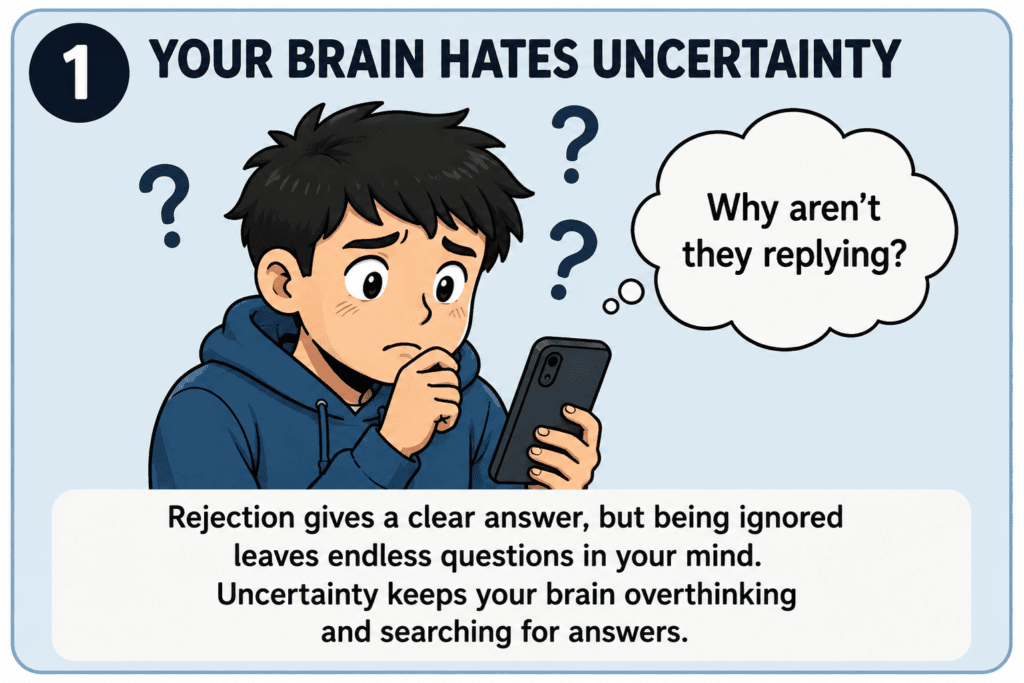
Being ignored, however, leaves endless unanswered questions. You may keep wondering whether they’re busy, upset, or simply don’t care.
That uncertainty can keep your mind replaying the situation again and again.
2. Silence Feels Like Social Exclusion
Humans are wired to seek connection and belonging.
Throughout history, being excluded from a group could threaten survival.
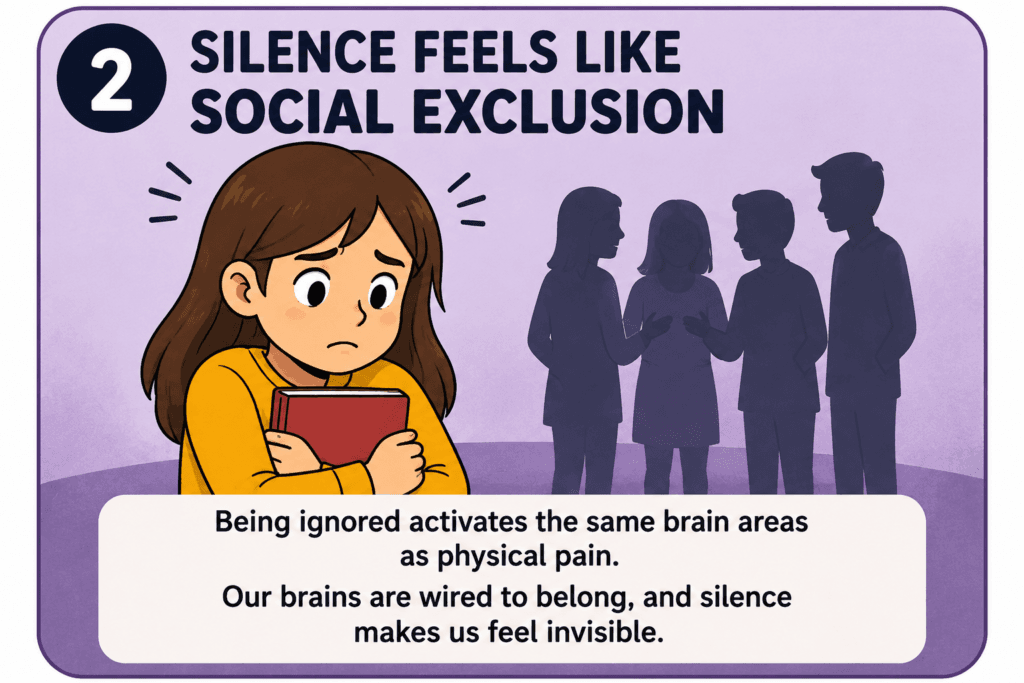
Modern psychology shows that being ignored activates many of the same brain regions associated with physical pain.
Even though no one says anything hurtful, silence itself can feel like emotional rejection.
3. You Start Blaming Yourself
When nobody explains why they’re ignoring you, your brain often fills in the missing information.
Many people begin thinking:
- Did I do something wrong?
- Am I annoying?
- Maybe I’m not good enough.
Without clear communication, self-doubt grows quickly, damaging confidence and self-esteem.
The Impact of Being Ignored on Emotional Healing
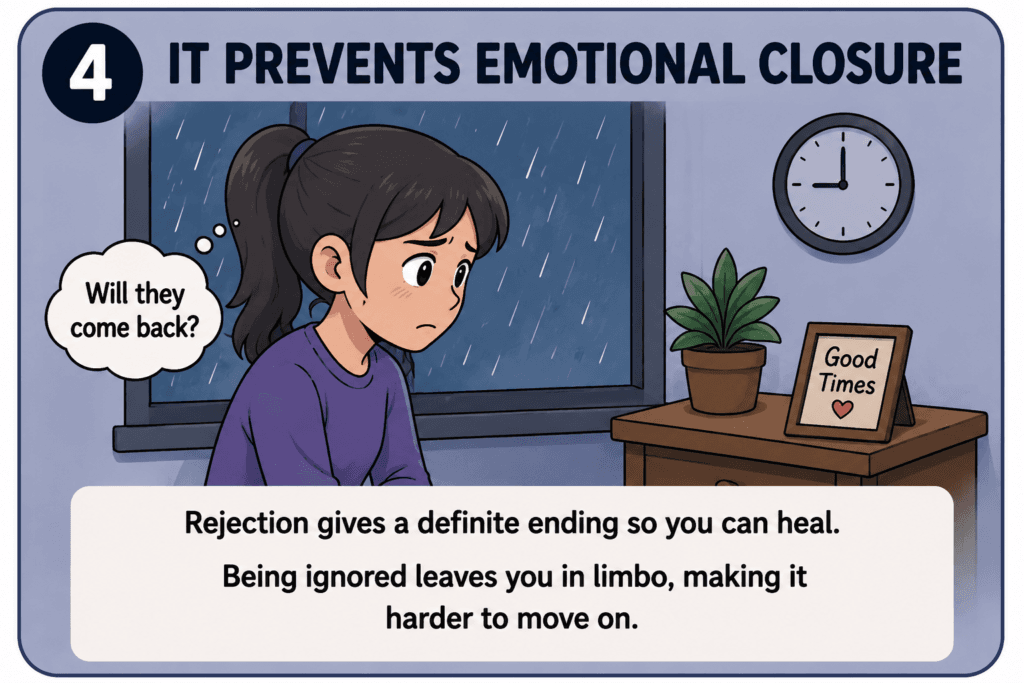
4. It Prevents Emotional Closure
Rejection allows people to begin healing because it provides a definite ending.
Ignoring someone creates emotional limbo.
Since there is no clear conclusion, many people continue hoping things will change.
That hope can make moving on much more difficult.
5. It Triggers Your Need for Validation
Being ignored often creates a strong desire to regain someone’s attention.
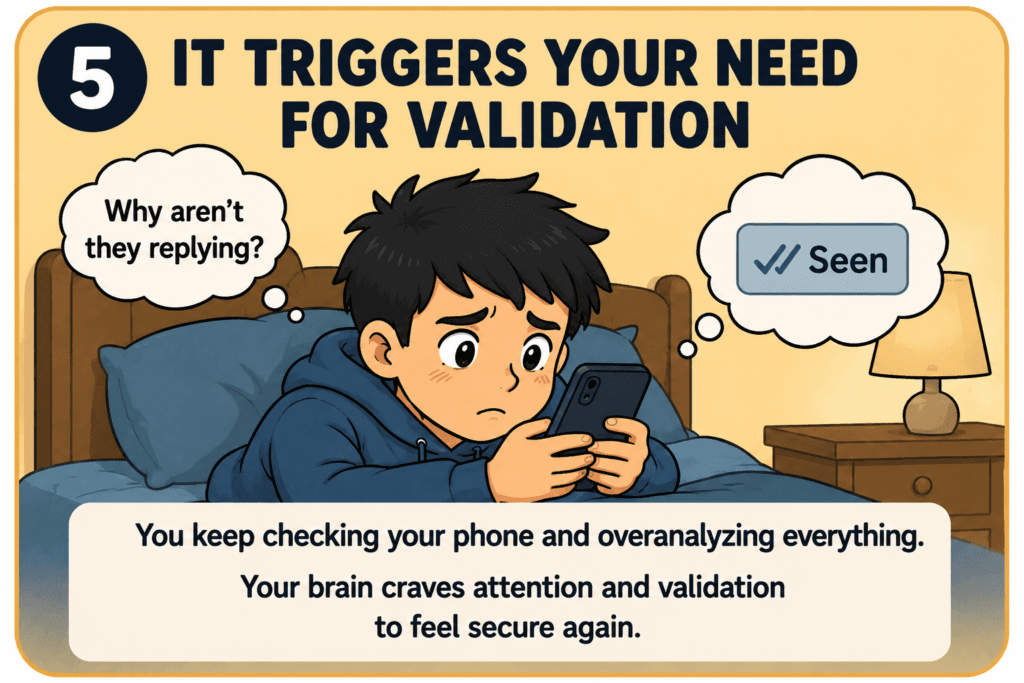
Instead of letting go, people may:
- Repeatedly check their phone
- Revisit past conversations
- Overanalyze every interaction
This cycle happens because the brain naturally seeks resolution and validation when emotional needs remain unmet.
6. Your Imagination Makes It Worse
When information is missing, the brain doesn’t simply stop thinking—it creates its own explanations.
Unfortunately, those explanations are often more negative than reality.
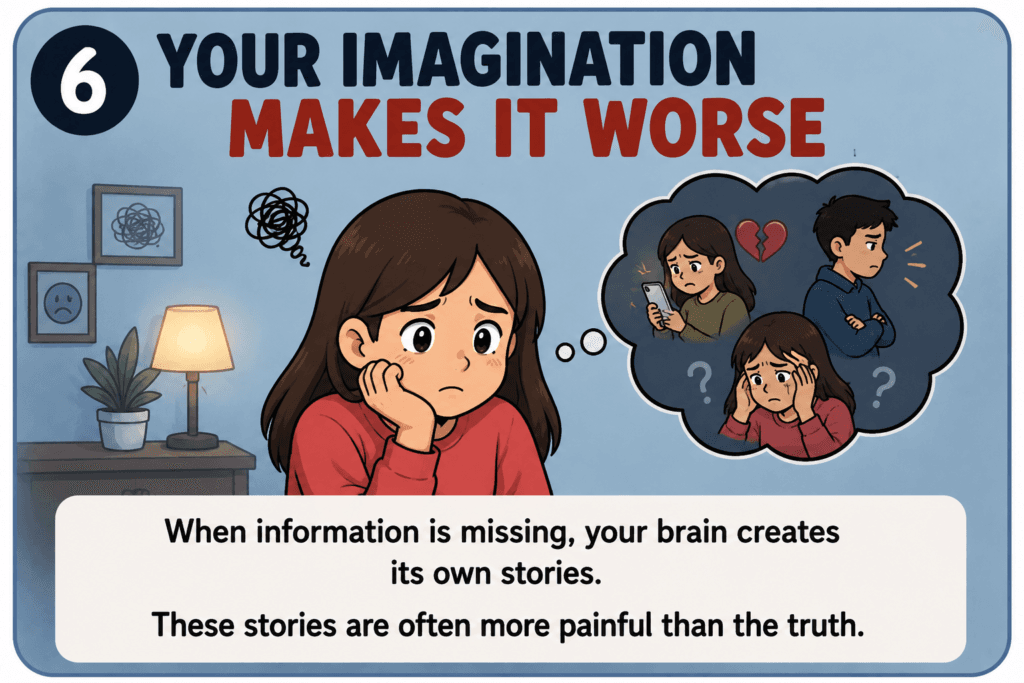
You may imagine the worst possible reasons for being ignored, increasing anxiety and emotional distress without any real evidence.
Final Thoughts
Being ignored hurts because it combines uncertainty, unanswered questions, and emotional isolation.
Unlike rejection, which offers a clear answer, silence leaves the mind searching for explanations that may never come.
If someone consistently ignores you, remember their silence does not define your worth.
Sometimes the healthiest response is to stop chasing answers that another person has chosen not to give.
Protecting your peace is often more valuable than forcing closure.
Discover six psychology-backed reasons why being ignored often hurts more than being rejected. Learn how uncertainty, social exclusion, and lack of closure affect emotional well-being.