

Life has a way of surprising us. A sudden medical bill, an unexpected car repair, or even losing a job can happen when we least expect it.
Without savings, these situations often lead to debt, stress, and difficult financial decisions.
An emergency fund is money set aside specifically for unexpected expenses. It’s not meant for vacations or shopping — it’s your financial safety net when life doesn’t go as planned.
Why You Should Start Building an Emergency Fund Today
1. It Protects You From Unexpected Expenses
Emergencies rarely come with a warning. Hospital visits, home repairs, broken appliances, or urgent travel can cost more than you expect.
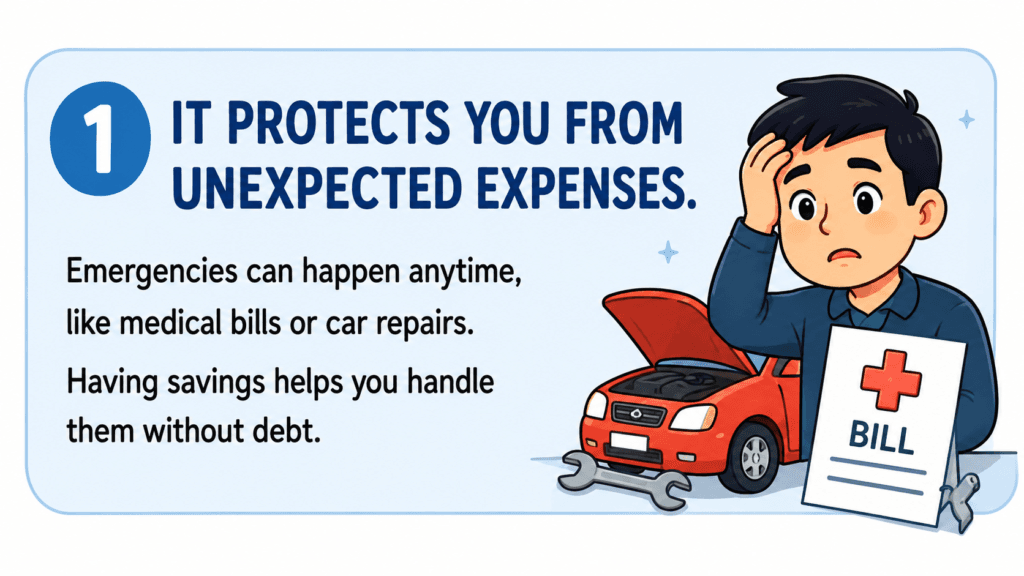
Having an emergency fund means you can handle these situations without relying on credit cards or loans.
2. It Reduces Financial Stress
Money problems are one of the biggest sources of stress for many adults.
Knowing you have savings available can give you peace of mind and help you focus on solving the problem instead of worrying about how you’ll pay for it.
3. It Keeps You Out of Debt
Without emergency savings, many people borrow money whenever something unexpected happens.
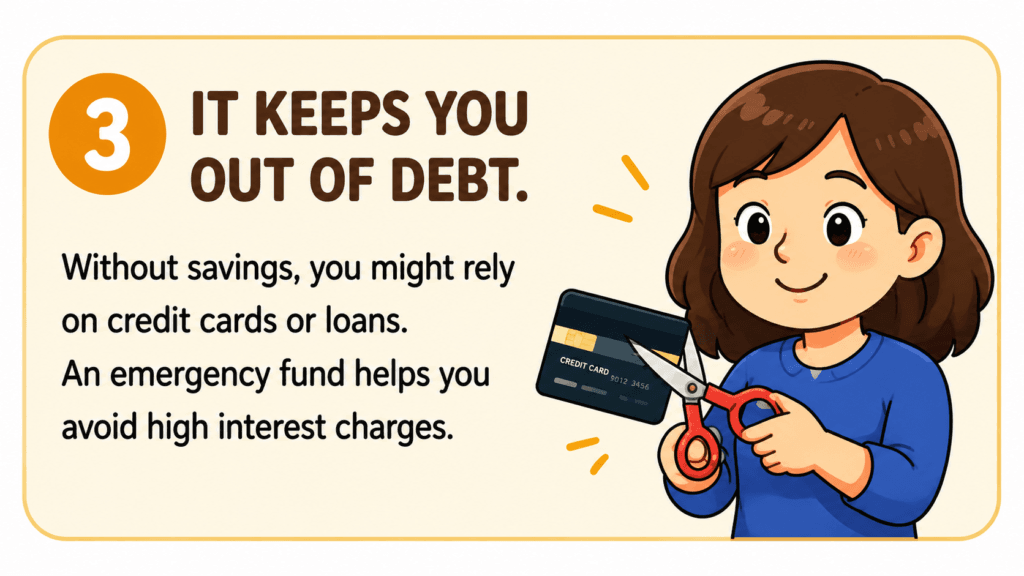
Over time, interest charges can make a small expense much more expensive.
An emergency fund helps you avoid this cycle.
4. It Gives You Time if You Lose Your Job
Job loss can happen because of company changes, economic downturns, or unexpected personal circumstances.
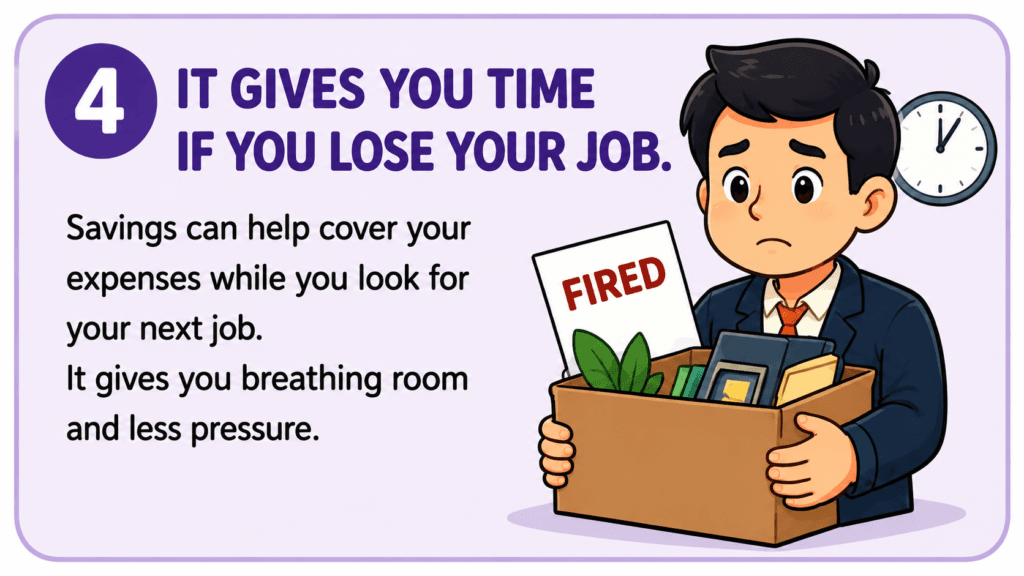
Even a few months of savings can give you breathing room while you search for your next opportunity instead of accepting the first job out of desperation.
5. It Helps You Make Better Decisions
When you’re under financial pressure, it’s easy to make rushed decisions.
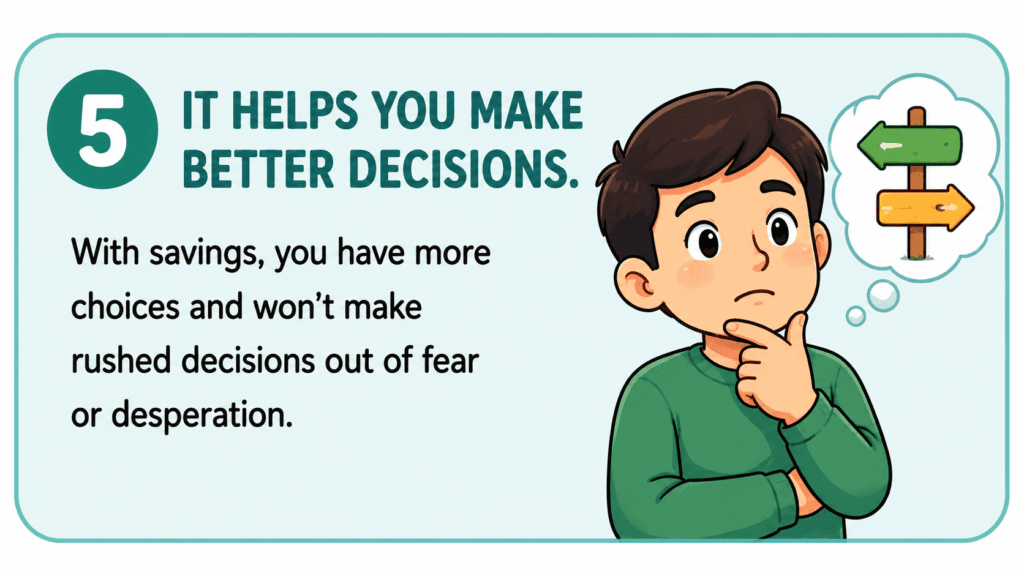
Having emergency savings gives you more options and allows you to think clearly instead of reacting out of fear.
6. It Protects Your Long-Term Financial Goals
Without an emergency fund, you may have to dip into retirement savings, investment accounts, or money you’ve been saving for a house or education.
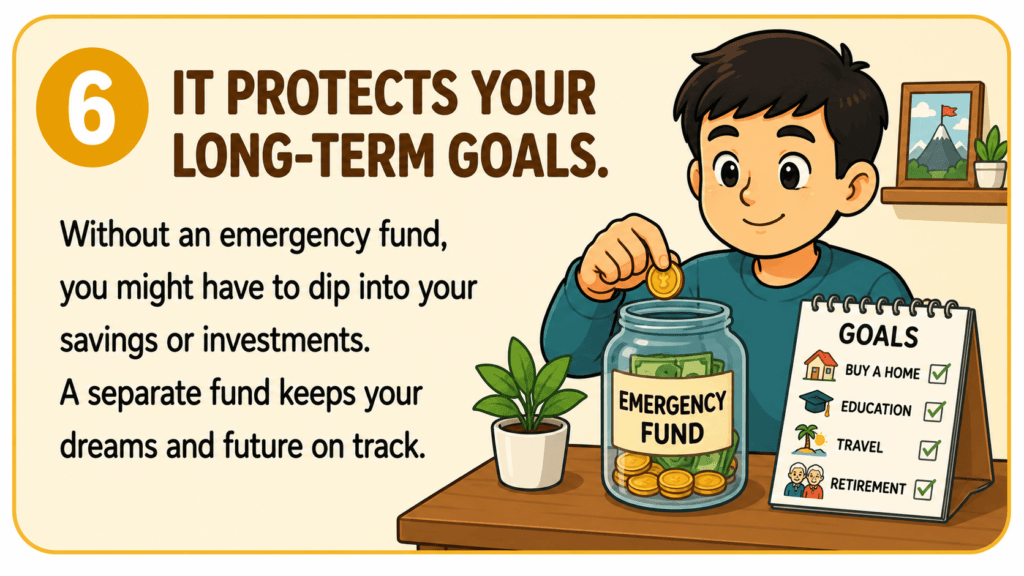
A dedicated emergency fund helps keep those long-term goals on track.
7. It Builds Financial Confidence
Every amount you save is a step toward greater financial security.
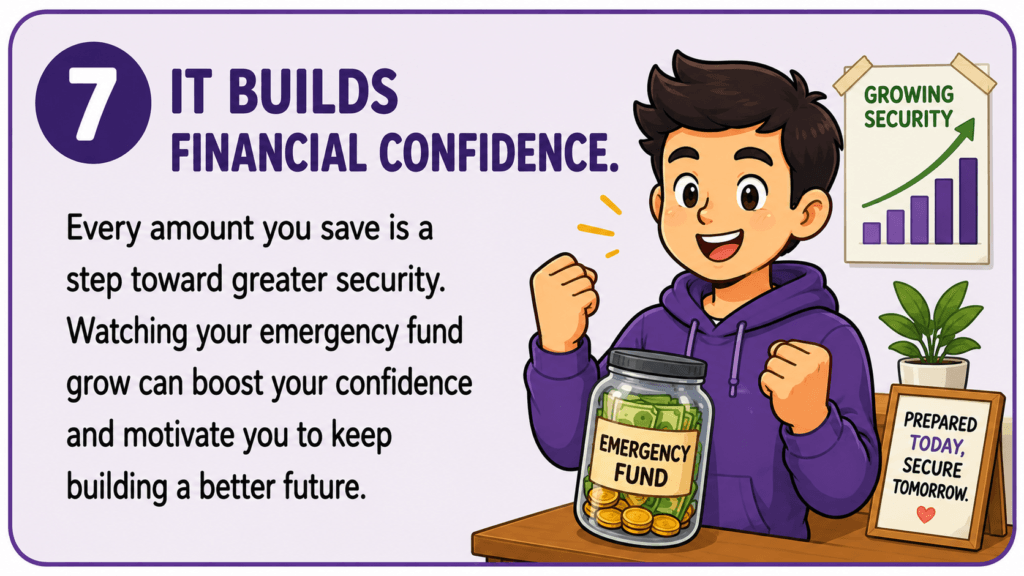
Watching your emergency fund grow can increase your confidence, improve your financial habits, and motivate you to continue building wealth over time.
How Much Should You Save?
A common recommendation is to save enough to cover three to six months of essential living expenses.
If that feels overwhelming, don’t worry.
Start with a small goal, such as ₱5,000, ₱10,000, or one month’s worth of expenses.
The important thing is to begin.
Simple Tips to Build Your Emergency Fund
- Save a small amount from every paycheck.
- Keep the money in a separate savings account.
- Automate your savings whenever possible.
- Avoid using the fund unless it’s a true emergency.
- Rebuild it after you use it.
Final Thoughts
Building an emergency fund isn’t about expecting the worst — it’s about preparing for the unexpected.
Even small, consistent savings can make a huge difference when life throws you a challenge.
Start today, stay consistent, and give your future self the financial security and peace of mind you deserve.