
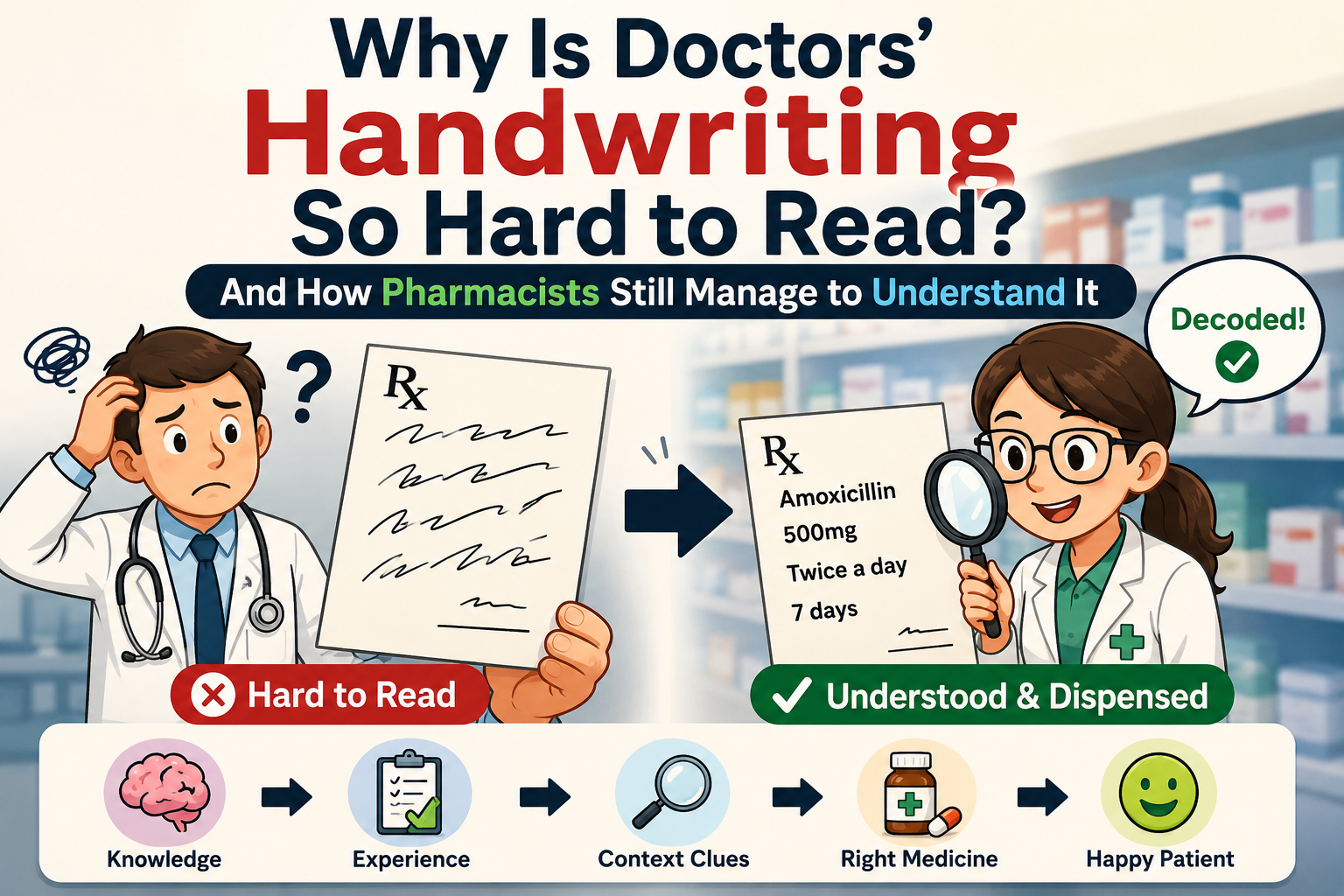
And How Pharmacists Still Manage to Understand It
Almost everyone has experienced this moment: you leave the clinic, look at your prescription, and suddenly realize your doctor appears to write in a language discovered before civilization itself.
At first glance, it may look less like handwriting and more like:
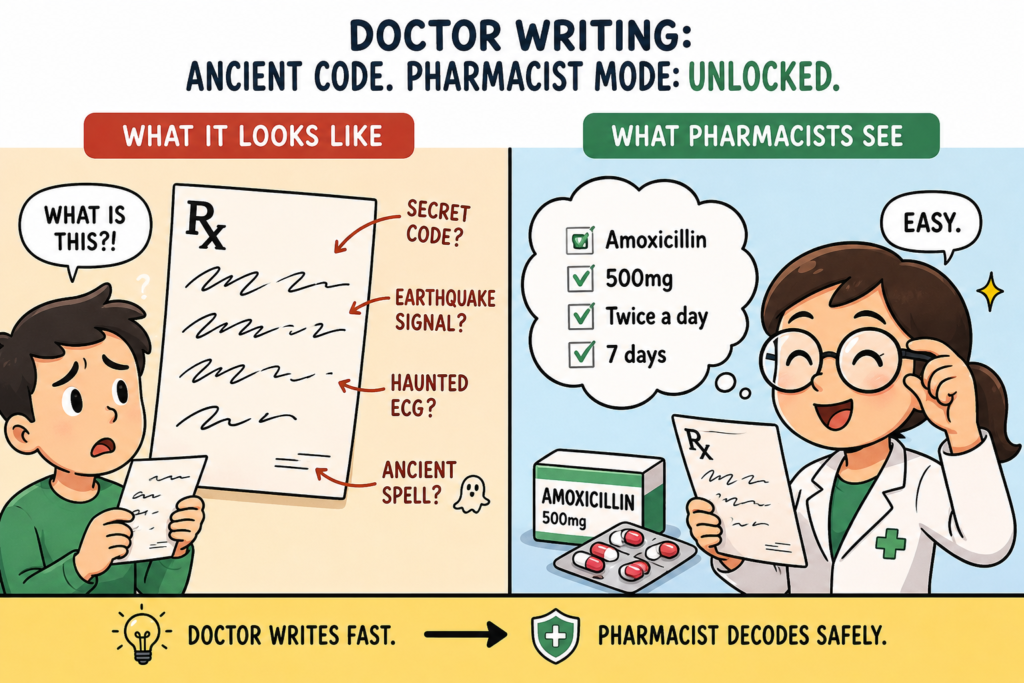
- A secret code
- Earthquake monitor results
- A haunted ECG machine
- An ancient spell from a forbidden medical scroll
Yet somehow, pharmacists look at it for two seconds and calmly say:
“Okay, that’s Amoxicillin. Twice a day.”
How?
Why Doctors’ Handwriting Looks Like a Speedrun
The biggest reason is simple: speed.
Doctors often see many patients every day while writing prescriptions, notes, charts, laboratory requests, and reports nonstop. Over time, their handwriting slowly evolves from neat student writing into something resembling a cardiogram generated by stress.
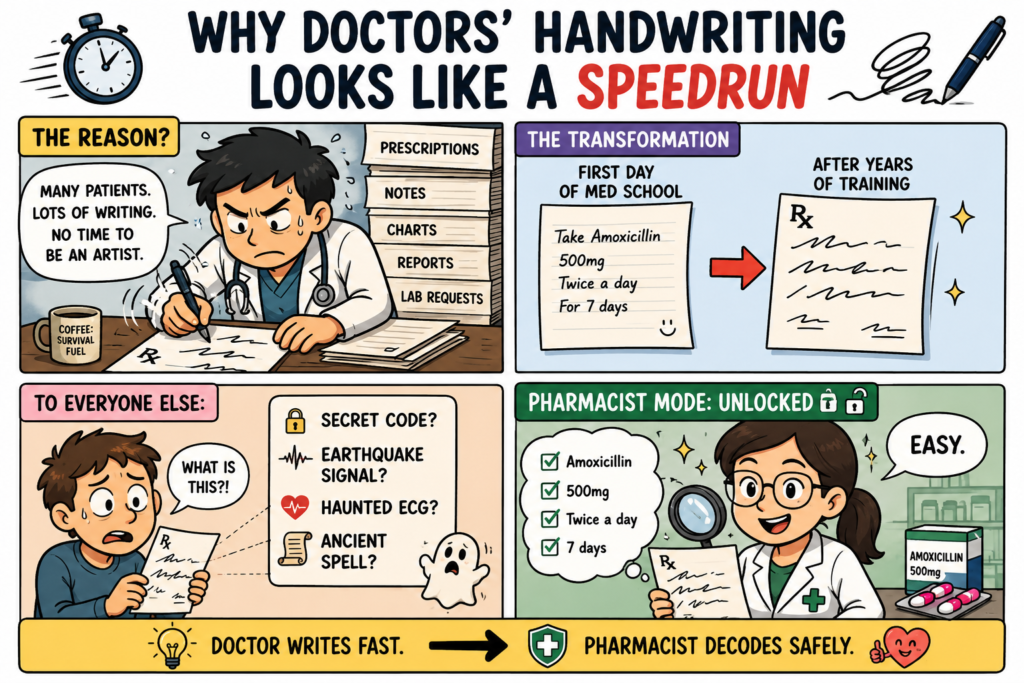
Medical school also contributes heavily to this transformation. Students spend years rapidly copying lectures and taking notes under pressure. By the end of training, some doctors can probably write an entire paragraph without lifting the pen—or forming recognizable letters.
To them, the writing still makes perfect sense. To everyone else, it looks like:
“₩~//xq∆ßmg”
How Pharmacists Decode the Chaos
Pharmacists are basically the official translators of doctor handwriting.
They do not simply guess. Instead, they use:
- Medical knowledge
- Prescription patterns
- Common drug names
- Dosage rules
- Context clues
- Years of experience reading medical scribbles
Imagine a pharmacist looking at a prescription like a detective solving a crime scene.
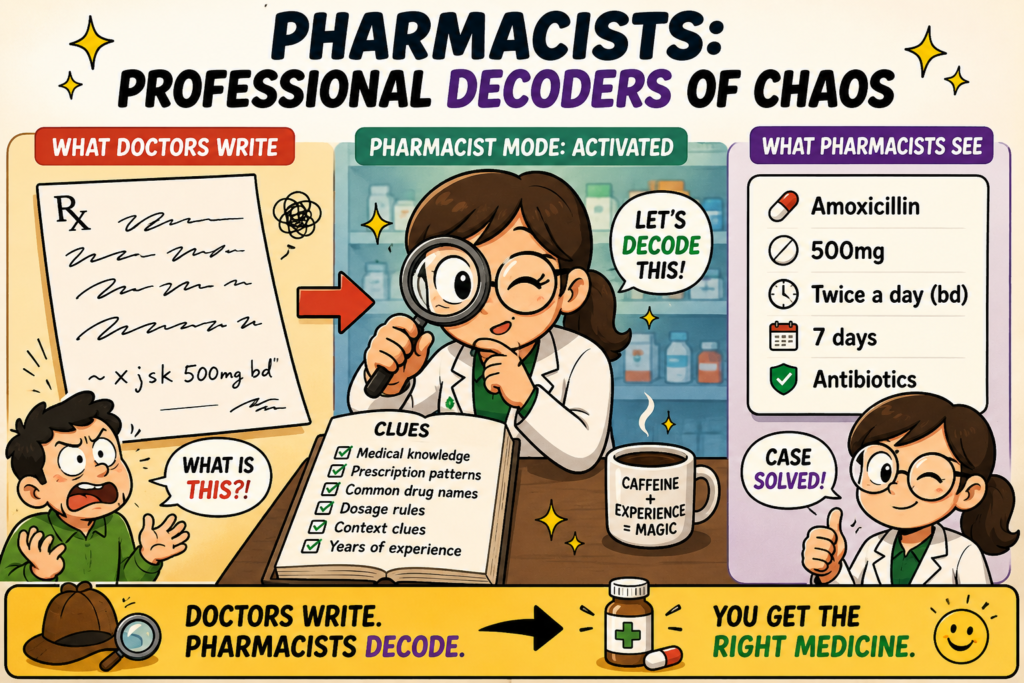
Doctor writes: “~xjsk 500mg bd”
Pharmacist: “Ah yes. Clearly antibiotics.”
It almost feels supernatural.
Some pharmacists even become familiar with specific doctors’ handwriting styles over time. They can identify the doctor before reading the actual name. That is both impressive and slightly terrifying.
But Yes — Serious Mistakes Have Happened
As funny as the jokes are, bad handwriting in medicine can become dangerous.
There have been real cases where unclear prescriptions contributed to:
- Wrong medications
- Incorrect dosages
- Dangerous misunderstandings
- Confusion between drugs with similar names
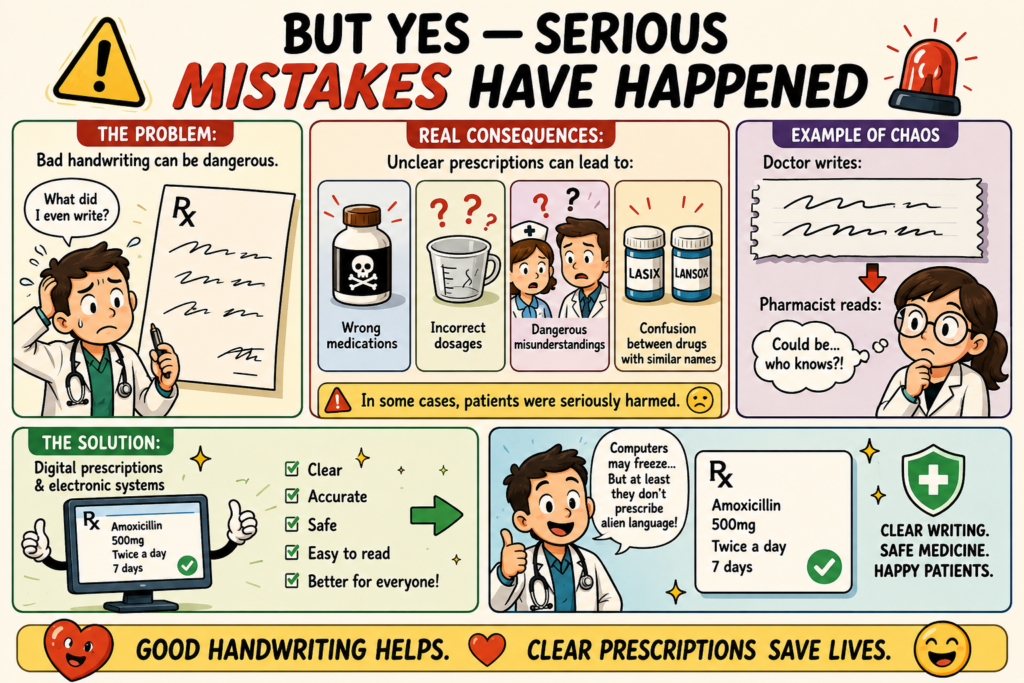
In some cases, patients were seriously harmed.
That is one major reason why many hospitals now use digital prescriptions and electronic medical systems. Computers may freeze sometimes, but at least they usually do not prescribe: “̴̫̺̎͒A̶͇̻͌̈́m̸̥͘o̷̫̔x̴̦̾i̸͕̍c̷͍͠i̸̲̽l̶̯͂l̷̲͝i̸̢͂ń̵̘.”
The Real Truth
Most doctors are not trying to write badly.
Their handwriting is often the result of years of pressure, exhaustion, multitasking, and working in fast-moving environments where speed constantly matters.
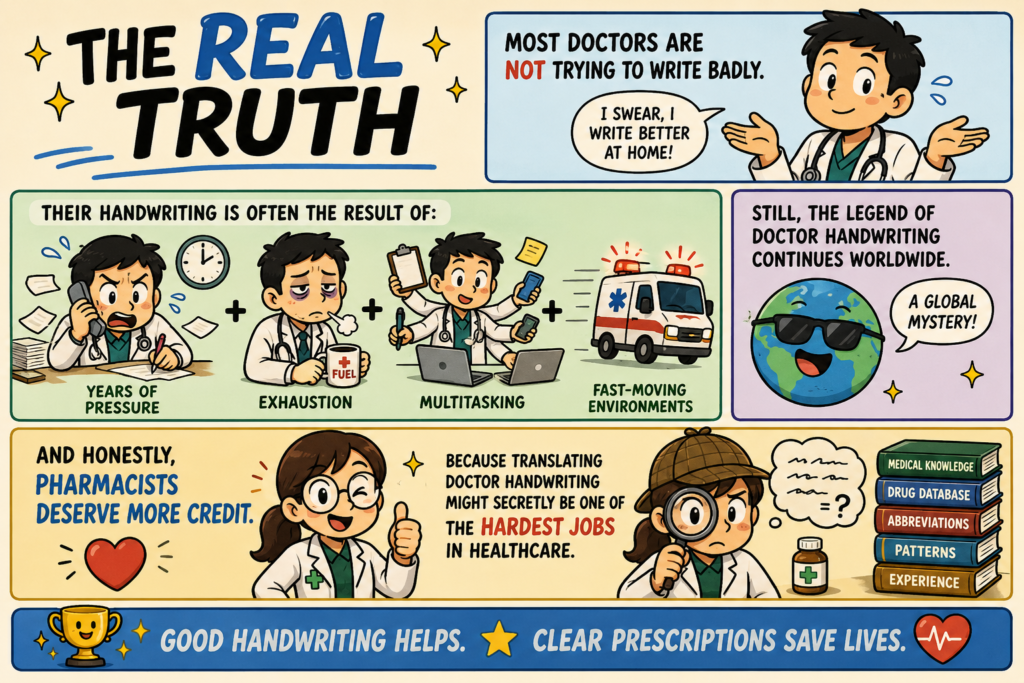
Still, the legend of doctor handwriting continues worldwide.
And honestly, pharmacists deserve more credit.
Because translating doctor handwriting might secretly be one of the hardest jobs in healthcare.