
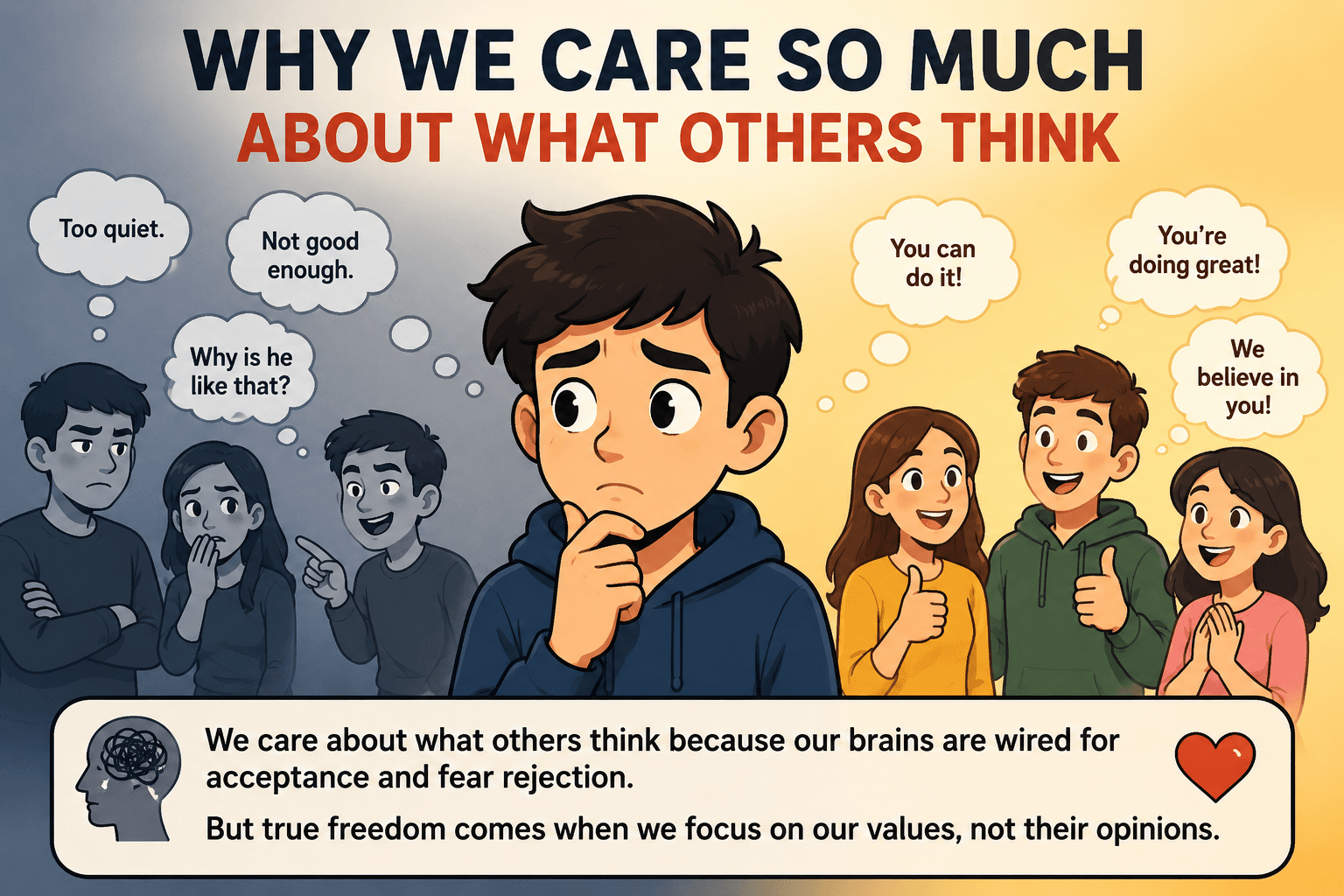
From childhood, many of us learn to pay attention to how others see us. We seek approval from parents, teachers, friends, and later from coworkers, partners, and even strangers online.
While caring about others’ opinions can help build healthy relationships and cooperation, it can become overwhelming when it starts to control our decisions and happiness.
Psychology shows that this concern is deeply connected to human evolution, our need for belonging, and how our brains process social experiences.
Understanding why this happens can help us build healthier confidence and make choices based on our values instead of constant approval.
Our Brains Are Wired to Seek Belonging
1. Humans Depend on Groups for Survival
Thousands of years ago, being accepted by a community meant better protection, access to food, and greater chances of survival.
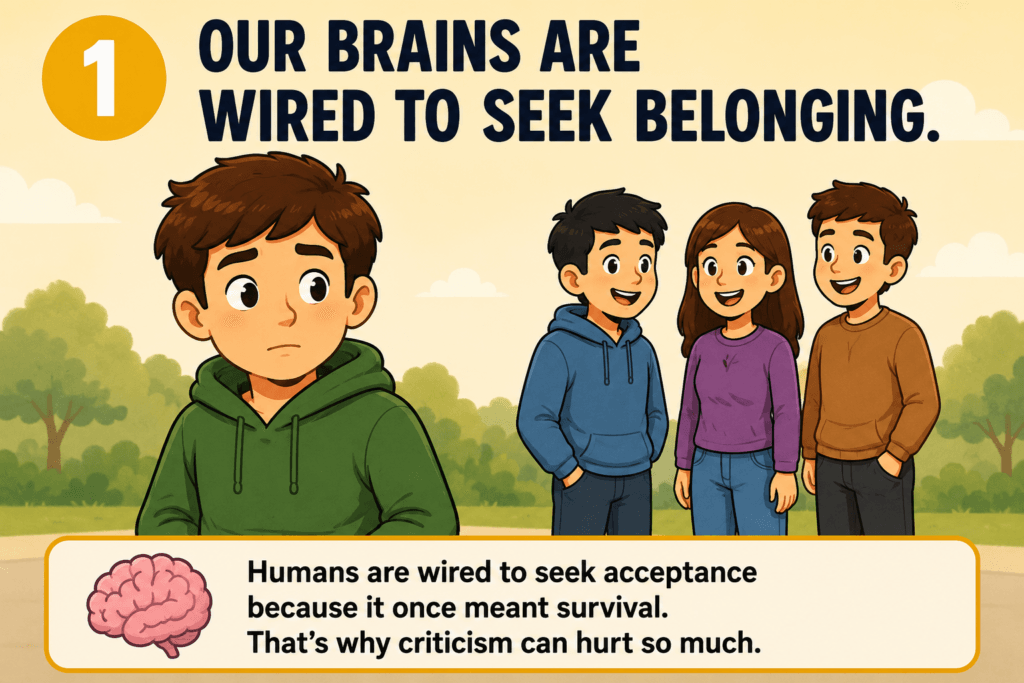
Although modern life is different, our brains still respond strongly to social acceptance and rejection.
This is why compliments feel rewarding and criticism often feels painful.
We Naturally Compare Ourselves to Others
2. The Role of Social Comparison
People evaluate themselves by comparing their abilities, appearance, or success with those around them.
While comparison can inspire growth, too much often leads to insecurity, jealousy, and dissatisfaction.
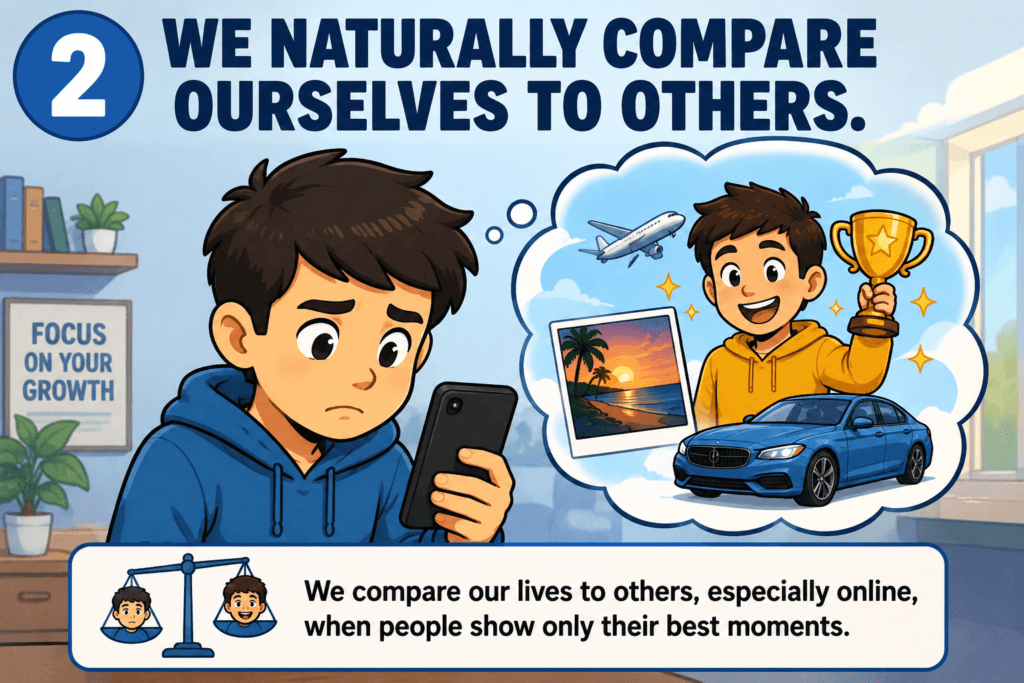
Social media amplifies this effect by showing mostly the best parts of others’ lives.
Fear of Rejection Influences Behavior
3. The Impact of Criticism and Exclusion
Many worry that mistakes, different opinions, or public failure will lead to rejection.
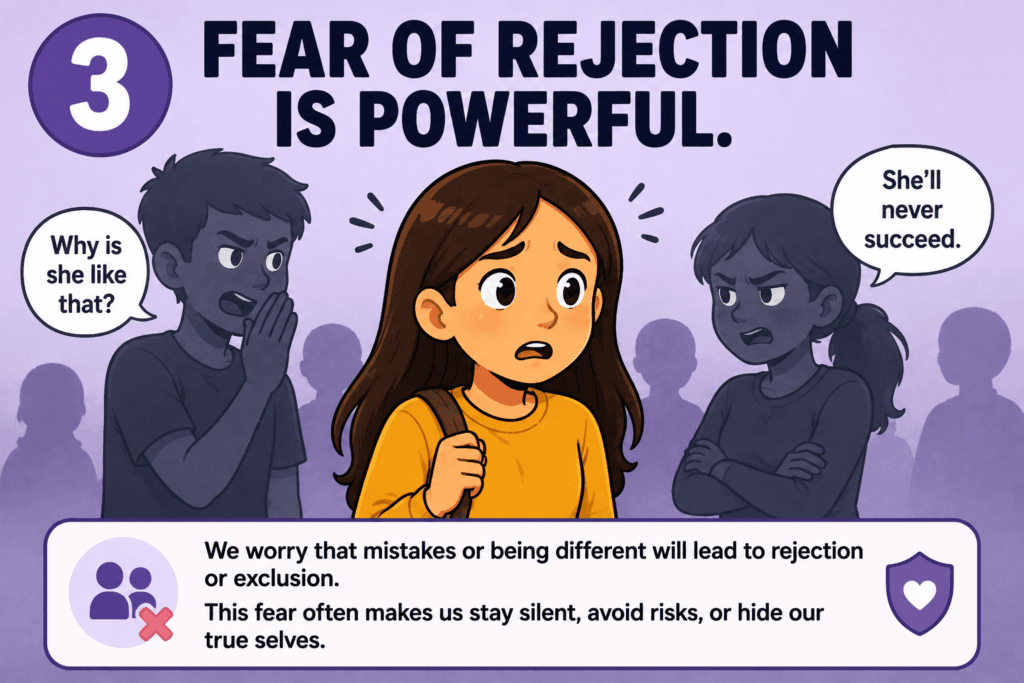
Because connection matters deeply, fear of criticism or exclusion can cause people to stay silent, avoid risks, or hide their true selves.
We Seek Validation That We’re Doing Well
4. The Power of Positive Feedback
Compliments, praise, and encouragement activate the brain’s reward system, making approval feel emotionally satisfying.
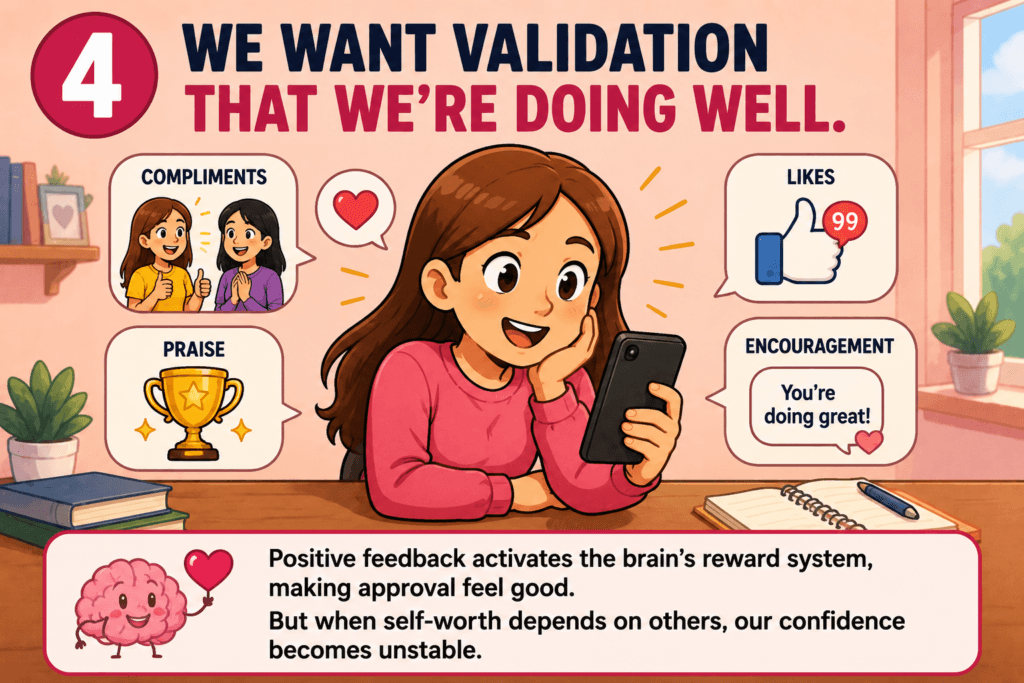
However, relying entirely on external validation makes confidence unstable, as it depends on others’ reactions.
Social Media Amplifies These Feelings
5. The Effects of Online Approval
Modern technology allows us to compare ourselves with hundreds or thousands of people daily.
Likes, comments, followers, and shares can become unconscious measures of self-worth.
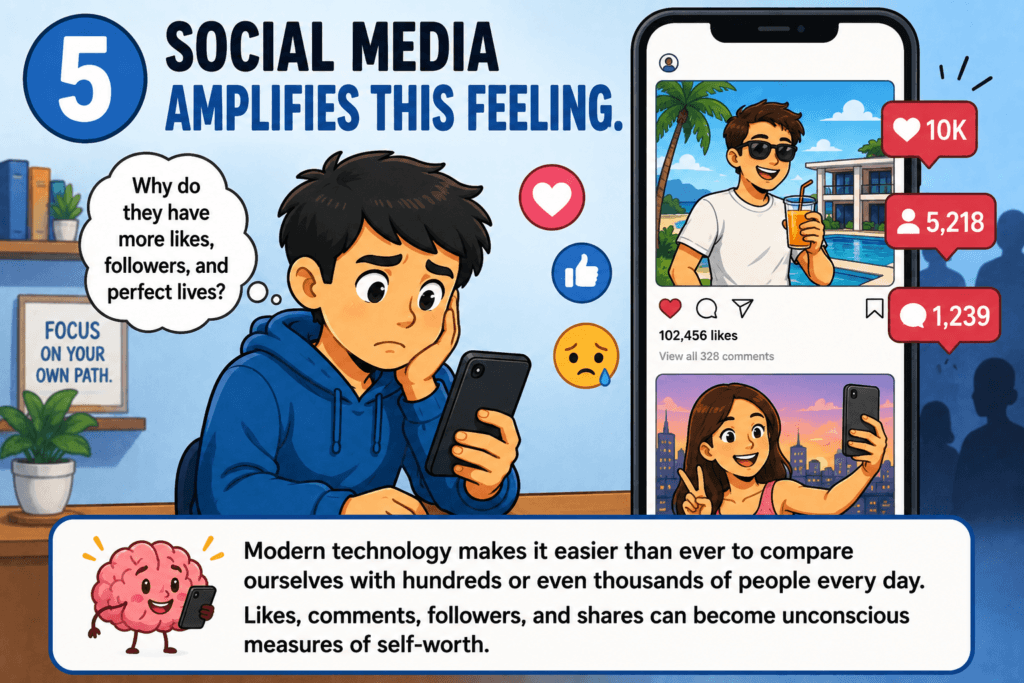
Yet, these numbers don’t truly reflect a person’s value, character, or happiness.
Most People Think About Themselves More Than They Think About You
6. Understanding the Spotlight Effect
We tend to overestimate how much others notice our appearance, mistakes, or behavior.
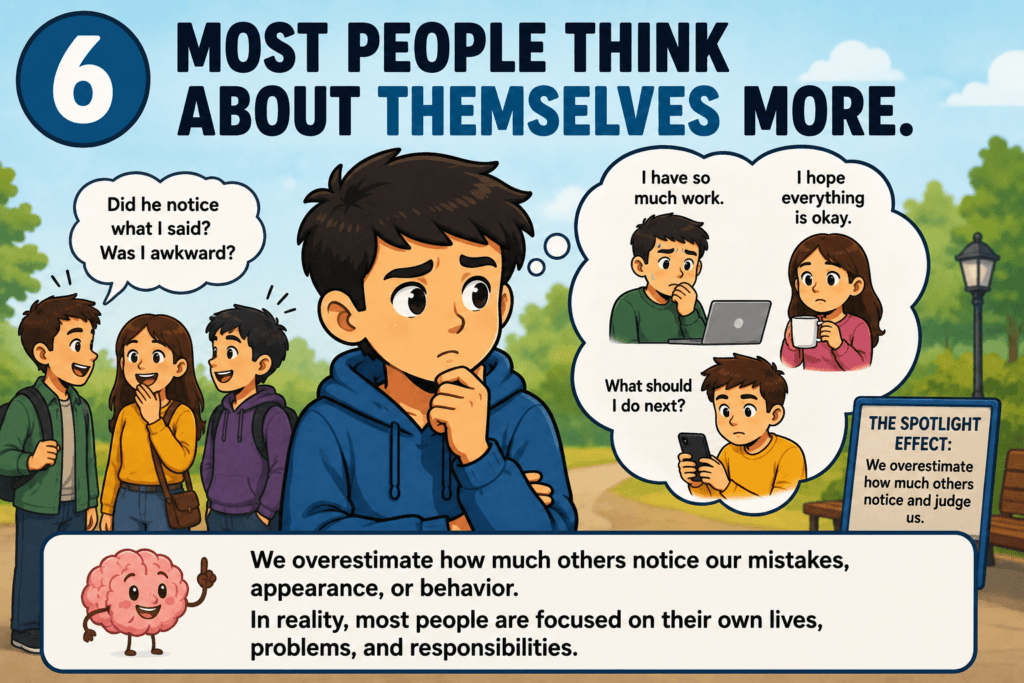
In reality, most people are focused on their own lives, worries, and responsibilities rather than judging us.
Confidence Grows When You Live by Your Own Values
7. Relying on Internal Principles
As we mature emotionally, we depend less on constant approval and more on our own values.
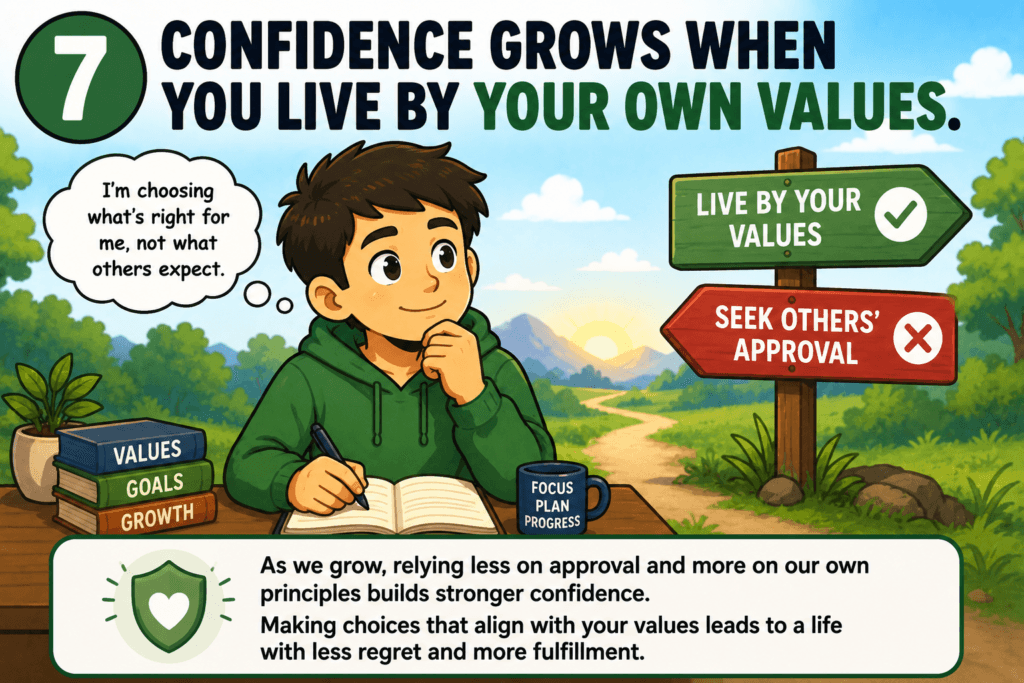
Making decisions aligned with your principles leads to stronger, more stable confidence than trying to please everyone.
Caring Less Doesn’t Mean Ignoring Everyone
8. Choosing Whose Opinions Matter
Healthy confidence doesn’t reject all feedback or advice.
It means learning whose opinions deserve your attention.
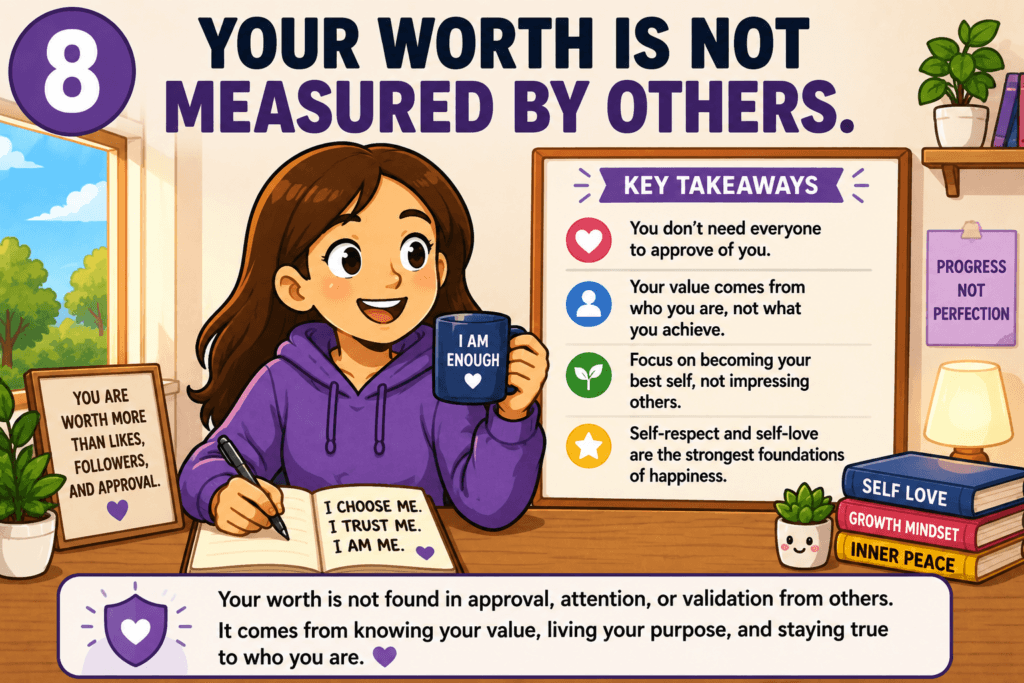
Constructive feedback from trusted people can foster growth, while unnecessary criticism from strangers need not shape your choices.
Final Thoughts
Caring about what others think is a natural part of being human.
It reflects our need for connection, belonging, and acceptance.
The challenge is to find balance—valuing meaningful relationships without letting others’ opinions control your identity or decisions.
True confidence grows when you respect yourself, focus on your values, and remember that most people are far more concerned with their own lives than judging yours.