
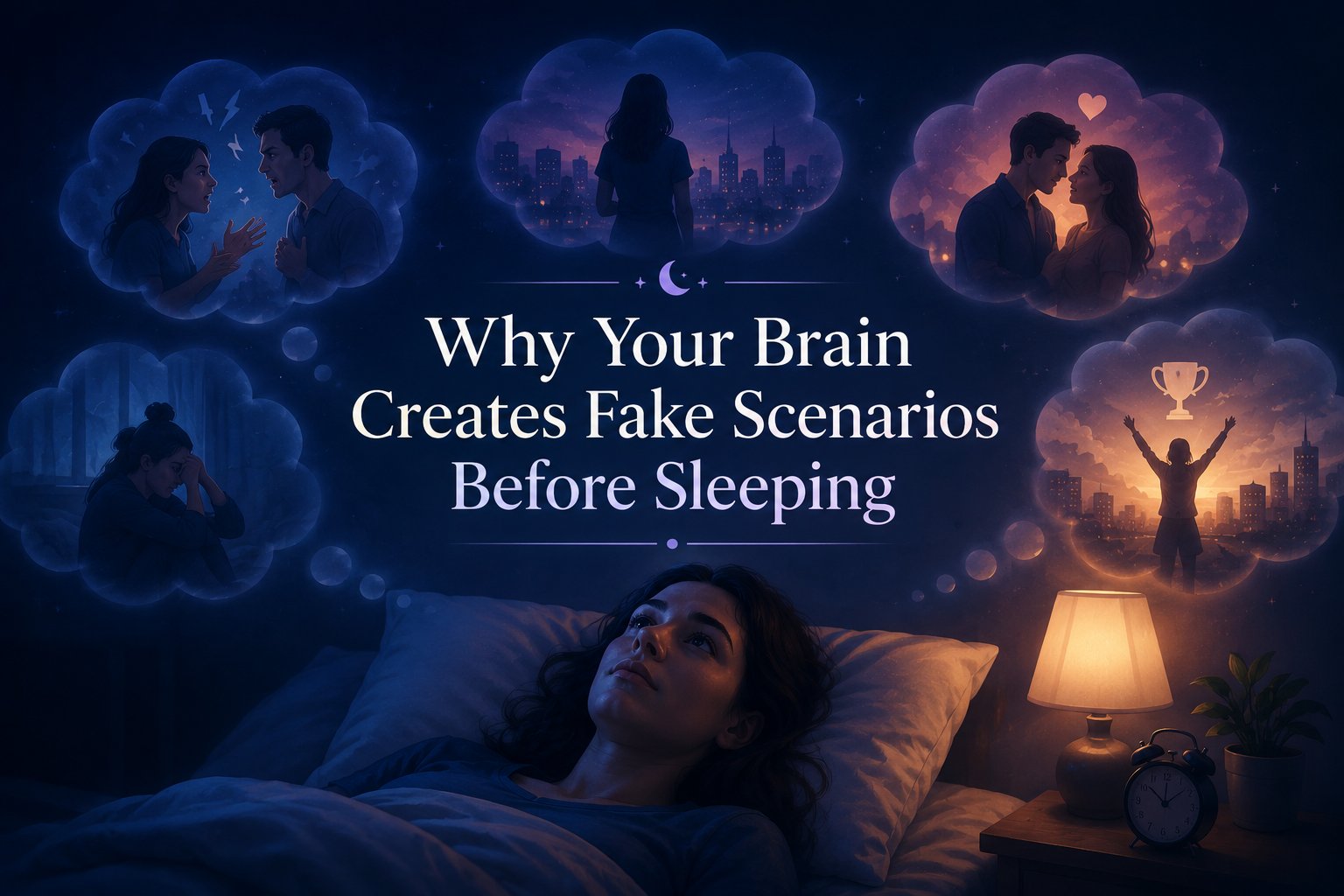
Have you ever laid in bed completely exhausted, only for your brain to suddenly start creating imaginary conversations, fake arguments, embarrassing moments, or unrealistic future scenarios?
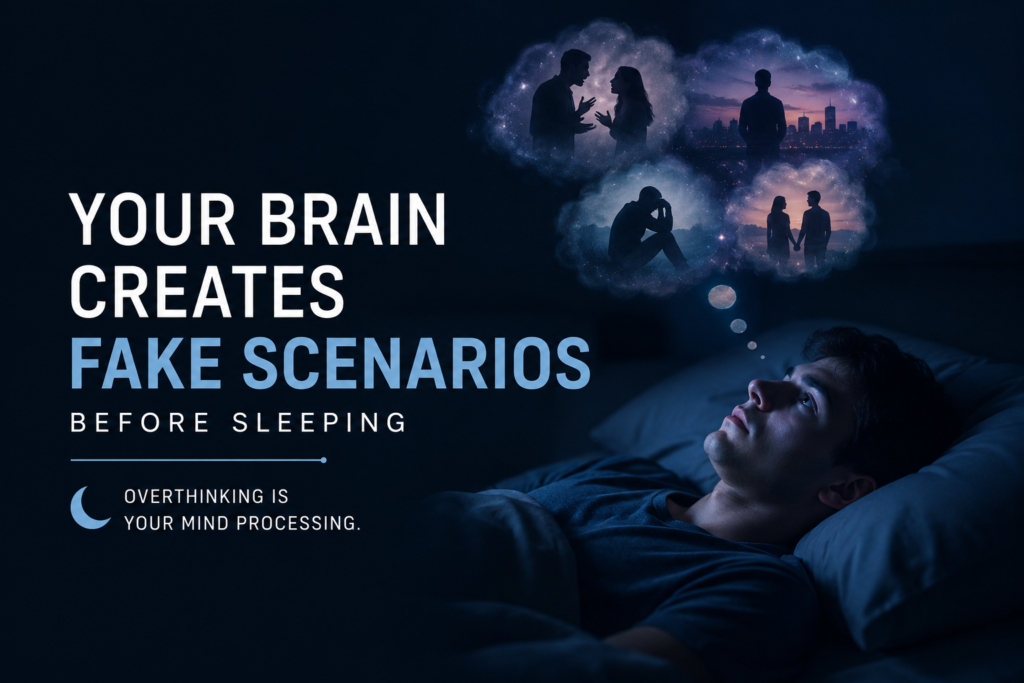
One minute you are ready to sleep. The next minute your mind is replaying old memories, imagining future disasters, romantic situations, success stories, or arguments that never even happened.
It feels strange, but it is actually very common.
Why This Happens
When the world becomes quiet at night, your brain finally has room to process thoughts that were buried during the day.
During daytime, your attention is constantly distracted by:
- Social media
- Work or school
- Conversations
- Notifications
- Stress
- Noise
But at night, especially before sleep, your brain becomes less focused on external stimulation and more focused on internal thoughts.
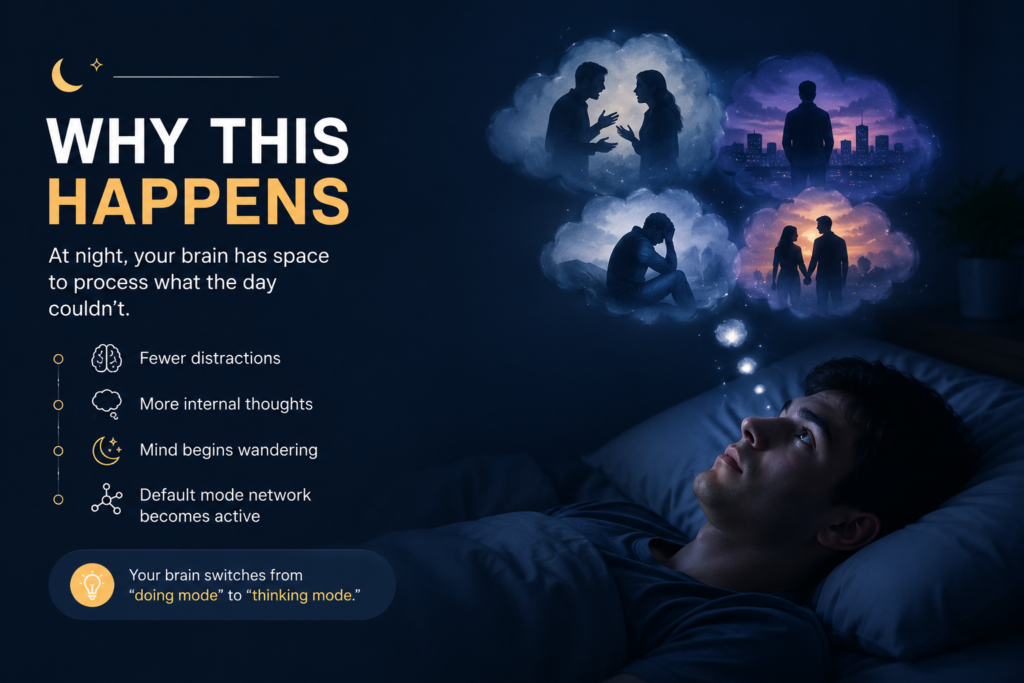
This is when the mind begins wandering.
Scientists sometimes call this “default mode network” activity — a system in the brain linked to imagination, memories, self-reflection, and future thinking.
Your brain essentially switches from “doing mode” into “thinking mode.”
Why the Scenarios Feel So Real
The brain does not perfectly separate imagination from emotion.
Even fake scenarios can trigger real feelings like:
- Anxiety
- Excitement
- Regret
- Anger
- Sadness
- Hope
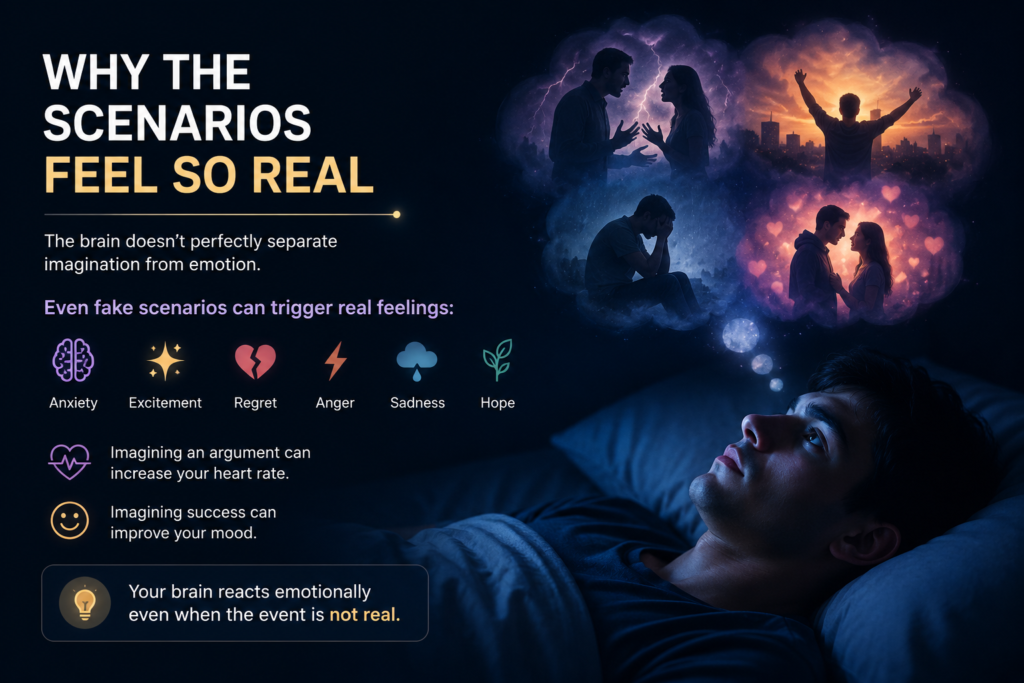
That is why simply imagining an argument can increase your heart rate, or imagining success can suddenly improve your mood.
Your brain reacts emotionally even when the event is not real.
Why Negative Thoughts Often Appear at Night
Nighttime naturally removes distractions, so unresolved emotions become louder.
This is why people often overthink:
- Past mistakes
- Awkward moments
- Relationship problems
- Fears about the future
- “What if” situations
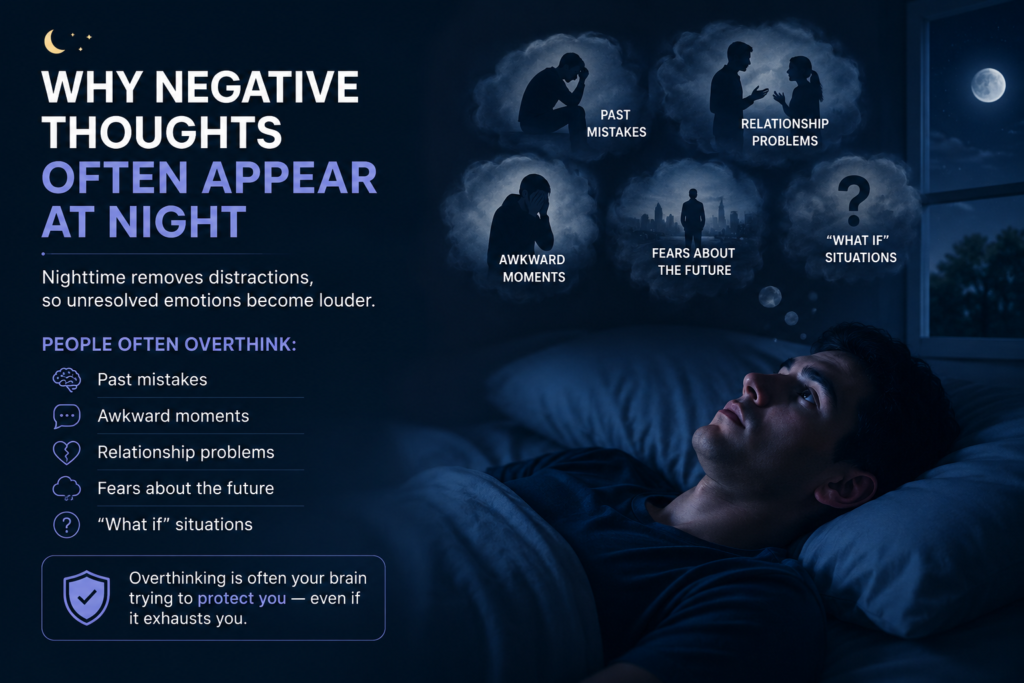
The brain tries to prepare for danger or uncertainty by mentally rehearsing scenarios.
In a strange way, overthinking is often the brain trying to protect you — even if it ends up exhausting you instead.
Why Romantic or Unrealistic Scenarios Happen Too
Not all nighttime scenarios are negative.
Sometimes the brain creates:
- Ideal conversations
- Dream relationships
- Future success fantasies
- Imaginary reunions
- Perfect versions of ourselves
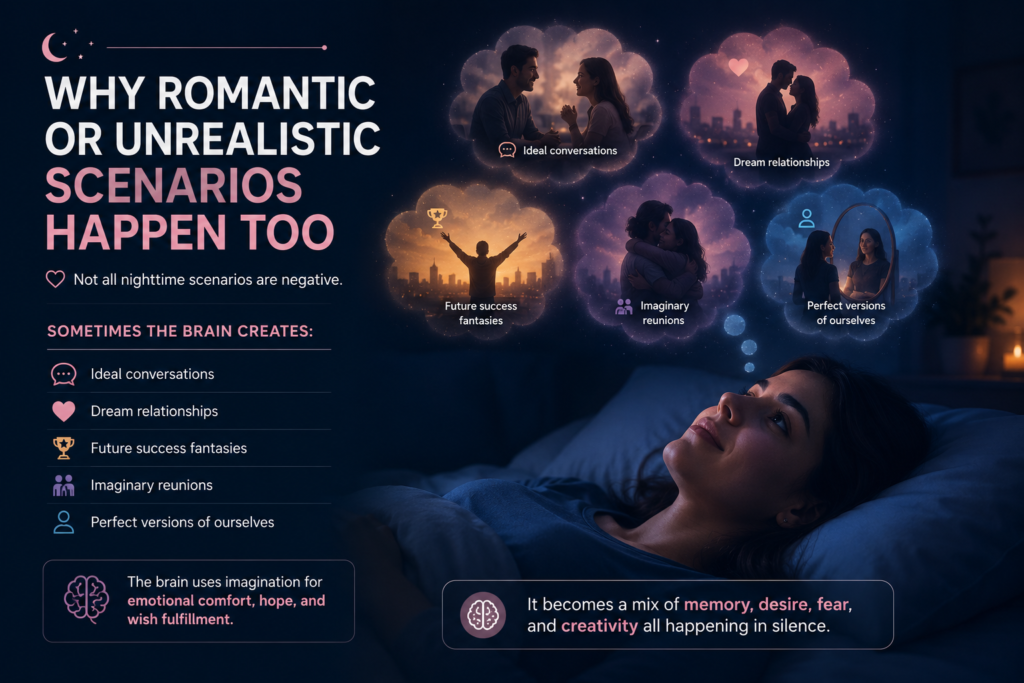
This happens because the brain also uses imagination for emotional comfort, hope, and wish fulfillment.
It becomes a mix of memory, desire, fear, and creativity all happening in silence.
Is It Normal?
Yes — completely normal.
Almost everyone experiences some form of nighttime mental wandering.
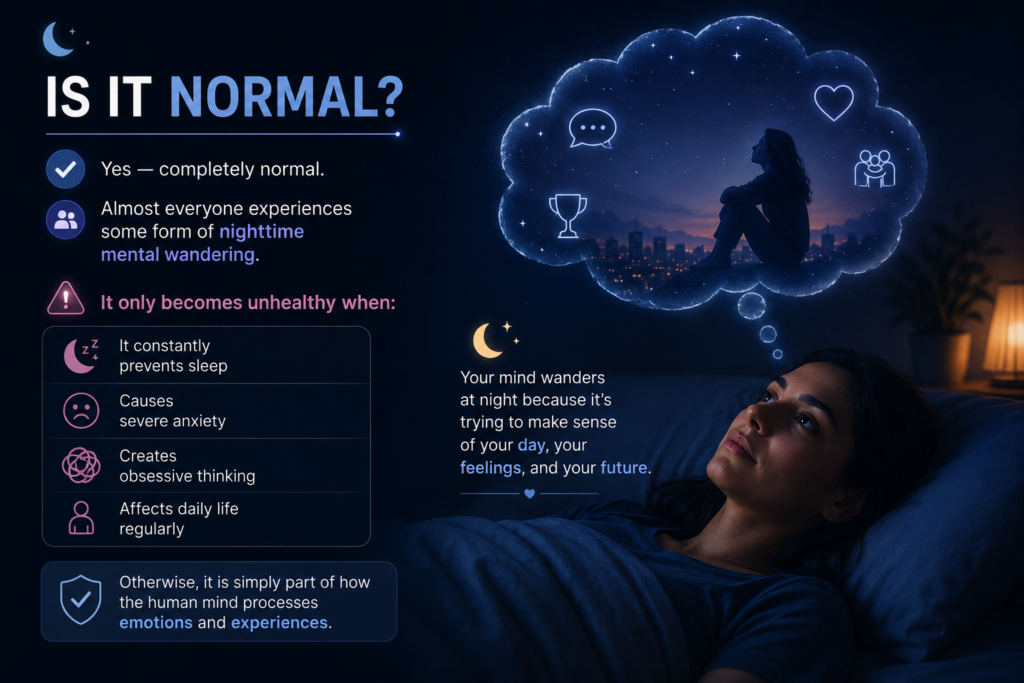
It only becomes unhealthy when:
- It constantly prevents sleep
- Causes severe anxiety
- Creates obsessive thinking
- Affects daily life regularly
Otherwise, it is simply part of how the human mind processes emotions and experiences.
How to Calm an Overactive Mind Before Sleep
Some simple things may help:
- Reduce phone use before bed
- Avoid stressful content late at night
- Listen to calming audio or music
- Write thoughts in a journal
- Focus on slow breathing
- Keep a consistent sleep schedule
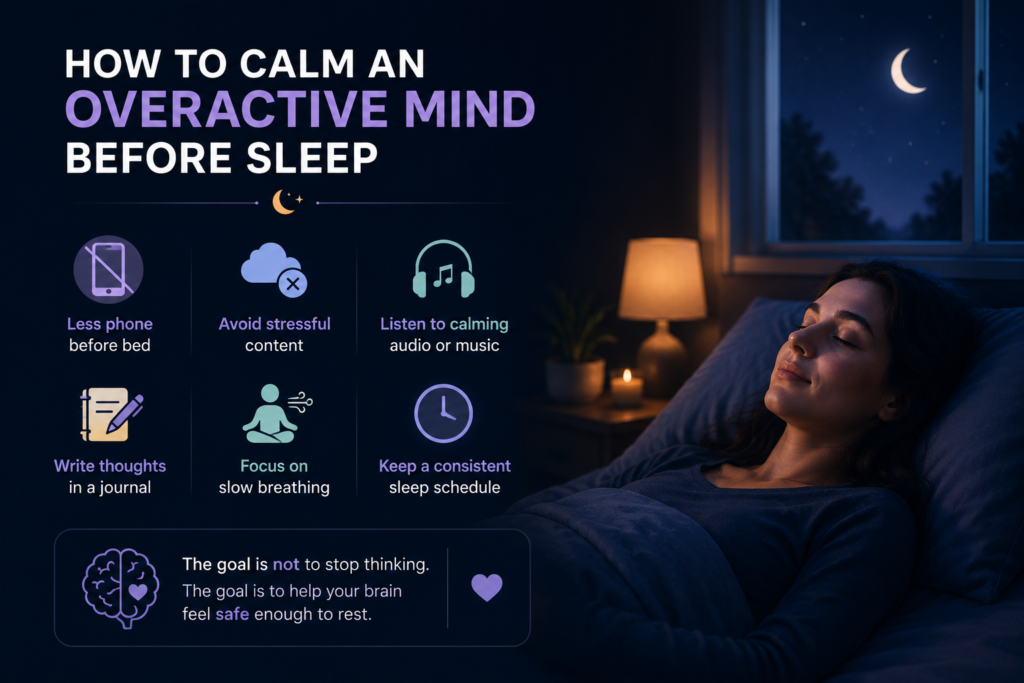
The goal is not to stop thinking completely.
The goal is to help the brain slowly feel safe enough to rest.
Final Thoughts
The human brain is never truly silent.
Even in darkness, it continues creating stories, replaying memories, preparing for the future, and trying to understand emotions.
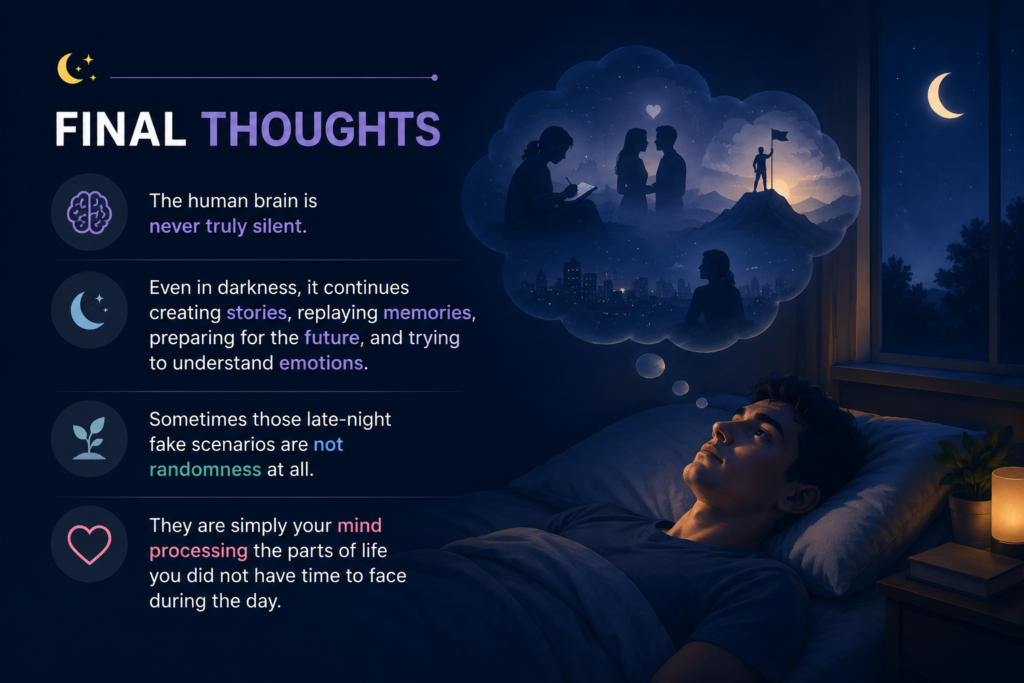
Sometimes those late-night fake scenarios are not randomness at all.
They are simply your mind processing the parts of life you did not have time to face during the day.